






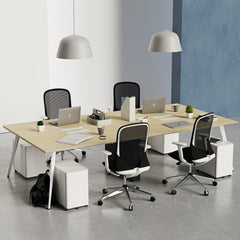
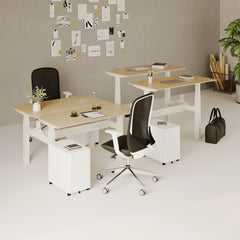
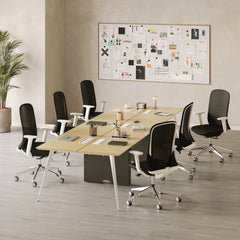




How to Pair Executive Conference Tables With Better Chairs
Pairing executive conference tables with better chairs requires more than matching styles. This post explains how to balance table shape, cha...
Learn more
Visit quiz page to see how we makes it easy to create an inspiring workplace


Ergonomics gets used as a catch-all, but posture support is not a vibe and it is not a style category. A chair earns the ergonomic label when it helps your body stay in a neutral, low-strain position while you work or play, and when it makes it easy to change positions without losing support.
From our perspective at Urbanica, the most honest way to compare gaming chairs and ergonomic office chairs is to zoom out first. What matters is whether the chair matches your body dimensions, supports your pelvis and spine, and fits your desk setup. The fastest way to see how different silhouettes and support philosophies show up in the real world is to scan an actual lineup rather than arguing labels. Our Urbanica office chair collection makes that contrast clear, because you can visually compare how different backs, seat shapes, and adjustment approaches are built for different work styles.
A chair tends to be truly ergonomic when it reliably supports these outcomes:
Your pelvis is the base. If the seat encourages you to slide forward, your lower back rounds, your ribcage collapses, and your neck compensates. That is why the seat pan shape, seat tilt, and back contact matter as much as “lumbar support.”
Good support fills the natural curve of your lower back without pushing you forward. When support is too aggressive or positioned poorly, people usually respond by perching, leaning, or reclining in a way that shifts strain elsewhere.
Ergonomics is also about reach. If you cannot pull the chair close to the desk, or if armrests push your elbows out, your shoulders lift and your neck starts doing extra work.
There is no single “perfect posture” to hold all day. Better chairs are designed to support micro-movements and small reclines, so your muscles are not bracing constantly.
Many gaming chairs borrow from racing seats. That design language can be visually compelling and it can feel secure, but the same geometry that helps a driver feel locked in can be a mixed bag at a desk.
Side bolsters keep you centered. For some bodies, that feels stable and encouraging. For others, bolsters can be the reason you cannot sit comfortably when you shift positions.
You sit mostly squared to the desk and rarely cross a leg.
Your hips and shoulders fit inside the contour without being squeezed.
You like feeling “held” during high-focus moments.
You prefer one leg tucked, a figure-four sit, or frequent hip rotation.
You have wider hips or thighs and feel pressure on the outer legs.
You work long hours and need small posture changes to stay fresh.
If your hips cannot rotate freely, your body finds the next available motion, often through the low back or neck. That is where discomfort can sneak in after the first hour.
A chair can feel plush at first and still create leg fatigue. The under-discussed culprit is often seat depth and the seat edge shape.
If the seat is too deep for your femur length, you tend to perch forward, losing back support.
If the front edge presses into the back of the knees, circulation can feel “pinched,” leading to numbness or fidgeting.
In long sessions, those small pressure signals often lead to a slouched posture that feels “relieving,” but increases spinal strain.
Gaming chairs frequently include a head pillow. A pillow can feel nice, but the positioning matters. If the pillow pushes the back of your skull forward, it encourages forward-head posture. That can feel subtle during a game and very obvious after a few hours of computer work.
A truly helpful head support aligns behind the head when you recline, and stays out of the way when you are upright and typing. If a headrest forces your chin forward, your neck muscles do extra work even while “resting.”
Recline can be great for decompression breaks, but desk work requires that your eyes stay aligned with the monitor and your hands stay aligned with the keyboard and mouse.
A chair that reclines deeply can still be ergonomic if:
You can maintain lumbar contact while reclined.
Your monitor position accommodates a slight recline without neck craning.
Your arm support keeps your elbows from drifting behind your body.
Without those conditions, reclining becomes a workaround that shifts strain to the neck and shoulders.
Ergonomic office chairs usually prioritize neutral work posture first, then allow rest postures that still preserve support. The strongest difference is not aesthetics. It is how the chair is meant to behave during the repetitive reality of typing, mousing, and reading.
A chair can advertise lumbar support and still miss your lumbar curve entirely. Proper lumbar contact typically feels like gentle filling, not a push.
If lumbar support is too high, it feels like it is pressing into the mid-back. Many people respond by sliding forward or rounding.
Support should be present, but it should not become a pressure point. Overly aggressive support can create a “bracing” sensation that turns into fatigue.
Seat depth affects whether you can sit back and still keep a small clearance behind the knee. When seat depth is wrong, even an otherwise solid chair cannot do its job.
Too deep, you perch and lose back contact.
Too shallow, your thighs are under-supported and your low back works harder.
Work ergonomics often fails at the armrest. Armrests that are too high elevate the shoulders. Armrests that are too wide push elbows away from the body. Armrests that cannot clear the desk edge force you to reach forward, which often rounds the upper back.
A work-friendly armrest setup helps your elbows stay under your shoulders while your hands operate keyboard and mouse comfortably.
Chairs that allow a controlled, supportive tilt often help users sustain focus longer. Supported motion encourages circulation and reduces the sensation that your core must brace constantly. The best experience is not “perfectly upright.” It is “supported while you move.”
A label does not predict fit. This quick test does.
1. Feet contact: Can both feet rest flat, or with stable foot support, without pressure under the thighs?
2. Seat depth clearance: When you sit back, is there a small gap behind the knees, not tight contact?
3. Pelvic anchor: Can you stay seated back without sliding forward after a few minutes?
4. Lumbar contact: Does the back support fill the low-back curve without forcing you to arch or slump?
5. Desk distance: Can the chair pull close enough that your elbows stay near your sides while typing?
6. Arm support: Can you rest forearms without lifting shoulders or flaring elbows outward?
7. Recline usability: Can you recline slightly and still see the monitor without craning, and still reach input devices without reaching?
If a chair fails items 2, 3, or 5, it is rarely the right choice for long desk blocks, even if it feels comfortable for ten minutes.
| Ergonomic factor | Why it matters at a desk | Common gaming chair approach | Common ergonomic office chair approach | Who tends to benefit most |
|---|---|---|---|---|
| Seat depth fit | Prevents perching or knee pressure | Often fixed seat depth, contour varies | More often designed around desk sitting norms | People doing long typing blocks |
| Hip freedom | Enables posture variation without strain | Bolsters can limit hip rotation | Typically fewer restrictive contours | People who shift positions often |
| Armrest desk compatibility | Reduces shoulder and neck load | Armrests vary, can interfere with desk edge | More likely designed for keyboard and mouse tasks | Mouse-heavy workdays |
| Neck support behavior | Prevents forward-head posture | Pillow can push head forward when upright | Often no pillow, focus on upright alignment | People sensitive to neck tension |
| Supported micro-movement | Reduces static fatigue | Recline emphasized, work-angle control varies | Tilt often designed for small adjustments | People sitting for hours at a time |
| Thermal comfort | Heat discomfort triggers slouching | Upholstery often warmer, depends on material | Mesh or breathable backs are common | Warm rooms, long sessions |
This table is not declaring one category “good” or “bad.” It shows why an ergonomic office chair often wins for desk work, while a gaming chair can be fine if your body and desk match its geometry.
When a chair runs hot, compresses unevenly, or becomes slippery, posture tends to degrade. People usually interpret that as “my back is weak.” In reality, your body is reacting to changing support and pressure signals.
Heat buildup is not only annoying. It drives constant repositioning. That repositioning often ends in slouching because slouching feels like relief when the body is uncomfortable.
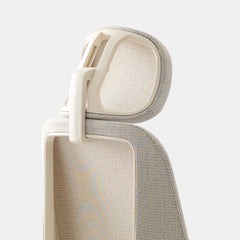
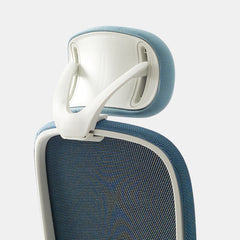
The Muse Chair details reference breathable mesh in its product presentation and imagery, which is the kind of material choice that helps keep day-to-day sitting comfortable, especially in longer sessions where thermal discomfort becomes the hidden enemy of posture.
If a cushion is too soft, it can “bottom out,” and your pelvis tilts back. That posterior tilt rounds the low back and increases upper-back compensation. If a cushion is overly firm, pressure points can trigger frequent shifting, which also disrupts stable support.
The practical goal is not maximum softness. The goal is consistent support over time.
A surface that is too slippery encourages forward sliding. A surface with balanced grip helps you stay anchored while still moving naturally. Stability at the pelvis is one of the most underrated comfort multipliers.
The strongest predictor of “gaming chair vs ergonomic office chair” is how many continuous hours you sit, and whether your day is more typing and mousing or more reclining breaks.
If your day includes long desk blocks, you want stable pelvis support, reliable back contact, and arm positioning that supports keyboard and mouse work. This is where ergonomic office chairs tend to outperform racing-style seating.
When we point customers to a chair like the Onyx, we do it because the chair is presented as office-ready ergonomic seating, not because it is a magic fix. The Ergonomic Onyx Chair product page is a useful reference point when evaluating whether an office-oriented design matches your routine, especially if your schedule includes long work sessions where small ergonomic mismatches become big fatigue.
Not every space needs a highly technical chair. If your work sessions are shorter, or your home office needs to blend into a living space, the “best chair” can be one that supports a decent upright posture and feels easy to live with.
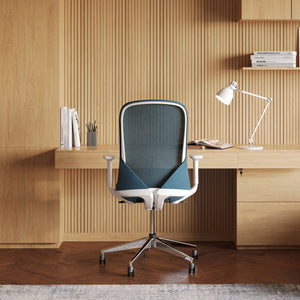
That is why we keep chairs like the Muse in the conversation. It sits between a purely decorative chair and a traditional bulky task chair, and the product page explains it as a chair built around style, movement, and everyday productivity rather than aggressive “clinical” adjustability. For many homes, that balance is exactly what makes a workspace sustainable.
A chair cannot fix a desk that forces shoulder elevation or wrist extension. Workstation geometry always wins.
If the desk surface is too high relative to your seated elbow height, you lift the shoulders and bend wrists upward. If the desk is too low, you hunch and crane the neck to see the screen.
A practical way to assess desk pairing is to check whether you can type with elbows near your sides and wrists neutral. If you cannot, you will compensate regardless of chair type.
Desk drawers, crossbars, or shallow leg space can force you to sit forward. That removes back support and turns the chair into a stool.
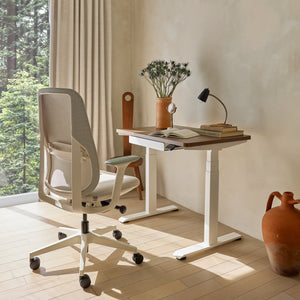
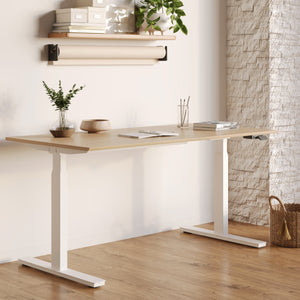
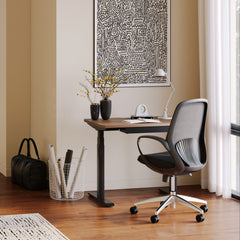
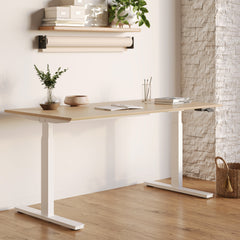
Our Office Desk sizing and features page highlights the desk as a minimalist workspace with space below, which is a detail that matters for chair pairing because legroom and clearance affect how close you can sit and how well you can keep your pelvis anchored.
Foot support, monitor risers, and keyboard positioning can fine-tune comfort. But the order matters:
1. Set seat height for stable feet support.
2. Align desk and chair so elbows and wrists stay neutral.
3. Place monitor height and distance to reduce neck strain.
4. Use accessories only to refine, not to compensate for a mismatch.
Many chairs pass the “first minute” comfort test. Fewer pass the “first hour” posture test. These quick checks catch the difference.
Sit all the way back and work for a few minutes. If you feel yourself sliding forward, or if you need to keep scooting back, the chair is not anchoring your pelvis well. That usually predicts future slouching.
When seated back, there should be a small clearance behind the knee. Tight contact often predicts numbness. Too much space often predicts under-supported thighs and low-back fatigue.
Place hands where you normally type and mouse. If your shoulders feel like they are creeping upward, armrest height or desk height is off. If elbows flare outward, armrest width or desk spacing is off.
Recline slightly, then try to type for a moment. If your head pushes forward to see the screen, or if you must reach for keyboard and mouse, the recline function is not compatible with your workstation.
Gaming chairs are not automatically “bad,” and ergonomic office chairs are not automatically “perfect.” The outcome depends on fit and setup.
Your hips and shoulders fit the seat contour comfortably.
You take frequent posture breaks and do not sit for long uninterrupted desk blocks.
Your desk allows you to sit close without armrest interference.
You value recline breaks and you have a monitor setup that supports them.
Your work involves sustained typing and mousing.
You sit in long focus blocks where small posture errors accumulate.
You share the chair with another user and need a wider adjustment range.
You are sensitive to low-back or neck fatigue triggered by static sitting.
At Urbanica, our goal is to help people build setups that feel good in real life, not setups that sound impressive on paper. Chairs are tools, and different tools fit different work rhythms.
If you sit for extended hours, choose a chair that is presented as ergonomic seating for long workdays, and verify the basics with the fit test. The Ergonomic Novo Chair overview is positioned as ergonomic seating, and its presentation references adjustable mesh seating with lumbar support in the product imagery and description context, which aligns with what long desk sessions usually require.
For many people, a dependable performance chair that supports posture and breathability is the right match. The Seashell Chair breathable mesh design explicitly highlights breathable mesh and lumbar support elements in the product presentation, which are practical features for comfort and posture in everyday work setups.
The gaming chair versus ergonomic office chair question has a more reliable answer when it is framed as a system decision, not a chair-only decision.
Choose the chair that passes the fit test first, even if it is not the flashiest option.
Pair it with a desk setup that lets you sit close, keep wrists neutral, and keep shoulders relaxed.
Prioritize stable pelvis support and consistent back contact over extreme recline features.
Treat comfort claims as hypotheses, then verify with the micro-tests during real work.
Some decisions are easier when you can review brand support information, FAQs, and how we guide customers through choosing pieces that match their workflow. Our regional office furniture FAQ and support page provides that kind of context, including common questions and guidance, so expectations stay grounded and transparent.
A chair is ergonomic compared to another chair when it helps you maintain neutral posture longer, reduces the urge to compensate with slouching or shrugging, and supports movement without losing contact where you need it. If a gaming chair fits your body and your desk, it can be ergonomic enough. If your day is primarily desk work, an ergonomic office chair usually has the advantage because it is designed around work posture precision and supported motion.
The best choice is the chair that makes good posture feel natural, not the chair that demands willpower to sit “correctly.”


You have unlocked free shipping!
You're saving $29 and unlocked free shipping!
Leave a comment