



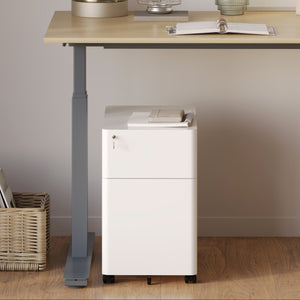







Filing Cabinet Choices for Cleaner Workstation Planning
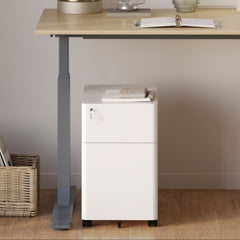
Cleaner workstation planning starts with filing storage that matches the desk, document volume, security needs, and daily workflow. Explore how cab...
Learn more
Visit quiz page to see how we makes it easy to create an inspiring workplace


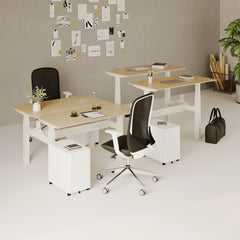
An adjustable height standing workstation is a work setup designed to move with you, not force you into one posture. In practical terms, it means a desk or worksurface that can be set to a comfortable typing height while standing, and also lowered to a comfortable seated height. The goal is not to stand all day. The goal is to make switching positions feel easy enough that it becomes part of your routine.
A true adjustable setup typically includes:
A height-adjustable worksurface that can reach both seated and standing typing heights
A stable frame that does not feel shaky when you type, lean, or rest your forearms
A screen position you can set at a comfortable eye level without craning your neck
Some products are called “standing desks” but are actually fixed-height tables. Those can work for short bursts, but they rarely fit day-to-day computer work for most people because typing height, screen height, and posture needs change from person to person.
A desk converter sits on top of a desk and lifts your keyboard and screen. It can be useful for certain setups, but it adds height, reduces depth, and often changes where your elbows land. A full sit-stand desk gives you a clean slate for keyboard, mouse, and monitor placement.
This is the most common adjustable height standing workstation question because it affects comfort immediately. The simplest answer is: set the desk so your shoulders stay relaxed and your elbows bend naturally near a right angle when your hands rest on the keyboard.
1. Stand tall with your feet flat and knees soft.
2. Let your arms hang naturally, then bring your forearms forward as if you are about to type.
3. Adjust the desk so the keyboard meets your hands, not the other way around.
If you find your shoulders creeping upward, the desk is too high. If you find yourself bending forward or dropping your wrists, the desk is too low.
When your hands are on the keyboard, your wrists should look straight, not bent up. A slightly negative keyboard angle can feel more natural for many people, but the best signal is simple: your wrists should not feel “loaded” or pinched after a focused 10 to 15 minutes.
Typing comfort comes from elbow height. Neck comfort comes from screen height. A common mistake is to raise the desk until the monitor feels right. That usually forces the keyboard too high and turns shoulder tension into a daily habit.
If the desk height is correct for typing but the monitor feels low, solve that with screen elevation, not by raising the entire desk.
Shared workstations succeed or fail based on how easy it is to switch. The more friction, the more likely the desk stays in one position and becomes a normal desk again.
A shared desk should go low enough that the shorter person can sit with feet supported and elbows relaxed. It should also go high enough that the taller person can stand and type without hunching.
Shoes matter. A thick sole changes standing height enough to notice.
Floor type matters. A soft mat can slightly change how you stand and where your elbows land.
Monitor stands matter. They can reduce the need to compromise on desk height.
If you share a desk, set two reference points:
Your seated typing position
Your standing typing position
If your desk has presets, use them. If it does not, place a subtle mark or note your height setting so you can return to it quickly.
This comes down to habit. If changing height feels like a chore, you will do it less often. If it is simple, you will do it more often.
If you switch only once or twice a day, manual can work fine.
If you switch multiple times per day, electric is usually the easier fit because it reduces friction.
A reliable motor system matters, but so does the desk’s overall feel. The best signal is how confident it feels at standing height. When it rises, it should feel controlled and stable. When it stops, it should not wobble or keep shaking.
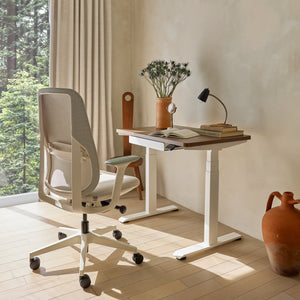
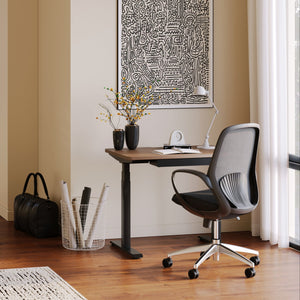
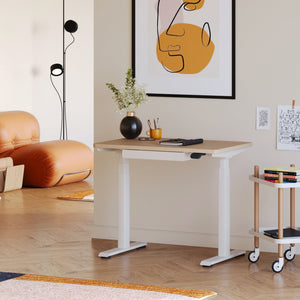
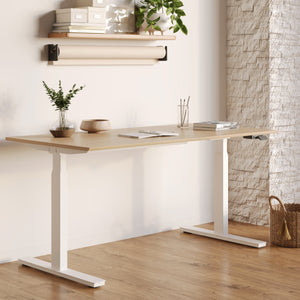
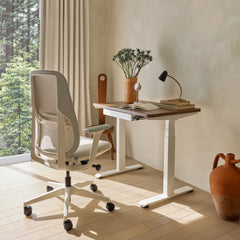
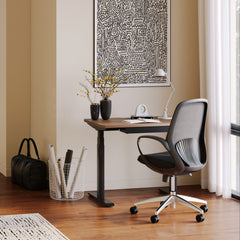
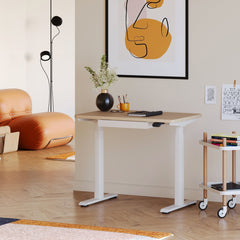
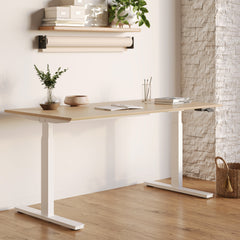
For a reference point of how we build a height-adjustable workstation desk, see the Urbanica Standing Desk.
If you prefer manual, prioritize a crank that feels smooth and a frame that stays steady at any height. The less “effort tax” you feel, the more likely you are to use the adjustability.
Wobble is not just annoying. It can change how you type and how you hold your neck and shoulders. Stability is one of the clearest signs of whether a standing workstation will feel good long-term.
A frame that is not designed to stay rigid at full standing height
A desktop that is too thin or not well supported
Uneven floors and unadjusted leveling feet
A monitor setup that bounces easily
Level the desk using the adjustable feet, if available.
Avoid placing it half on a rug and half on hard flooring.
Give it a little breathing room from the wall so it can stand evenly, but not so far that cable pull causes movement.
Try these three quick checks:
1. Type quickly for 20 seconds and notice if the desk shakes.
2. Rest your forearms lightly on the desk and see if it dips or sways.
3. Tap the desk lightly and observe your monitor movement.
A stable desk makes standing feel natural. A wobbly one makes you brace without realizing it.
The safest, most realistic answer is: switch often, and build tolerance gradually. The point is not to chase a number. The point is to use movement as a tool for comfort and focus.
Start with shorter standing blocks and return to sitting before fatigue hits.
Switch before discomfort builds, not after.
You lock your knees without noticing
Your feet ache and you stop shifting weight
Your lower back feels tired, not energized
You start leaning on one hip and your posture becomes lopsided
Add micro-movement. Small shifts, gentle calf raises, and changing stance can reduce fatigue without changing your entire routine.
A supportive surface and comfortable footwear can change how standing feels. The goal is not “perfect.” The goal is “comfortable enough that you want to do it again tomorrow.”
Yes. A standing workstation is only as good as the seated half of the day. Sitting well becomes your recovery posture between standing blocks.
When sitting is uncomfortable, people tend to:
Slouch to relieve pressure
Lean forward toward the screen
Clamp shoulders upward
Avoid switching positions because “sitting feels bad”
If the chair supports you well, switching becomes natural. You stand to reset energy and focus, then sit to recover without collapsing.
Seat height that lets your feet feel supported
Seat depth that supports your thighs without cutting into the back of your knees
Lumbar support that feels present but not aggressive
Armrests that help your shoulders relax without forcing you to shrug
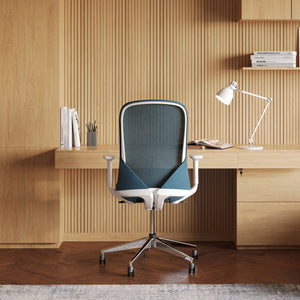
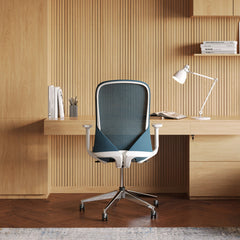
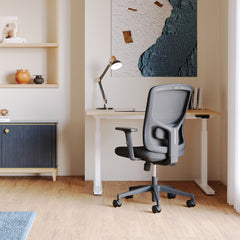
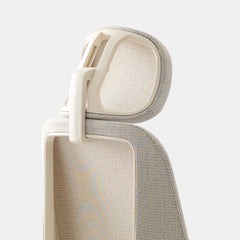
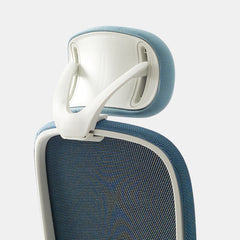
For seating options designed around support and adjustability, see the Novo Chair and the Onyx Chair.
1. Set seat height so feet feel grounded.
2. Set seat depth so the back of the knees has breathing room.
3. Adjust lumbar so your lower back feels supported without being pushed forward.
4. Adjust armrests only if they help your shoulders relax during typing.
Screen placement is where many standing workstations fail, even with a good desk. If the screen is too low, you lean forward. If it is too high, you tilt your head back and tighten your neck.
A practical starting point is to place the top portion of the screen near eye level when you sit or stand tall. Fine-tuning is normal because comfort differs slightly from person to person.
If the monitor is too close, you pull your head forward. If it is too far, you lean toward it. A comfortable distance helps your eyes stay relaxed and your posture stay neutral.
A laptop ties your keyboard height to your screen height, so one is almost always wrong if nothing is elevated.
If you use a laptop for work, elevating it can help your neck, but you will usually want an external keyboard and mouse to keep typing height comfortable.
For simple elevation options, explore the Monitor and Laptop Stand collection.
Desktop size is not only about fitting your gear. It is about giving your body space to stay neutral.
A deeper desk lets you place the monitor farther back, which can reduce neck strain and prevent a crowded “screen too close” feeling. Depth also gives your forearms a more comfortable landing zone.
Laptop-only setups can work on smaller surfaces, but often benefit from added depth for posture.
Single monitor plus laptop setups need space for screen distance and input devices.
Dual monitor setups need both width and depth to avoid turning your head and shoulders all day.
Keep frequently used items within a comfortable reach so you are not constantly leaning forward. A simple way to think about it:
Primary zone: keyboard, mouse, trackpad
Secondary zone: notebook, phone, water
Tertiary zone: storage and items you use occasionally
Not everyone needs height adjustment in every room. A stable, minimalist desk can be the right choice for a dedicated seated workspace, a homework station, or a room where you want a clean profile and consistent setup.
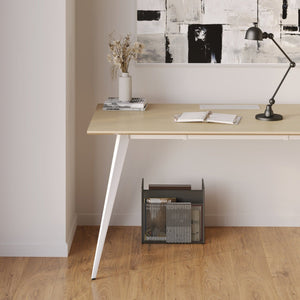
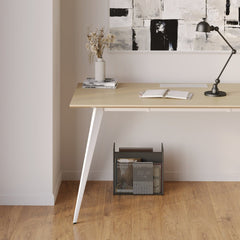
For a reference on our minimalist desk approach, see the Urbanica Office Desk.
A standing workstation becomes “easy to use” when small accessories remove daily friction. The best accessories are not flashy. They simply make good posture the default.
Screen elevation so you do not crane your neck
Cable control so nothing pulls when the desk moves
Lighting that reduces eye strain and keeps you from leaning forward
A keyboard and mouse position that keeps wrists straight and shoulders relaxed
Plan for movement. Leave enough slack for height changes, and keep the cable path consistent so the desk can move without tugging. A tidy cable path also reduces the chance you avoid switching because it feels complicated.
Small spaces are where adjustable desks often shine, because one surface can serve multiple tasks. The key is choosing a setup that fits the room and supports your habits.
Place the desk where the chair can slide back without hitting a bed or wall.
Avoid corners that force you to twist your torso to enter the seat.
Keep a clear standing zone so switching is not blocked by clutter.
In a tight room, a desk can feel heavy or calm depending on its lines and proportions. Minimalist design can make the workspace feel intentional instead of crowded.
If you want to compare desk options across styles and sizes, browse the Urbanica desks collection.
A standing workstation is a daily-use tool. Small mismatches become big annoyances when repeated every day. Testing is less about perfection and more about preventing obvious friction.
Your elbow height when standing comfortably
Your seated elbow height when your feet feel supported
Your seated eye level for monitor placement
Does the design clearly support sitting and standing use?
Is stability emphasized at full height, not only at seated height?
Do you have a plan for monitor elevation and input device placement?
| Workstation format | Best fit for | Common friction points to watch | Easy improvement that helps most |
|---|---|---|---|
| Full sit-stand desk | People who want regular switching | Monitor bounce if setup is top-heavy | Improve monitor support and distance |
| Desk converter on a fixed desk | People testing standing occasionally | Reduced depth and cramped mouse space | External keyboard and mouse placement |
| Fixed-height desk | Dedicated seated work or secondary rooms | Sitting fatigue if chair setup is weak | Better seating and monitor elevation |
| Compact workstation | Small apartments and multipurpose rooms | Clutter builds fast | Reach-zone layout and cable control |
Sometimes the biggest question is not technical. It is whether a brand’s design approach matches how you want to work. We build furniture to make everyday comfort feel natural, with clean forms and ergonomic intent.
If you want to see how we think about outfitting workspaces and what is available for local shoppers, explore our modern office furniture selection.
A good setup is not complicated. It is systematic. Start with the foundation, then layer in screen placement.
1. Set your chair first so sitting feels stable and supported.
2. Set desk height for standing typing using relaxed shoulders and elbows.
3. Set monitor height so your neck feels neutral.
4. Check screen distance so you are not leaning forward.
5. Place keyboard and mouse so wrists stay straight.
6. Clear your standing zone so switching feels effortless.
If something feels off, change only one variable:
Wrists feel strained: lower keyboard height slightly or adjust keyboard angle.
Neck feels tight: raise the screen or move it back slightly.
Feet feel tired: add micro-movement and consider a softer standing surface.
When you can work for a focused block without thinking about your shoulders, neck, or wrists, the setup is close. Small tweaks are normal, but comfort should feel repeatable, not fragile.
A standing workstation succeeds when it supports real life. Workdays change. Tasks change. Energy changes. The right setup gives you options.
Stability you can feel, especially at standing height
Ergonomic adjustability that fits different bodies and different tasks
A clean layout that makes switching positions easy, not fussy
If the desk is in place and movement feels possible, the next biggest comfort wins typically come from:
Better seating support for the seated half of the day
Better screen positioning so your neck stays calm across hours of work
That is the heart of an adjustable height standing workstation done well: a desk that moves, a chair that supports, and a screen setup that keeps posture neutral so you can focus on the work, not on discomfort.


You have unlocked free shipping!
You're saving $29 and unlocked free shipping!
Leave a comment