



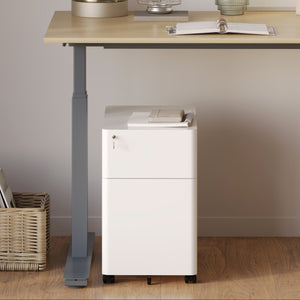






















Filing Cabinet Choices for Cleaner Workstation Planning
Cleaner workstation planning starts with filing storage that matches the desk, document volume, security needs, and daily workflow. Explore how cab...
Learn more
Visit quiz page to see how we makes it easy to create an inspiring workplace


At Urbanica, we design for real workdays, not ideal ones. We know that people rarely sit perfectly upright for eight hours, and that most workspaces evolve around habits, not diagrams. A well designed adjustable chair respects that reality. It gives you enough control to support healthy posture, yet remains simple enough that you will actually use the adjustments.
Comfort, in our view, is not a soft luxury. It is the foundation for focus, mood, and long term wellbeing. When a chair is tuned to your body, your muscles do less compensating, your breathing stays fuller, and your energy lasts longer into the afternoon. The goal is not to hold you in a rigid pose. Instead, we want the chair to invite small shifts, stable alignment, and easy transitions between tasks.
The starting point for this is an honest understanding of ergonomics. Reputable organizations explain how posture, reach, and repetition affect your body over time. Resources that outline ergonomic safety principles help translate medical and engineering insight into practical guidance you can apply at your desk, and they shape the way we approach every chair frame and mechanism we design.
Each adjustable control on a chair has a specific purpose. When you understand these purposes, you can move beyond guesswork and create a reliable setup that matches your proportions and work style.
Seat height is the anchor for every other adjustment. When it is correct, your feet rest flat on the floor, your knees are roughly level with or slightly below your hips, and your thighs are supported without feeling compressed. If your chair is too high, your feet may dangle and pressure can build in the backs of your thighs. If it is too low, your knees and hips may feel compressed and your lower back may start to round.
Seat depth controls how much of your thigh is supported by the cushion. A good starting point is a small gap between the front of the seat and the back of your knees. Too much depth encourages slouching and makes it hard to use the backrest. Too little depth shifts too much load to a small area under the sit bones.
The backrest guides your spine, and the lumbar area is the anchor point. When the support meets the natural curve of your lower back, your torso feels gently lifted rather than pushed forward. Many people position lumbar support too low, where it presses on the pelvis instead of following the spine. Raising it slightly until it sits in the small of the back often makes breathing and upper body movement feel easier.
Armrests are not decorative details. They support the weight of your arms and relieve the constant pull on your neck and upper back. When armrests are too high, shoulders creep up toward the ears. When they are too low, the arms hang and the upper back overworks to keep the hands in position for typing. Correct armrest height lets your shoulders relax while your forearms float just above the work surface.
Your back is not meant to stay perfectly vertical all day. Recline functions allow the spine to move, which reduces pressure on the discs and keeps muscles active. Tilt tension determines how easily the chair moves with you. If the tension is too stiff, you may feel locked in place. If it is too loose, the chair may tip back too quickly and feel unstable. We aim for mechanisms that invite gentle, controlled movement so you can shift naturally between focus and recovery moments.
| Chair Element | Primary Purpose | Signs It Needs Attention | Typical Goal |
|---|---|---|---|
| Seat height | Leg circulation, hip angle | Feet dangling, knees jammed into edge | Feet flat, knees relaxed |
| Seat depth | Thigh support, weight distribution | Knees pressed, slouching away from backrest | Small gap behind knees, full thigh support |
| Lumbar placement | Spinal alignment, pelvic stability | Lower back ache, mid back fatigue | Noticeable support in small of the back |
| Armrest height | Shoulder and neck relief | Raised shoulders, arm fatigue | Forearms supported without shoulder lift |
| Recline / tension | Movement, pressure variation | Stiff, rigid sitting or sudden tipping | Smooth, controlled reclining and return |
When something feels off in your chair, your body is giving you feedback. The challenge is translating that feedback into specific adjustments.
Lower back ache often means your lumbar region is either unsupported or pushed too aggressively. Hip pressure can point to improper seat height or depth. Shoulder and neck tension usually reflect armrests that are too high, too low, or too far from the body. Tingling in the hands can indicate that wrists are extended for long periods or that arm support is inconsistent.
These signals rarely exist in isolation. For example, if your monitor is too low, you may crane your neck forward, which then causes the upper back and shoulders to tighten. A good approach is to treat discomfort as a system level hint, then work backward to trace the root cause.
We frequently see three recurring patterns in customer photos and workspace consultations.
The first is the forward lean, where the user hovers over the keyboard. This is often triggered by a backrest that is not trusted or not aligned. Raising the backrest, adjusting the lumbar support, and reassuring yourself that it will move with you usually helps you settle back.
The second is the collapsed mid back. This happens when lumbar support is too low and simply pushes the pelvis forward. Raising support and slightly increasing recline can restore a natural curve.
The third is uneven shoulders. When one armrest is higher than the other, or when both are too low, the neck muscles are forced to compensate. Setting both armrests at a height that touches the forearms with the shoulders relaxed can quickly calm this pattern.
Not every chair can accommodate every body. If you find that you are constantly fighting the shape of the seat or the range of the mechanisms, your body may be asking for a different foundation. Chairs created specifically to support long work sessions usually provide more precise controls and well considered contours. A design like Novo ergonomic seating demonstrates how a focused approach to adjustability, contouring, and stability can help the chair match you, rather than asking you to match the chair.
Most workdays are not a single continuous task. You might spend an hour drafting documents, half an hour in a video call, and another hour reading or reviewing. The way your body prefers to sit during each of these activities is subtly different, and your chair should accommodate that.
When typing, your elbows should rest close to the body, and your forearms should float roughly parallel to the desk. If you need to raise your shoulders to reach the keyboard, either the desk is too high or the chair is too low. If you feel yourself hunching over the keys, the opposite is true. Rather than accepting a poor match, it is better to coordinate chair and desk so they work as a pair. Browsing Urbanica’s desk selection can be a helpful way to understand the difference between shallow work surfaces, generous layouts, and storage configurations that keep essential items within comfortable reach.
During reading and handwritten planning, you may want to sit slightly closer to the surface. Some people prefer a more upright backrest that keeps them aligned over the work. Others benefit from a subtle recline that lets the head and neck rest back while the arms stay supported. The key is to avoid bending forward from the spine. Instead, move the chair, adjust the recline, or reposition the material so that your eyes and hands are supported without strain.
For video calls, comfort and presentation intersect. Ideally, your camera should be at or near eye level so that your neck stays neutral. This sometimes means raising the chair and lowering the armrests a touch. Because calls can stretch longer than scheduled, it helps to use a recline setting that lets you move while staying centered in the frame.
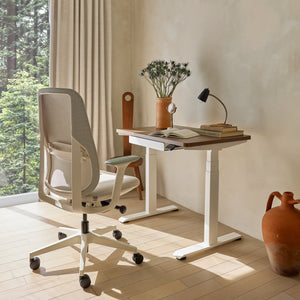
The most comfortable seating experiences happen when the chair is not fighting the desk. Leg clearance, surface depth, and visual lines all matter. Designs such as a considered functional office desk design aim to support natural posture by leaving room for knees and feet, offering a surface that invites proper monitor placement, and keeping essential tools within relaxed reach.
Adjustability is only half of the comfort equation. Materials influence how your body experiences the chair over time. We pay close attention to how fabrics, foams, and shells respond to real workday conditions.
If you tend to run warm while working, a breathable back helps prevent that heavy, overheated feeling that can develop over long sessions. Mesh and carefully ventilated backs allow air to move and keep moisture from building up. For colder offices, a more cushioned and upholstered profile may feel more inviting.
Seat foam is responsible for holding much of your weight, hour after hour. We aim for a balance that feels welcoming at first sit and remains supportive after repeated use. Softer foams may feel comfortable initially but can allow hips to sink too deeply, which disturbs alignment. Firmer, well contoured foam supports the sit bones while still providing enough give for comfort.
The contour of a chair can encourage healthier alignment even before you touch a lever. Slightly sculpted backs guide the spine into a neutral position. Subtle wing shapes can keep the torso centered without feeling restrictive.
We explore different silhouettes to match different personalities and spaces. For example, Muse chair design details show how a refined profile can bring a sense of calm structure to a room while still supporting everyday seating needs. In another direction, Seashell chair shape wraps gently around the back, offering a curved form that feels both supportive and visually soft. Both approaches are about more than style. They shape how the body settles, how the shoulders open, and how the back feels over time.
Even the best adjustable chair cannot help if the settings drift or if the chair gets moved and never recalibrated. We encourage a simple routine, something you can do in a few moments at the start of a day or after rearranging a workspace.
Use this as a repeatable checklist rather than a rigid rule. It is a framework you can refine as you become more familiar with how your body responds.
1. Begin with seat height. Sit down, place your feet flat, and adjust the height until your knees feel relaxed and free. Use how your ankles and hips feel as a guide.
2. Slide the seat forward or backward if your chair allows depth adjustment. Aim for a small gap behind the knees, with your thighs comfortably supported.
3. Lean back and move the lumbar support up or down. You are looking for a gentle lift in the small of your back, not a hard push.
4. Adjust the backrest recline and tension. Test small movements. You should be able to lean back and return without effort or surprise.
5. Set the armrests so that your shoulders drop naturally, and your forearms rest lightly when your hands are at the keyboard.
6. Position your monitor and keyboard afterward. Once the chair is tuned, moving your tools to match your posture is easier than the other way around.
We do not expect anyone to remember every control setting. Instead, we encourage a quick scan once or twice a day. Ask simple questions: Are my feet grounded. Are my shoulders relaxed. Am I leaning forward unnecessarily. When something feels off, start with the major adjustments again. Over time, this becomes second nature, and you will notice that small changes made early prevent larger discomfort later.
Comfortable seating does not eliminate the need for movement. In fact, we design our chairs to encourage it.
Recline functions, flexible backs, and smooth transitions between positions make it easier to shift your weight without breaking concentration. Rolling a few centimeters closer or farther from the desk, leaning back for a moment to breathe more deeply, or tilting slightly while thinking are all positive patterns. The chair should support these, not resist them.
Where you place things on your desk affects how your shoulders and spine behave. Items you use constantly should sit within a relaxed arm reach, without twisting or leaning. Less frequently used items can occupy outer areas. This layout reduces repeated stretching, which over the course of weeks can be just as fatiguing as a poorly adjusted chair.
Even with a well adjusted chair, giving your body time out of the seated posture is valuable. Short walks, light stretches, and occasional standing work can refresh muscles and circulation. The goal is not to avoid sitting altogether, but to make sitting one healthy part of a varied day.
As a furniture maker, we see a wide range of body types, work patterns, and aesthetic preferences. A good match respects all three.
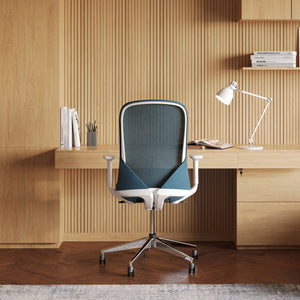
If you spend most of your day at a desk, features like adjustable lumbar support, thoughtful recline, and refined armrest controls will serve you daily. Designs that prioritize intuitive controls help reduce the friction between you and your ideal setup. A configuration such as Onyx ergonomic configuration illustrates how a focused set of adjustments can keep everything important within reach without feeling complicated.
Some rooms call for a strong visual statement. Others benefit from a quieter presence. We believe you should not have to choose between comfort and character. By exploring Urbanica’s chair assortment, you can see how different back heights, bases, shells, and upholstery choices influence both how a chair looks and how it supports you.
From our vantage point, a comfortable workday is not an accident. It is the result of small, informed decisions made about your chair, your desk, and your workspace as a whole. An adjustable day chair is central to that picture because it touches your body for so many hours. When it fits your proportions, supports your posture, responds to your movements, and aligns with your environment, the chair becomes quietly reliable. You sit down, adjust once or twice, and then you are free to focus on what matters, knowing that your body is supported for the day ahead.


You have unlocked free shipping!
You're saving $29 and unlocked free shipping!
Leave a comment