















Table Lamp Setup Ideas for Reading Corners, Sideboards, and Flexible Work Areas

A table lamp can change the way a room works. It can make a reading corner feel calmer, give a sideboard more height and warmth, or turn a flexible surface into a focused work zone without making the space feel overly technical. The best setups are not built around the lamp alone. They consider the chair, table height, wall color, surface clutter, nearby outlets, screen placement, and how the room shifts between daytime function and evening comfort.
In modern homes, one room often has to do more than one job. A living room corner may become a quiet reading spot. A dining sideboard may support entertaining, storage, and soft evening lighting. A compact desk may serve as a home office during the day and a writing, planning, or creative surface at night. Table lamps fit naturally into these flexible settings because they bring light closer to the activity without relying only on ceiling fixtures.
The strongest table lamp setups feel intentional. They offer enough light for the task, enough softness for the room, and enough restraint to let the furniture breathe.
Table Lamp Placement Starts With the Purpose of the Light
Before choosing a lamp shape or styling a surface, define what the light needs to improve. A lamp used for reading has different requirements than a lamp placed on a sideboard. A lamp used beside a laptop needs different positioning than one used only for evening ambience.
A table lamp generally serves one or more of three functions: task lighting, ambient lighting, and accent lighting. The clearest setups usually begin by choosing the primary role first, then supporting it with the right placement, bulb tone, shade shape, and surrounding furniture.
Task Lighting for Reading, Writing, and Focused Work
Task lighting supports a specific activity. In a reading corner, the lamp should fall across the page without shining directly into the eyes. On a desk, it should brighten the working surface without creating screen glare. Near a side table, it should make small actions easier, such as writing notes, setting down glasses, or reviewing printed material.
The most common task lighting mistake is placing the lamp too far away. A beautiful lamp loses practical value when the light does not reach the book, notebook, or keyboard area. For reading and desk use, the lamp should sit close enough to the activity to create useful illumination while still leaving comfortable surface space.
Ambient Glow for Softer Room Transitions
Ambient lighting is about atmosphere. A table lamp can soften a room after overhead lighting is turned off, create a lower visual plane, and make furniture feel warmer. This is especially valuable in living rooms, bedrooms, dining spaces, and open-plan interiors where ceiling lights can feel too broad or bright.
Warm, diffused light usually works best for ambience. Fabric shades, frosted glass, and translucent materials help spread the glow more evenly. The goal is not maximum brightness. The goal is a comfortable layer of light that makes the room feel settled.
Accent Lighting for Sideboards, Consoles, and Display Surfaces
Accent lighting draws attention to surfaces, textures, and shapes. A lamp on a sideboard can highlight wood grain, ceramics, framed art, wall texture, or the silhouette of a mirror. It can also add vertical structure to a low piece of furniture.
Accent lighting works best when the surrounding surface is edited. Too many decorative items around the lamp can weaken its visual impact. Negative space matters because it allows the lamp to feel like part of the composition rather than just another object on the surface.
A Practical Lighting Decision Table
| Setup Area | Primary Lamp Role | Best Placement Strategy | Common Mistake to Avoid |
|---|---|---|---|
| Reading corner | Task lighting with warmth | Beside or slightly behind the seated reader | Lamp positioned too low or too far from the book |
| Sideboard | Ambient and accent lighting | One side for asymmetry or paired lamps for balance | Overcrowding the surface with small decor |
| Flexible work area | Task lighting and visual zoning | Beside the screen or work surface, away from glare | Letting cords and devices dominate the setup |
| Entry console | Welcoming ambient light | Near a tray, mirror, or artwork | Using a bulb that feels too bright for the space |
| Bedroom desk | Multi-use task light | Compact lamp with clear writing space | Choosing a base that consumes too much surface area |
Reading Corner Lamp Setups That Support Comfort and Page Clarity
A successful reading corner feels easy to use. The chair is comfortable, the side table is within reach, and the lamp provides enough light without making the space feel clinical. The setup should invite longer reading sessions while still looking integrated with the rest of the room.
The lamp should support the reader, not simply decorate the corner. That means its height, shade direction, and distance from the chair all matter.
Position the Lamp Near the Reader’s Shoulder
For most reading corners, the lamp works best when placed beside or slightly behind the reader’s shoulder. This position allows light to fall across the page while keeping the bulb out of the direct line of sight. When the lamp is placed directly in front of the reader, it can feel visually sharp. When it is too far behind the chair, the reader may cast a shadow over the page.
A side table helps anchor this arrangement. The table should be high enough to keep the lamp useful, but not so tall that the shade sits awkwardly above the chair. A good rule is to check the lamp while seated, not while standing. Reading corners are experienced from chair height.
Match Lamp Height to the Chair and Side Table
A lamp that looks proportional on a showroom surface may not function well beside a deep lounge chair. Tall chairs, thick cushions, and wide arms can block light if the lamp is too short. A very tall lamp, on the other hand, may expose the bulb or create glare.
The ideal height depends on the chair, side table, and shade shape. A cone or tapered shade can help direct light downward, while a drum shade spreads light more evenly. If the reading corner is used at night, a warmer bulb can make the space feel more relaxed and less like a task station.
Keep the Reading Surface Clear
A reading corner often attracts small clutter: bookmarks, charging cables, notebooks, mail, pens, and extra reading material. The lamp setup works better when the side table remains open enough for a book, drink, glasses, and one or two essentials.
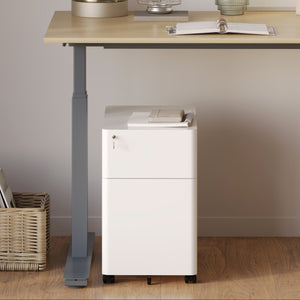
A reading corner feels more intentional when loose papers and small office items are stored nearby in a lockable filing cabinet instead of crowding the side table. Storage does not need to dominate the room. It simply needs to keep the lamp surface from becoming a catchall.
Build the Nook Around Reach and Routine
A strong reading corner is designed around natural movement. The lamp switch should be easy to access. The table should sit close enough that the reader does not need to lean forward. The chair should face the room, window, or view in a way that feels inviting.
A simple reading nook formula works well:
1. Place the chair first and test the seated angle.
2. Add a side table within easy reach.
3. Position the lamp beside or just behind the shoulder.
4. Choose warm, diffused light for evening use.
5. Keep storage nearby so the tabletop stays calm.
The result is a corner that looks composed and functions naturally.
Sideboard Table Lamp Ideas That Add Height, Balance, and Visual Depth
Sideboards, credenzas, and console tables are natural homes for table lamps because they benefit from vertical lift. These furniture pieces are often long and low, which means a lamp can add height, rhythm, and softness without requiring large-scale changes to the room.
A sideboard lamp does not need to be overly dramatic. In many interiors, the best result comes from a restrained lamp, a few well-chosen objects, and enough open space for the arrangement to breathe.
Use One Lamp When the Surface Needs Breathing Room
A single table lamp can work beautifully on a narrow sideboard or compact console. Placing it to one side creates asymmetry, leaving the rest of the surface available for a tray, vase, books, or a small bowl. This approach is especially useful in dining rooms, hallways, and apartment living areas where too many objects can make the surface feel busy.
The key is to balance the lamp with lower objects. If the lamp is tall, pair it with decor that sits closer to the surface. This contrast creates a natural visual slope rather than a crowded line of competing heights.
Choose a Pair of Lamps for Symmetry
A pair of lamps can work well when the sideboard sits beneath a large mirror, wide artwork, or centered wall feature. Matching lamps on both ends frame the furniture and create a formal sense of balance. This approach is common in dining rooms and entry areas because it gives the surface a finished architectural quality.
Symmetry should still feel edited. The space between the lamps does not need to be filled with many objects. A centered bowl, low arrangement, or sculptural piece may be enough.
Let Materials Control Visual Weight
Lamp materials influence how heavy or light the sideboard feels. Glass can add shape without blocking the eye. Metal can create definition and a sharper profile. Ceramic can bring softness and craft. Wood can warm the setting, especially when paired with painted or stone surfaces.
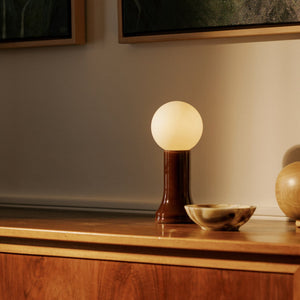
A narrow sideboard can gain sculptural interest without looking heavy when styled with the Shore recycled glass table lamp, especially when nearby decor stays minimal. A recycled glass form can add texture and reflection while keeping the overall surface visually open.
Sideboard Styling Reference
| Sideboard Goal | Lamp Setup Approach | Supporting Decor | What to Avoid |
|---|---|---|---|
| Add height | Use one taller lamp | Low tray, stacked books, small bowl | Several tall objects competing with the shade |
| Create balance | Use a matching pair | Centered mirror or artwork | Uneven clutter between lamps |
| Keep it airy | Choose glass or slim forms | Negative space and pale ceramics | Dense clusters of small accessories |
| Add warmth | Use diffused warm light | Textured wall art or natural materials | Cool, harsh bulbs in dining areas |
| Support entry use | Place lamp near a landing tray | Keys, bowl, small framed piece | Blocking the usable drop zone |
Flexible Work Area Lamp Setups for Desks, Dining Tables, and Hybrid Rooms
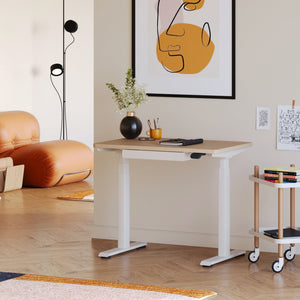
Flexible work areas need lighting that adapts. A dining table may become a laptop station. A bedroom desk may shift between work, planning, and personal use. A living room console may support short admin tasks. In these spaces, a table lamp helps define focus without permanently changing the room’s identity.
The best work-area lamp setups separate the surface into zones. This prevents the lamp, laptop, notebook, charger, and personal items from competing for the same space.
Separate the Screen Zone, Writing Zone, Lamp Zone, and Power Zone
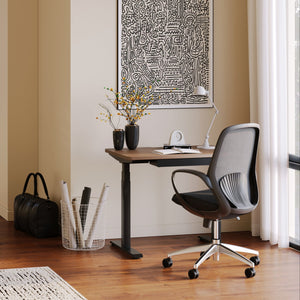
A flexible work surface becomes easier to use when every object has a logical place. The screen or laptop belongs in the central sightline. The writing zone should remain open near the front of the surface. The lamp should sit to the side, angled toward the work area but not aimed at the screen. Chargers and cords should stay close to the edge or back of the setup.
This kind of zoning makes a small surface feel larger. It also helps the lamp support the work instead of becoming another obstacle.
Raise the Laptop Before Adjusting the Lamp
Screen height affects lamp placement more than many people realize. If the laptop sits too low, the user may lean forward and place the lamp awkwardly to compensate. If the screen is raised, the lamp can sit beside the work area more naturally, and the surface becomes easier to organize.
A slim laptop stand helps create a cleaner screen height, making it easier to position the table lamp beside the work surface instead of letting light bounce awkwardly across the display. The goal is not to overcomplicate the desk. It is to make the essentials work together with less visual friction.
Keep Power Access Close but Visually Quiet
Work areas often become cluttered because the lamp, laptop, phone, and accessories all need power. When cords stretch across the surface, the lamp setup can quickly feel messy. A better approach is to plan where power enters the workspace and keep that point close to the items that need it most.
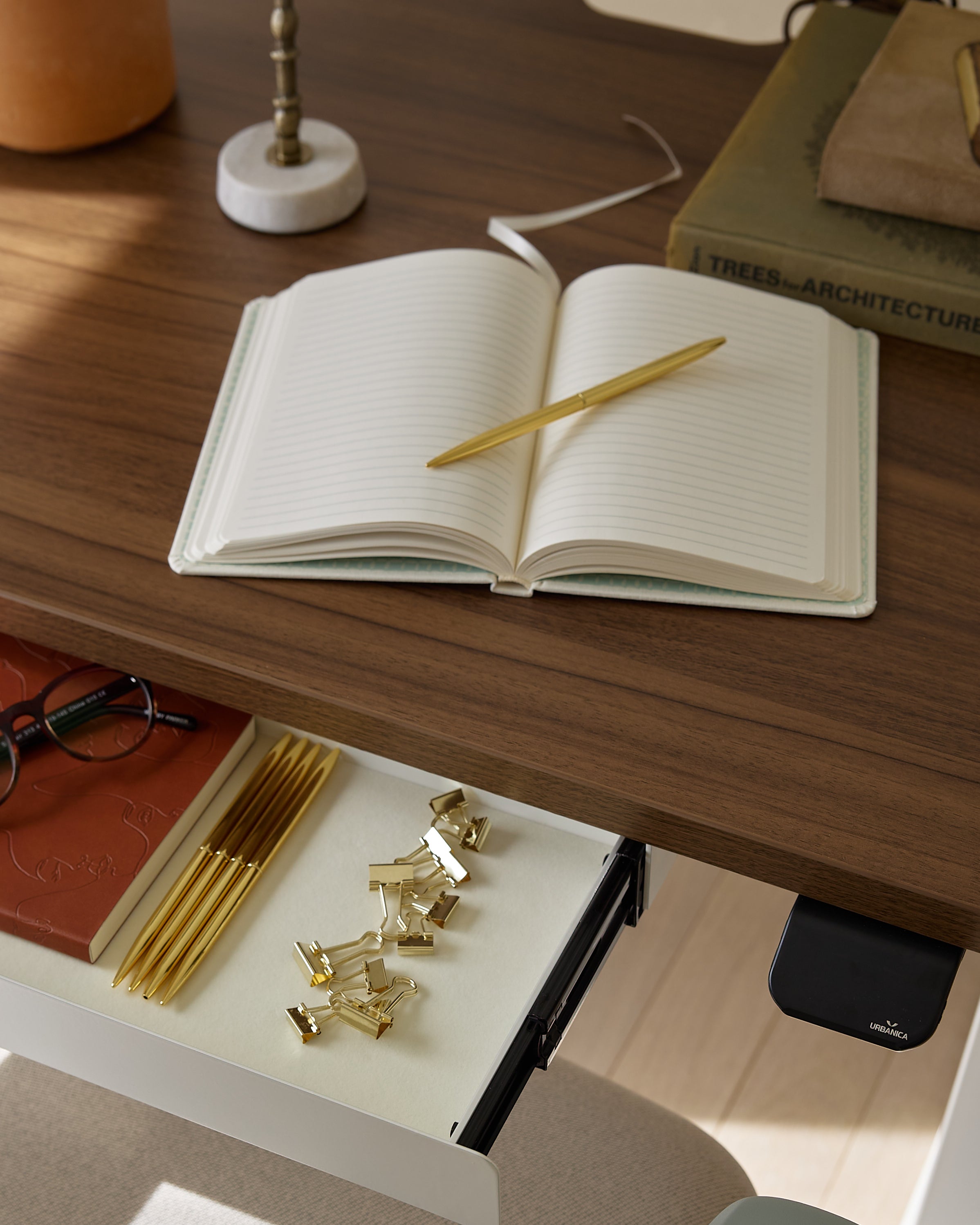
A dedicated desk can stay cleaner when the lamp, laptop, and device chargers connect through an in-desk power outlet rather than spreading cords across the full work surface. This supports a more organized setup without making the desk feel overly complex.
Use the Lamp as a Work Mode Signal
In shared rooms, lighting can signal a shift in use. Turning on a table lamp at a dining table or compact desk can mark the beginning of focused time. Turning it off helps the room return to its relaxed role.
This is especially useful in apartments, studios, and hybrid home offices where visual boundaries are limited. A lamp creates a zone through light rather than walls, dividers, or extra furniture.
Cord Management and Power Planning for Multi-Use Lamp Setups
Cord management is a practical part of table lamp styling. Even the best lamp can look unresolved if the cord crosses a walkway, hangs visibly from a sideboard, or competes with other charging cables on a desk. Planning power access early keeps the setup safer, cleaner, and easier to use.
A good cord path follows furniture lines. It should feel quiet and deliberate.
Route Cords Along Furniture Lines
Cords are least noticeable when they follow table legs, sideboard backs, wall edges, or desk panels. They become more distracting when they cut diagonally across open floor or hang loosely from the center of a surface.
For reading corners, the cord can often run behind the chair or along the wall. For sideboards, the best route is usually down the back of the furniture. For work areas, cords should move toward the rear or side edge rather than across the writing zone.
Choose Temporary Power Access for Changing Surfaces
Some surfaces change roles throughout the day. A dining table may support breakfast, laptop work, school tasks, and evening meals. A project table may need light and charging access only during certain hours. In these situations, permanent installation may not be the right fit.
When a dining table, shared desk, or project surface changes throughout the day, a clamp-on power outlet can support a lamp-and-device setup without requiring a built-in desktop solution. The value is flexibility: power can stay close to the activity while the surface remains adaptable.
Keep Practical Details Accessible
Hidden cords are helpful only when the setup remains easy to use. A plug should not be buried so deeply behind furniture that turning off or moving the lamp becomes frustrating. Leave enough slack for small adjustments, especially in flexible work areas.
A simple cord check can prevent common issues:
-
Does the cord cross a walking path?
-
Can it run behind a furniture leg or panel?
-
Is the outlet close enough to avoid tension?
-
Can the plug still be reached when needed?
-
Will the arrangement still work if the furniture shifts slightly?
Cord management should support daily life, not create a fragile setup that only works when nothing moves.
Choosing Table Lamp Materials and Shapes for Different Room Roles
The style of a lamp affects both function and atmosphere. Material, base shape, shade shape, and scale all influence how the lamp behaves in a room. A glass lamp may keep a sideboard airy. A metal lamp may suit a focused desk. A compact lamp may preserve surface space in a small corner.
The right choice depends on where the lamp sits and what the room needs from it.
Glass Lamps for Lightness and Reflection
Glass table lamps work well where visual openness matters. On a sideboard, glass can add form without making the surface feel crowded. In a small room, it can reflect light and preserve a sense of space. Clear or translucent materials are especially useful when the furniture below is visually heavy.
Glass also pairs well with wood, stone, and matte finishes because it introduces contrast without feeling loud.
Metal Lamps for Definition and Focus
Metal lamps often bring a cleaner, more defined profile. They can suit desks, work-adjacent corners, and minimal interiors where the lamp needs to feel precise. A slim metal body can provide structure without taking up too much visual space.
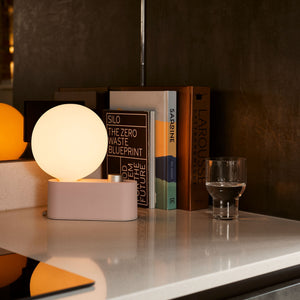
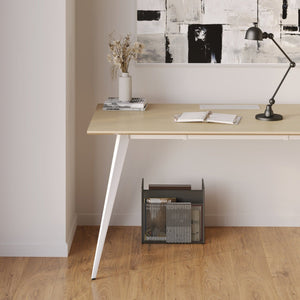
The Alumina LED lamp fits work-adjacent or compact zones where a table-and-wall lighting design can support a more adaptable setup. Its role is best understood as flexible lighting for spaces that may not rely on one fixed furniture arrangement.
Shade Shape Should Match the Lighting Job
Shade shape changes how the light spreads. A drum shade usually distributes light more evenly, which works well for sideboards and consoles. A cone or tapered shade directs light downward, making it useful for reading corners. A globe shade softens the glow and can act more like an accent piece. A slim shade can suit compact desks where visual weight needs to stay low.
| Lamp Feature | Best Placement | Why It Works |
|---|---|---|
| Glass base | Sideboards and compact rooms | Adds shape without heavy visual weight |
| Metal body | Desks and modern work areas | Creates a crisp, defined profile |
| Drum shade | Consoles and sideboards | Spreads softer ambient light |
| Cone shade | Reading corners | Directs light toward the page or surface |
| Compact base | Small side tables | Preserves room for daily essentials |
Small-Space Table Lamp Strategies for Apartments, Studios, and Shared Rooms
Small spaces benefit from table lamps because they define areas without adding bulk. A lamp can make a corner feel like a reading nook, a sideboard feel like an evening focal point, or a compact desk feel ready for focused work.
The key is proportion. A lamp should strengthen the purpose of the surface without overwhelming it.
Use Light to Define Zones Without Adding Furniture
In a studio or open room, a lamp can create a boundary through brightness and mood. A chair with a side table and lamp becomes a reading area. A console with a lamp becomes an entry moment. A desk with a focused lamp becomes a work zone even when it sits in a bedroom or living area.
This approach keeps the room flexible. Instead of adding partitions, the lighting helps each area feel distinct.
Let a Sideboard Lamp Do More Than One Job
A sideboard lamp can support dining, entry, display, and evening ambience at once. In compact homes, this multi-use value matters. The lamp may provide a welcoming glow near the front door, soft light during dinner, and a visual anchor when the rest of the room is dim.
To keep the setup clean, limit the objects around it. A tray, bowl, vase, or framed piece may be enough. The more jobs a sideboard does, the more important surface restraint becomes.
Keep Work Areas Cohesive With the Furniture Around Them
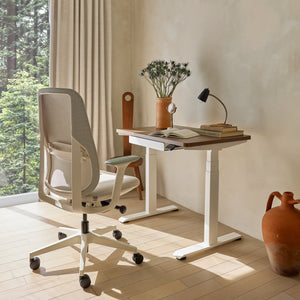
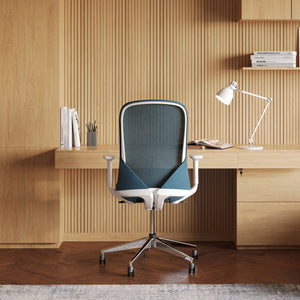
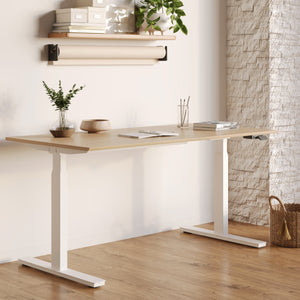
A table lamp should not feel like an afterthought in a home office or hybrid work zone. It should relate to the desk, chair, storage, power access, and accessories. A more cohesive workspace comes from pairing lighting decisions with ergonomic office furniture and accessories, so the lamp supports the broader setup instead of feeling added at the end.
This is especially important in visible work areas. When a desk sits in a living room or bedroom, every item affects the room’s overall calm. The lamp should support focus while still fitting the surrounding interior.
Table Lamp Setup Mistakes That Make Rooms Feel Dim, Crowded, or Unfinished
Many table lamp issues come from placement rather than the lamp itself. A well-made lamp can still feel wrong if it is too far from the task, too large for the surface, too bright for the room, or surrounded by clutter.
Avoiding these common mistakes helps the setup feel more polished and more useful.
Placing the Lamp Too Far From the Activity
A reading lamp should serve the book. A desk lamp should serve the work surface. A sideboard lamp should serve the furniture composition. When the lamp is placed too far from its purpose, it becomes decorative but not helpful.
Test the lamp from the actual position where it will be used. Sit in the chair. Open the laptop. Stand near the sideboard in the evening. The right placement often becomes obvious once the room is experienced naturally.
Choosing Bulbs That Feel Too Cool or Too Bright
Bulb tone affects comfort. Cool light can feel sharp in reading corners and dining areas, while overly bright bulbs can flatten the atmosphere of a sideboard. Warmer light is often better for relaxation and ambience, while clearer task lighting may be useful near work areas.
The safest approach is to match brightness and tone to the room’s purpose. A lamp used for evening calm should not feel like overhead office lighting. A lamp used for focused work should not be so dim that it causes strain.
Crowding the Lamp With Too Many Objects
A lamp needs space around it. This is especially true on sideboards and small tables. When too many small items gather near the base, the lamp loses its presence and the surface feels unresolved.
Use fewer objects with stronger intention. A small stack of books, a tray, a ceramic bowl, or a vase can support the lamp without competing with it. Negative space is part of the setup, not empty space waiting to be filled.
Ignoring Scale and Surface Proportion
An oversized lamp can overwhelm a small side table. A tiny lamp can disappear on a long sideboard. A bulky base can consume valuable desk space. Scale should be judged by both appearance and usability.
For sideboards, consider the length of the surface and the height of nearby wall decor. For reading corners, judge scale from the seated position. For desks, prioritize a footprint that leaves enough room for the actual work.
A Practical Table Lamp Setup Framework for Reading, Display, and Work
A useful table lamp setup can be planned with a few clear decisions: where the light is needed, what surface supports it, how the cord reaches power, and what surrounding objects should stay or go. This framework applies across reading corners, sideboards, and flexible work areas.
Reading Corner Setup Checklist
-
Place the lamp beside or slightly behind the reader.
-
Check the light from a seated position.
-
Use a warm, diffused bulb for evening comfort.
-
Keep the side table open enough for daily essentials.
-
Store papers, extra books, and devices away from the lamp base.
-
Make sure the switch is easy to reach.
Sideboard Setup Checklist
-
Decide whether one lamp or a pair best fits the furniture.
-
Leave negative space around the lamp.
-
Match lamp height to nearby art, mirror, or wall scale.
-
Use a small number of supporting objects.
-
Choose a bulb that creates ambience rather than glare.
-
Keep cords hidden along the back of the furniture.
Flexible Work Area Setup Checklist
-
Keep the lamp outside the primary typing or writing zone.
-
Position it to the side of the screen rather than directly behind it.
-
Raise the laptop or monitor before adjusting lamp placement.
-
Keep charging access close to the work surface.
-
Route cords along furniture edges.
-
Choose a lamp profile that supports focus without adding clutter.
One-Room Planning Reference
| Room Type | Best Lamp Priority | Setup Strategy |
|---|---|---|
| Living room corner | Reading comfort | Lamp beside the chair with warm task light |
| Dining sideboard | Ambient balance | Single sculptural lamp or a restrained pair |
| Bedroom desk | Flexible task lighting | Compact lamp with clear surface space |
| Studio apartment | Zone definition | Lamp marks reading, work, or entry areas |
| Home office | Focus and cord control | Lamp paired with organized power access |
Thoughtful Table Lamp Setups Make Everyday Corners More Comfortable and Complete
A table lamp works best when it is chosen and placed as part of the room’s daily rhythm. In a reading corner, it should support the body, the book, and the quiet mood of the space. On a sideboard, it should add height, glow, and balance without overwhelming the surface. In a flexible work area, it should help define focus while respecting screen placement, power access, and surface clarity.
The strongest setups are simple but considered. They place light where people actually need it. They leave enough room for ordinary use. They manage cords before they become distracting. They use materials and shade shapes that match the job of the lamp.
When placement, proportion, light quality, and furniture planning work together, a table lamp becomes more than a finishing touch. It becomes the detail that makes a corner easier to use, a sideboard more expressive, and a flexible work area feel calm, capable, and complete.
Leave a comment