









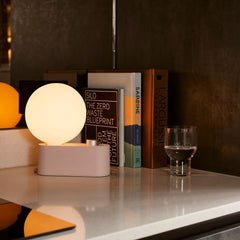
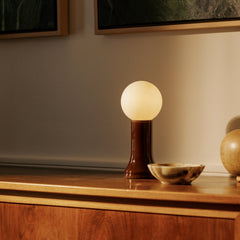

Table Lamp Buying Guide: What to Look For Beyond Just Style
Choosing a table lamp takes more than finding the right style. This buying guide explains how to evaluate lamp height, shade type, brightness...
Learn more
Visit quiz page to see how we makes it easy to create an inspiring workplace


“Standard” desk chair height usually refers to a typical adjustable seat height range that fits many people, not a perfect one-size-fits-all setting. What matters more than the number on paper is what happens when you sit down: your cushion compresses, your pelvis settles, and your legs either feel grounded or start compensating.
A dependable ergonomic target is simple to feel in your body:
Feet fully supported so your legs are not searching for stability.
Knees comfortably bent without pressure behind the knee.
Hips level or slightly higher than knees so the pelvis can stay neutral instead of tucking under.
If you hit those, your “standard” height is correct for you, even if it does not match what someone else calls standard.
Chair listings often show a seat height range, but that is typically measured to the top of the seat at rest. In real use, foam and suspension compress. Two chairs set to the same height can feel different because one sits firmer and one sinks more.
Adjust while seated. Set height while you are actually sitting in your normal work posture.
Measure from the floor to where your sit bones actually land, not the highest point of a plush cushion edge.
If you only chase a number, you can end up with a setup that looks right but feels wrong after an hour. Angles keep you honest:
Knee angle: close to 90 degrees, give or take. A little more open is often comfortable.
Hip angle: slightly open is often better than tightly closed.
Ankle position: foot flat and stable, not tiptoed or drifting forward.
1. Desk height: A fixed desk can force compromises if it is too high or too low.
2. Foot support: Footwear, slippers, barefoot days, and footrests all change leg geometry.
3. Seat depth and back support: If your seat is too deep or your back support encourages slouching, you will slide, and sliding changes effective height.
At Urbanica, we look at chair height as one part of a system. When the system is tuned in the right order, your body stops negotiating with your furniture all day.
Your feet are your foundation. If they are not supported, everything above compensates.
Full sole contact, not just toes.
Weight distributed across heel and forefoot.
No foot gripping or toe clenching to stay steady.
If your feet do not reach the floor comfortably at a height that makes your desk usable, add a footrest or platform. Do not force a too-high seat just to meet a tall desk.
Raise or lower the chair until your feet feel stable and your knees are comfortably bent.
Slide two fingers into the space between the front edge of the seat and the back of your knee. You want light contact or a small gap, not a compressed pinch. Pressure here can create tingling, numbness, or restless leg shifting.
If the chair cannot go low enough, use a footrest instead of perching.
If the chair cannot go high enough, you may need a different chair range, or you may need to address desk height so you are not forced upward.
Seat depth determines whether your thighs are supported without cutting circulation. If the seat is too deep, you will scoot forward to reach the backrest. That scoot changes where your pelvis sits and makes your “correct height” feel wrong.
With your back supported, aim for a small gap between the seat edge and the back of your knee. If there is no gap and you feel pressure, you will likely slide forward. If the gap is huge and you feel unsupported, you may slump.
A neutral pelvis is a quiet pelvis. When it is stable, your spine stacks more naturally and your chair height holds steady.
If you find yourself tucking your tailbone and rounding your lower back, a small recline adjustment and proper lumbar contact can reduce the urge to slump.
If your chair height is right for your legs but your shoulders are creeping up, do not ignore that signal. It usually means your desk surface is too high relative to your seated position.
Adjust in this order:
1. Lower armrests so shoulders can drop.
2. Bring keyboard and mouse closer so elbows stay near your sides.
3. If needed, raise the seat slightly and add a footrest to preserve leg support.
1. Sit back so your hips are fully on the seat.
2. Place both feet flat and centered under your knees.
3. Adjust seat height until your feet feel stable and knees bend comfortably.
4. Check behind-knee pressure and reduce it if you feel pinching.
5. Adjust seat depth so your thighs are supported without cutting circulation.
6. Set back support so your pelvis feels neutral and your lower back is supported.
7. Place keyboard and mouse so elbows stay close and wrists feel straight.
8. Set armrests only if they support forearms without lifting shoulders.
Starting points are helpful, but they are not the finish line. Use a starting range, then validate with comfort and angles.
| User height | Seat height starting range (in) | Seat height starting range (cm) | Confirm it’s correct with these checks |
|---|---|---|---|
| Under 5'2" (157 cm) | 15 to 17 | 38 to 43 | Feet fully supported, no toe pressure, knees not flared outward |
| 5'2" to 5'6" (157 to 168 cm) | 16 to 18 | 41 to 46 | Light behind-knee contact, hips level or slightly above knees |
| 5'6" to 6'0" (168 to 183 cm) | 17 to 20 | 43 to 51 | Thighs supported, pelvis neutral, no forward slide to reach backrest |
| Over 6'0" (183 cm) | 18 to 22 | 46 to 56 | Knees clear desk underside, no knee squeeze, feet still stable |
These ranges assume an average desk height and a chair with a typical seat pan. Cushions, shoes, and seat depth will shift your best number.
When feet do not reach comfortably, people often slide forward or perch on the seat edge. Both reduce back support and can create neck strain later. A stable foot platform is often the most ergonomic fix for a too-high desk.
Taller users often chase knee clearance under the desk and end up lowering the chair too much, which can push knees above hips and encourage pelvic tuck. The better target is a seat height that keeps hips open enough while ensuring the desk height supports relaxed shoulders.
Switching from thick-soled shoes to barefoot can shift your leg angles enough to notice. If your posture suddenly feels off, re-check foot support and behind-knee pressure before changing anything else.
Chair height does not exist in isolation. The desk dictates where your arms must land, and your chair must support your legs without forcing your shoulders into tension.
If the desk is too high, the risky path is shrugging your shoulders up to reach your keyboard. That tension often turns into neck fatigue and headaches.
Raising the seat can help elbows meet the work surface, but only if you protect foot support with a footrest or platform. This keeps your legs stable while your arms stay relaxed.
Lowering the seat can keep feet grounded, but then the screen can become too low. Raise the monitor rather than rounding your back down to meet it.
An adjustable desk makes it easier to respect both leg support and arm comfort. When we talk about sit-stand ergonomics, the goal is not to chase constant movement. It is to give your body more than one comfortable posture across the day.
A setup like the Urbanica Standing Desk supports this approach because you can dial in a seated elbow-friendly height and a standing elbow-friendly height without forcing your chair into compromises.
Two people sharing a desk often default to a middle setting that fits nobody. A better strategy is to treat the workstation like two quick-change stations.
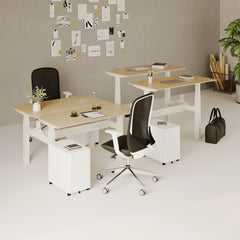
A surface designed for shared use, like the Two-Person Standing Desk, makes it easier to preserve independent comfortable heights, especially when each person saves their own seated and standing presets.
Once legs and chair height are stable, the upper body should feel supported, not held in position by tension.
A monitor that is too low often forces a forward head posture, even if chair height is perfect.
Eyes should land naturally on the upper portion of the screen without craning.
Screen distance should allow relaxed focus without leaning forward.
If you use a laptop, consider a stand plus an external keyboard and mouse so chair height is not sacrificed to see the screen.
Hands should reach the keyboard and mouse without extending wrists upward or reaching forward from the shoulders.
Keep keyboard close enough that elbows rest near your sides.
Keep mouse close to the keyboard so it does not drift into a reach position.
Armrests help when they support forearms lightly without lifting shoulders. They hurt when they become a shelf that forces shoulder elevation, or when they block you from pulling close to the desk.
If armrests keep you from getting close enough to the keyboard, lower them or move them out of the way and let the desk height and keyboard placement do the work.
Two chairs can be set to the same height and still create different body mechanics.
Soft cushions compress more, which can reduce leg support and encourage pelvic tuck. Firmer seats can feel higher but often keep thigh support more consistent.
A gentler front edge can reduce pressure behind the knee at the same height, which helps circulation and comfort during long sessions.
When a chair supports your pelvis and lets you fine-tune fit, you are less likely to shift forward and lose the height you set.
For example, the Novo Chair is positioned as an ergonomic office chair, and in setups where users alternate between tasks, adjustability can help keep the body aligned rather than constantly resetting posture.
Comfort should not mean sinking into a posture that collapses alignment. A chair like the Onyx Chair is presented as an ergonomic office chair option, and the practical takeaway is this: choose support that maintains a stable pelvis, then refine comfort through fit and micro-adjustments.
Ergonomics becomes easier when you treat discomfort as feedback instead of something to push through.
Toes carrying weight instead of full-foot contact
Sliding forward to find stability
Pressure behind the knee or numbness in lower legs
Hips feeling pinched, especially at the front
Knees rising above hips
Tailbone tucked under and low back rounding
Shoulders rounding forward and neck drifting toward the screen
Feeling “compressed” at the hips after sitting
Add a stable foot platform when raising the seat to meet a tall desk.
If the desk is low, lift the monitor rather than lowering yourself into a slouch.
Re-center keyboard and mouse to reduce forward reach.
Use a cushion only if it helps you achieve stable angles without increasing behind-knee pressure. If a cushion makes you perch and slide, it is not helping.
The “perfect” chair height can shift slightly with the kind of work you do, because tasks change where your arms and eyes spend time.
Typing-heavy days reward a setup where elbows stay close and wrists remain neutral. If you notice shoulder creep, the desk surface may be too high relative to your seat height. Preserve leg support first, then bring the keyboard down through positioning or accessories rather than forcing a lower chair.
Design and editing often increase mouse time, and mouse reach becomes the culprit. Keep the mouse close and avoid reaching from the shoulder. A small change in mouse position can do more than a large change in chair height.
People often perch forward during calls, especially when using a laptop camera. Keep the back supported and bring the camera to you instead of bringing your head to the camera.
A chair can be beautiful and still respect ergonomic fundamentals, as long as it supports stable leg angles and a neutral pelvis.
If you want a chair that elevates the space and still supports daily work, focus on functional basics like seat height range, stable support, and a posture that does not push you into constant forward lean.
The Muse Chair is presented as an adjustable office chair option, and the practical ergonomic principle remains the same: adjustability should help you keep feet supported, hips stable, and shoulders relaxed.
Some chairs are better suited for lighter desk sessions or shared work areas. When seating is occasional, the desk setup often needs to do more of the ergonomic work. Keep the screen at a neck-neutral height and keep input devices close to reduce reach.
The Seashell Chair is positioned as a supportive seat option, and in occasional desk use, support is most effective when chair height and desk layout prevent sliding and shoulder tension.
Compact foot support that disappears under the desk
A slim monitor riser that keeps the screen at the right height
Cable control that keeps the keyboard and mouse zone uncluttered and easy to keep close
Ergonomics falls apart when your home setup and office setup feel like two different worlds. Consistency comes from recreating angles, not from recreating identical furniture.
When switching locations, re-check in this order:
1. Feet supported and stable
2. Seat height for comfortable knees and open hips
3. Seat depth and back support
4. Keyboard and mouse close enough for relaxed shoulders
5. Monitor height that does not pull your head forward
From our perspective at Urbanica, the most reliable ergonomic investments are the ones that fit real bodies and real routines. Before settling on a chair or desk, look for:
A usable seat height range for your body
Seat comfort that does not force sliding or perching
Back support that helps a neutral pelvis
Adjustability that you will actually use, not controls you ignore
For shoppers who want clarity on what is available and how support works from selection to delivery, the Urbanica office furniture service FAQ lays out key details in one place, which helps set realistic expectations before a workspace change.
Even a great setup benefits from micro-resets:
Let your hips settle back into the chair when you notice forward drift.
Keep feet supported whenever you change seat height.
Re-check behind-knee pressure when you change shoes or add a cushion.
When chair height becomes a simple habit of checking foot support, knee comfort, and shoulder relaxation, desk ergonomics stops feeling like a complicated project and starts feeling like a steady baseline you can rely on.


You have unlocked free shipping!
You're saving $29 and unlocked free shipping!
Leave a comment