





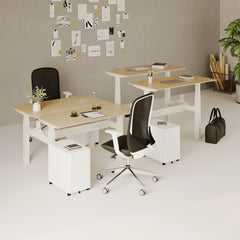
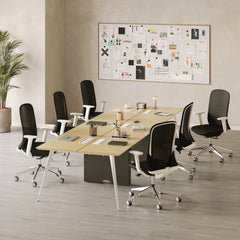






How Team Desks and Panels Create Better Daily Work Zones
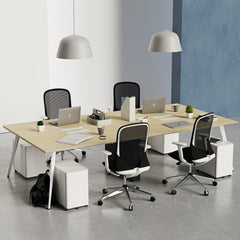
Team desks and workstation panels do more than organize seating. Together, they define personal work areas, manage sightlines, support smoother cir...
Learn more

Visit quiz page to see how we makes it easy to create an inspiring workplace


A cluttered desk is often treated as a storage problem, but the real issue may be the way screens occupy the surface. A monitor with a broad base, an open laptop, a separate keyboard, charging equipment, and loose cables can consume the most useful part of a workstation before the workday begins.
Monitor and laptop stands address that problem by using vertical space. Raising a laptop can open room for a keyboard or notebook. Supporting a monitor above the desktop can reduce the space taken up by its original base. Thoughtful positioning also helps define where work happens, where accessories belong, and where temporary objects should go.
The strongest setup is not necessarily the one with the most equipment. It is the one that gives every screen a clear role while preserving enough open surface for the work that happens in front of it.
Desktop clutter includes more than scattered pens and paperwork. Large equipment creates invisible boundaries that restrict how the remaining space can be used.
A monitor base may occupy a modest area, but it can block the space behind the keyboard, interfere with notebooks, and force accessories toward the desk edges. An open laptop creates another footprint through its screen angle, keyboard, charging cable, and the space needed to access its ports.
When those footprints overlap, even a reasonably sized desk can feel crowded.
A desk can be wide without being functional. What matters is the uninterrupted area available for typing, writing, reading, and moving between tasks.
A practical workstation usually needs three distinct zones:
1. Display zone: The monitor, elevated laptop, webcam, and any screen-mounted accessories.
2. Active-work zone: The keyboard, mouse, notebook, and materials being used now.
3. Transition zone: A small area for a phone, drink, charging device, or item that will soon leave the desk.
Problems begin when the display zone spreads into the active-work zone or when the transition zone becomes permanent storage.
A stand changes the geometry of a workstation. Instead of allowing a laptop or monitor to occupy a broad horizontal area, it gives the screen a defined elevated position.
The open area created beneath or in front of the device can then serve a specific purpose. A keyboard may slide partially beneath a raised laptop when the desk is not in use. A notebook can remain open without competing with a monitor base. Frequently used accessories can stay within reach without being placed directly in the center.
This is functional organization rather than visual minimalism. The goal is not to remove everything from sight. The goal is to make the desk easier to use.
Laptop users do not all need the same type of support. Some workstations change throughout the day, while others remain in one carefully arranged position.
The right choice depends on how often the laptop moves, whether an external keyboard is used, and how much space must remain available for other tasks.
A laptop may serve as a primary computer during focused work, a camera during video calls, a secondary screen beside a monitor, or a portable device that leaves the desk regularly. An adjustable stand is useful when those activities call for different screen positions.
A height-adjustable laptop support can provide more flexibility than a fixed platform when the screen needs to be raised or repositioned. The adjustment should serve a practical purpose, such as improving the viewing angle, aligning the laptop more naturally with another display, or creating clearance for input devices.
The stand should still fit within the desk’s overall layout. A highly adjustable design does not help if it is placed so far forward that it crowds the keyboard.
Raising a laptop screen changes the position of its built-in keyboard and trackpad. If the device is elevated significantly, continuing to type directly on it may require an uncomfortable reach.
A separate keyboard and mouse allow the screen and input devices to be positioned independently. The laptop can remain higher and farther back while the keyboard stays within the active-work zone.
This separation also makes the reclaimed space more useful. The keyboard can be centered with the user rather than centered with the laptop chassis, which is especially helpful when the laptop sits beside a larger monitor.
Not every workstation needs frequent adjustment. A dedicated home office, study station, or reception desk may benefit more from a stable laptop position that remains consistent each day.
A slim aluminum laptop stand fits naturally into a setup where the laptop has one established location. Its purpose is straightforward: elevate the computer, define its footprint, and keep the device from spreading across the center of the desk.
A fixed arrangement can also make daily resets easier. When the stand, keyboard, and mouse always return to the same positions, clutter becomes more noticeable and easier to correct.
More adjustment is not automatically better. Moving components can be useful, but they can also encourage constant changes that never result in a settled layout.
A simpler stand may be the stronger choice when:
One person uses the desk consistently.
The laptop remains in the same location.
The screen angle rarely changes.
A separate keyboard and mouse are already part of the setup.
Visual restraint matters more than maximum flexibility.
The best laptop stand idea is the one that supports actual work habits, not the one with the longest feature list.
A conventional monitor stand places the display securely on the desk, but its base can occupy valuable central depth. An arm shifts that support away from the immediate work surface.
An ergonomic monitor arm can help create a more open display zone by lifting the screen above the desktop. The available space beneath the monitor may then accommodate a notebook, keyboard, or a temporarily connected device.
The improvement depends on placement. A monitor that floats above the desk but sits too far forward can still make the workstation feel cramped.
A successful monitor-arm layout creates open space while keeping the display at a practical viewing distance. The screen should not force the keyboard toward the front edge or require the user to lean backward to see the full display.
Before settling on a position, consider:
The monitor’s width and depth
The arm’s mounting location
Clearance between the desk and wall
Space needed for the keyboard and mouse
The direction the screen must move
The cable path through the full adjustment range
A monitor arm saves meaningful space when it allows the screen to remain stable, comfortably positioned, and clear of the main work area.
Dual-screen setups often become cluttered because both displays are treated as equally dominant. That can create excessive width, large viewing angles, and additional equipment in the center of the desk.
Identify the primary display first. Place it closest to the natural forward sightline. The secondary screen can sit slightly to one side and angle inward.
For a laptop-and-monitor arrangement, the laptop usually works best as the secondary display. It can hold communication tools, reference material, or supporting documents while the main monitor carries the focused task.
Different supports solve different forms of clutter. Some create space beneath a device. Others reduce surface contact or make a screen easier to reposition.
| Screen support | Desktop footprint | Adjustment level | Best-fit setup | Main space advantage | Practical consideration |
|---|---|---|---|---|---|
| Adjustable laptop stand | Small to moderate | High | Flexible or shared laptop desk | Raises the laptop and can open space below | Usually works best with separate input devices |
| Fixed laptop stand | Small | Low | Dedicated laptop station | Establishes a compact, repeatable device zone | Offers less flexibility between users |
| Monitor riser | Moderate | Low | Storage-focused workstation | Creates a shelf-like area below the monitor | Still occupies desktop depth |
| Monitor arm | Minimal surface contact | High | Monitor-centered desk | Removes the conventional monitor base | Requires compatible mounting conditions |
| Vertical laptop holder | Very small | Minimal | Closed-laptop setup | Stores the laptop on its edge | Does not support use of the laptop screen |
A narrow desk may need more horizontal room. A shallow desk may need greater distance between the screen and keyboard. A writing-heavy workspace may need an open area beneath the display.
Those needs lead to different choices:
Choose a laptop stand when the open laptop occupies the central surface.
Choose a monitor arm when the monitor base blocks useful depth.
Choose a riser when under-screen storage is more important than adjustability.
Choose vertical storage when the laptop remains closed and connects to another display.
This needs-based approach prevents the stand itself from becoming another object that adds complexity without solving the original problem.
Screen supports cannot compensate for every desktop limitation. A stand may fit physically while leaving too little room for comfortable work.
When evaluating office desks and team workstations, consider the equipment arrangement rather than looking only at overall width. The surface must accommodate the display zone, active-work zone, and cable route without forcing them to overlap.
Depth affects how far the screen can sit from the front edge. It also determines whether the keyboard can remain in a comfortable location without touching the monitor stand or laptop support.
Measure three areas before changing the setup:
1. The distance from the front edge to the planned screen position
2. The width needed for every active display
3. The clear area required for the keyboard, mouse, and forearms
Also account for objects behind the desk. A wall, panel, shelf, or window ledge may limit how far a monitor arm can extend or how easily cables can turn toward an outlet.
Place the elevated laptop near the rear center of the desk. Keep the external keyboard directly in front of it and route the charging cable toward one rear corner.
This arrangement works well when the desk must support both digital and handwritten work. The keyboard can move aside when a notebook or document becomes the primary task, while the laptop remains elevated and visible.
Center the monitor with the seated position and place the raised laptop on the less dominant side. Angle the laptop slightly inward so information can be viewed without excessive head movement.
Keep adapters, docks, and permanent connections behind the display zone whenever access allows. Avoid placing them in the gap between the keyboard and screens, where they interrupt the active-work area.
Choose between a symmetrical arrangement and a primary-secondary arrangement based on actual use.
Symmetry works when both screens receive similar attention. A primary-secondary layout is usually clearer when one application dominates the workday. In that case, center the main screen and angle the other toward it.
The screens should feel like one coordinated display zone, not two separate stations competing for desk width.
Raising a laptop or monitor can expose cables that were previously hidden behind the device. Without a cable plan, the desk may gain physical space but look less organized.
The simplest approach is to give permanent cables one predictable exit path. Power and display connections can move toward the same rear section of the desk, while chargers that leave the workstation remain accessible.
Permanent cables include monitor power, display connections, dock power, and desk lighting. These can usually follow a stable route.
Occasional cables include phone chargers, external-drive connections, and presentation adapters. They need convenient access but should not remain spread across the surface.
Travel cables leave with the laptop or another mobile device. Store them where they can be removed without disturbing the permanent setup.
Follow this order:
1. Place the monitor and laptop stand.
2. Test the normal viewing and working positions.
3. Move adjustable components through the range that will actually be used.
4. Connect permanent cables with enough slack for necessary movement.
5. Direct excess length away from the keyboard and mouse area.
6. Keep frequently removed connections easy to identify and reach.
7. Securing cables too early can limit adjustment or pull equipment out of position.
Desk clutter often returns because the computer desk is expected to support every activity. Meetings bring extra notebooks, drinks, guest devices, and printed materials into an area already occupied by screens and input equipment.
A round table for small-group meetings creates a separate destination for short discussions, reviews, and collaborative tasks. That separation allows the monitor-and-laptop desk to remain focused on individual computer work.
The purpose is not to add furniture without a plan. It is to stop shared activities from repeatedly displacing the keyboard, mouse, and screen arrangement.
An ergonomic conference chair belongs naturally in a dedicated meeting or collaborative area. When visitors have an obvious place to sit, they are less likely to gather around the primary workstation or place bags and materials beside the monitor.
This distinction also simplifies cleanup. Meeting notes remain with the meeting area, while the desk retains its established display and active-work zones.
Compact rooms, studios, loft workspaces, and shared offices place greater pressure on every surface. Furniture may need to support focused work without visually dominating a multipurpose room.
Collections of office furniture for studios and coworking spaces can help frame the workspace as a coordinated environment rather than a collection of unrelated pieces. Consistent proportions, defined equipment zones, and controlled cable routes become especially important when several people or activities share the room.
The area created by an elevated screen is valuable because it remains available. Filling it with documents, chargers, and unopened mail simply replaces one form of clutter with another.
Assign that space a specific role. It may hold the keyboard when the desk is inactive, support a notebook during focused work, or remain empty to preserve visual breathing room.
Avoid using multiple catch-all containers. One small transition tray can be useful, but several trays often make temporary objects feel permanent.
A simple reset keeps the stand from becoming another shelf:
1. Remove objects unrelated to the current workspace.
2. File completed paperwork instead of stacking it beneath a screen.
3. Return the keyboard and mouse to their defined positions.
4. Move occasional charging cables back to their assigned route.
5. Clear the area beneath elevated equipment.
6. Return meeting materials to the collaboration zone.
7. Leave one usable section of the desktop completely open.
When clutter repeatedly returns to the same spot, examine the layout rather than adding another organizer. The monitor may be too far forward, the laptop may need a clearer secondary position, or the desk may not provide enough depth for the equipment.
Effective monitor and laptop stand ideas begin with one decision: identify the primary screen and give it the right position. From there, the secondary display, keyboard, mouse, cables, and temporary objects can be arranged around a clear hierarchy.
A stand should create usable space, not merely lift a device. A monitor arm should improve the display zone, not push the screen into the work area. An open section of desk should remain available for the tasks that cannot happen on a screen.
When screen placement, desktop dimensions, and daily habits support one another, less desk clutter becomes easier to maintain without constant rearranging.


You have unlocked free shipping!
You're saving $29 and unlocked free shipping!
Leave a comment