



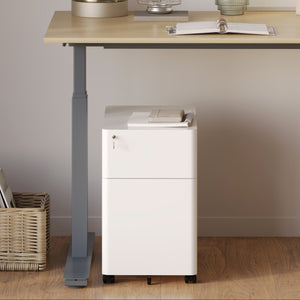






















Reception Area Furniture That Doubles as Guest Seating Today
Reception area furniture should do more than fill a waiting room. The right mix of guest chairs, compact tables, device-friendly accessories,...
Learn more
Visit quiz page to see how we makes it easy to create an inspiring workplace


Modular conference furniture has become one of the most practical ways to make meeting spaces work harder without making them feel crowded, fixed, or outdated. A single room may need to support leadership discussions in the morning, a project review before lunch, a hybrid call in the afternoon, and a small team workshop before the day ends. That kind of flexibility depends on more than movable tables or a clean floor plan. It depends on seating that can keep up with the room.
Chairs often get treated as the final layer of conference room planning, but they influence nearly every part of the meeting experience. They affect how easily people enter and leave the room, how long they can stay focused, how quickly a layout can be reset, and how professional the space feels to visitors. When modular conference furniture is paired with uncomfortable, bulky, or mismatched seating, the room may look flexible while feeling difficult to use.
Better seating does not need to overpromise or turn a meeting room into something complicated. It simply needs to support real workplace behavior. People sit, shift, write, listen, present, collaborate, join video calls, and move between rooms throughout the day. A well-planned conference space should make those actions feel natural. That begins with choosing modern conference chairs that belong in the meeting environment, support the pace of the room, and work with the rest of the furniture rather than competing with it.
A modular conference room is built around change. Tables may be rearranged, smaller groups may break away from larger discussions, and teams may shift from presentation mode to hands-on collaboration in the same session. Seating should support those transitions instead of slowing them down.
A chair that is difficult to move can make a flexible room feel rigid. A chair that is too wide can reduce circulation around the table. A chair that lacks proper support can make longer meetings feel heavier than they need to be. Even when the table system is well chosen, poor seating can quietly limit how the room performs.
Many conference rooms are designed with flexibility in mind but furnished with chairs that behave as if the layout will never change. Heavy frames, oversized backs, awkward arms, and inconsistent chair heights can make a room harder to reset. This matters because modular furniture is not only about what can be moved. It is about how easily people can use the space without friction.
A room that hosts strategy meetings may need seating that feels steady and supportive. A huddle room may need lighter profiles that allow quick entry and exit. A workshop space may need chairs that are simple to reposition as groups form, separate, and regroup. The more a room changes throughout the week, the more important seating behavior becomes.
The best conference seating choices feel intentional because they match the room’s pace. They do not dominate the layout, force people into awkward positions, or make furniture reconfiguration feel like a chore.
Meeting fatigue is not always caused by the meeting itself. Sometimes the room contributes to it. Poor seating can create small discomforts that build over time, including slouched posture, tense shoulders, restricted movement, or constant shifting in the chair. These issues can reduce attention, especially during longer discussions where people need to stay mentally present.
A modular conference room should support different kinds of concentration. In one meeting, users may listen closely to a presentation. In another, they may lean forward to review documents. In another, they may turn toward a screen or collaborate across the table. Seating should allow these movements without making the body work too hard.
1. Focused listening during longer planning, leadership, or client conversations.
2. Active participation during brainstorming, review sessions, and workshops.
3. Easy movement when the room shifts between formal, informal, and hybrid formats.
When seating supports these behaviors, modular conference furniture becomes more useful because the room feels ready for the way meetings actually happen.
The scale of a chair affects the scale of the entire room. A conference table may fit the floor plan on paper, but the room can still feel tight once chairs are added. Chair width, back height, arm placement, and clearance behind each seat all shape how usable the room feels.
A common mistake is planning around the maximum number of chairs that can fit rather than the number of people who can sit comfortably and move naturally. Modular conference furniture works best when the room has breathing space. People should be able to pull out chairs, walk behind seated users, access screens or whiteboards, and reset the layout without feeling boxed in.
A chair does not only occupy the space under the person sitting in it. It also needs pullback room, side clearance, and space for people to move behind it. In compact rooms, a few inches can determine whether the space feels comfortable or crowded.
Armrests can influence whether chairs tuck neatly under a table. Tall backs can affect sightlines and make a smaller room feel visually heavy. Wide seats may offer presence, but too many large chairs around a table can reduce the room’s practical capacity. These details matter because modular conference furniture is meant to serve people, not just fill a floor plan.
The right seating plan depends on what the room is meant to do most often. A leadership conference room has different requirements than a quick huddle space. A training room needs different chair behavior than a roundtable discussion area.
| Meeting Use Case | Seating Priority | Best-Fit Seating Behavior | Risk When Seating Is Wrong |
|---|---|---|---|
| Executive discussion | Support, polish, consistent spacing | Upright comfort with a professional profile | The room looks formal but feels tiring |
| Huddle session | Compact footprint and easy access | Quick sit-down and stand-up movement | The room feels crowded or awkward |
| Training session | Repeatable layout and reset speed | Chairs align cleanly and move easily | Rows become cramped or difficult to reset |
| Creative workshop | Mobility and posture flexibility | Users can pivot, turn, and regroup | Collaboration feels physically restricted |
| Hybrid meeting | Sightlines and screen-facing comfort | Users remain supported while viewing screens | People lean, twist, or block viewing angles |
A conference room that is packed to its limit may appear efficient, but it often performs poorly. People may struggle to sit down, reach the table, open laptops, or move behind one another. Overcrowding can also make the room harder to adapt because every layout change becomes more complicated.
A better approach is to plan seating around realistic use. If most meetings include six people, forcing ten chairs into the room may not improve function. It may make the space less comfortable for the people who use it daily. Modular conference furniture should make the room adaptable, but adaptability depends on room to move.
Not every meeting requires a full conference room. Small meeting zones have become important in modern offices because they support quick conversations, informal reviews, and short decision-making moments. These spaces may sit near workstations, reception areas, shared lounges, or open collaboration zones.
Compact meeting areas still need thoughtful seating. When chairs are too casual, the space can feel like a waiting area. When chairs are too formal or bulky, the zone can feel oversized for its purpose. The right seating makes a small table feel useful, approachable, and work-ready.
A compact bistro table can support quick workplace touchpoints when paired with seating that does not crowd the surrounding area. The goal is not to create a miniature boardroom. The goal is to create a functional setting where two or three people can sit comfortably, exchange ideas, review a note, or make a quick decision.
In compact spaces, seating should be easy to approach. People should be able to sit down without navigating around oversized chair backs or heavy frames. Chairs should also support a working posture, since even informal conversations often involve laptops, notebooks, or shared documents.
There is a difference between lounge comfort and meeting readiness. Lounge seating may be useful in waiting areas or casual break spaces, but quick collaboration zones need a more active posture. People should feel comfortable enough to focus, but not so reclined that the space loses purpose.
The most effective compact meeting zones usually feel simple and intentional. The furniture does not need to attract attention. It needs to make the conversation easy.
A slim profile that fits naturally around smaller tables.
Stable support for short working sessions.
Easy movement for entering, exiting, and repositioning.
Materials suited to regular office use.
A clean visual presence that keeps the table area uncluttered.
Compact modular furniture is successful when people use it without thinking too much about the furniture itself. The seating should make short collaboration feel easy, not improvised.
Round meeting tables are valuable because they reduce hierarchy. Everyone faces the center. Eye contact becomes easier. No one is visually assigned to the “head” of the table. This makes round tables especially useful for huddle rooms, small team discussions, planning sessions, and collaborative reviews.
Because round layouts are so balanced, poor chair choices stand out quickly. Uneven seat heights, bulky arms, mismatched chair profiles, or awkward spacing can interrupt the sense of equality that round tables are meant to create.
A 48-inch round meeting table needs seating that preserves balanced spacing and comfortable face-to-face conversation. If chairs are too wide, users may feel squeezed. If chairs are too deep, people may sit too far from the tabletop. If backs are too tall or visually heavy, the chairs can overpower the table.
Round layouts work best when the table remains the shared center of activity. The seating should support that center, not compete with it. Consistent chair scale helps everyone feel equally included and keeps the room visually organized.
Round tables encourage participation, but seating determines whether that participation feels physically comfortable. Users should be able to sit close enough to write, view materials, or use a laptop without leaning too far forward. They should be able to turn slightly toward a screen or colleague without twisting uncomfortably.
In small conference rooms, clearance is especially important. Chairs need enough space behind them so people can pull back and stand without disrupting others. This is where seating scale and room planning work together. A well-chosen chair makes the round table more effective because it protects the balance of the layout.
1. Consistent seat height across every chair.
2. Enough clearance between chair backs and walls.
3. Seat depth that supports working close to the tabletop.
4. A chair profile that keeps the table visually central.
5. Supportive posture for both quick huddles and longer discussions.
A round table can make collaboration feel more open, but only when seating supports the same sense of balance.
Modern conference rooms are often laptop rooms. People bring devices to take notes, present slides, join video calls, review documents, and collaborate on shared work. This has changed what comfort means in a meeting space.
A supportive chair is still important, but it cannot solve every posture issue on its own. If a laptop screen sits too low, users may hunch forward. If the table is crowded, people may work in cramped positions. If the room layout forces users to face screens at awkward angles, even a good chair can feel insufficient.
A slim laptop stand can help improve screen positioning during device-heavy meetings. This kind of accessory supports the broader seating strategy because it addresses how people actually use conference tables today.
Comfort in a modular meeting room comes from the relationship between the chair, the table, and the tools on the table. The chair supports the body. The table defines reach and working height. Accessories can improve how screens, laptops, and work materials are positioned. When these elements are planned together, the room feels more practical.
A conference chair should help users sit upright, but meeting behavior is rarely static. People lean in to see a screen, shift toward a presenter, type notes, review documents, or turn toward another participant. If the tabletop setup works against those movements, the chair has to compensate for problems it was not designed to fix alone.
Device-heavy meetings call for a more complete view of conference comfort. It is not enough to ask whether the chair feels good for a few minutes. The better question is whether the room supports the full meeting experience, from sitting and viewing to typing and participating.
Hunched shoulders from low laptop screens.
Neck strain from looking downward for long periods.
Crowded tabletop surfaces that restrict natural arm position.
Awkward reach when shared materials are placed too far away.
Twisting toward displays or cameras due to poor room orientation.
Modular conference furniture should support the way people work now, which means seating and accessories need to be planned as part of the same system.
Conference rooms do not operate separately from the rest of the office. Employees move between desks, meeting spaces, phone areas, lounge zones, and collaborative settings throughout the day. If the meeting room seating feels uncomfortable or disconnected, the conference space can feel like a downgrade from daily work areas.
A strong modular furniture plan creates continuity. The meeting room may have a different purpose than the workstation area, but it should still feel like part of the same workplace experience.
A six-person workstation desk supports team-based work outside the conference room, so meeting seating should maintain the same sense of practical comfort. When employees are used to organized, supportive work settings, they notice when conference chairs fall short.
This does not mean every chair in the office needs to look the same. It means the level of care should feel consistent. A team should not move from a functional workstation setup into a meeting room that feels stiff, crowded, or poorly planned.
The modern workday often moves in cycles. A team may begin at individual desks, gather for a project discussion, return to focused work, then meet again to finalize decisions. Conference seating should make those transitions smooth.
When chairs are comfortable, appropriately scaled, and visually aligned with the larger office environment, people are more likely to use the meeting room as intended. They are also less likely to avoid longer discussions because the room feels physically draining.
Similar expectations for posture support.
Consistent visual simplicity across furniture categories.
Enough mobility for team transitions.
Durable materials for repeated use.
Layout planning that supports both collaboration and focused work.
Conference furniture becomes more effective when it fits the rhythm of the whole workplace, not just the room where meetings happen.
Open offices often depend on flexible zones. A meeting area may not always have four walls. It may be shaped by furniture placement, visual boundaries, circulation paths, and the way people understand the purpose of the space.
In these settings, seating comfort is affected by more than the chair. People may feel distracted or exposed if the meeting area lacks definition. Even a comfortable seat can feel less effective when the surrounding environment feels too open for focused discussion.
Workstation panels can help define flexible zones where seated collaboration feels more intentional. Panels give a space clearer edges without requiring the room to become permanent or closed off.
This matters for modular conference furniture because not every meeting happens in a dedicated conference room. Some conversations happen beside workstations, within shared team areas, or in adaptable zones that shift depending on the day. Seating works better when people understand where the meeting space begins and how it should be used.
Clear boundaries help people choose where to sit, how to move around the table, and how to respect the purpose of the area. A small meeting zone with defined edges feels more deliberate than a table and chairs placed in an undefined corner.
Panels can also help reduce visual distraction by creating a clearer separation between collaboration areas and nearby workstations. This supports seated focus because users feel less like they are sitting in the middle of traffic.
Where the meeting zone begins and ends.
Which seats belong to the collaboration area.
How people should move around the table.
Which areas are meant for discussion and which are meant for focused work.
When seating and boundaries work together, open office meeting spaces feel more confident, organized, and usable.
Conference furniture decisions become stronger when they are grounded in the way a real office uses its space. Room size, traffic flow, meeting frequency, and employee work habits all influence what seating will perform well.
Teams evaluating local office furniture planning should think beyond table style and measure how chairs affect movement, comfort, and layout flexibility. A seating choice that works in a large boardroom may not work in a compact huddle room. A chair that looks refined in a showroom may feel oversized once the room is filled with people, laptops, and presentation equipment.
Before replacing or adding conference chairs, it helps to observe how the room is used. Does the space host long planning meetings or quick check-ins? Do users bring laptops? Is the room often rearranged? Are clients seated there, or is it mainly for internal teams? These questions keep seating decisions realistic.
A modular conference room should not be planned around rare scenarios at the expense of daily comfort. If a room is used most often by four to six people, that should guide the seating layout. If the room frequently supports hybrid calls, sightlines and posture become especially important. If the room needs to be reset often, chair movement matters.
A well-planned room begins with measurements, not assumptions. Chair clearance, table size, wall distance, and walking paths all affect whether modular conference furniture feels easy to use.
1. Distance from chair backs to walls or storage units.
2. Walking paths around the table when people are seated.
3. The realistic number of users in most meetings.
4. How often the room changes layout.
5. Whether laptops, monitors, or shared screens are used frequently.
6. How long people typically remain seated.
7. Whether the room serves visitors, internal teams, or both.
Good seating decisions are rarely about choosing the largest or most dramatic option. They are about choosing chairs that match the room’s real demands.
Improving seating does not always require changing the entire room at once. A careful audit can reveal whether the problem is chair comfort, room density, table scale, device posture, or layout behavior. The most effective upgrades begin by identifying what is actually limiting the room.
Start by watching how the space functions during normal use. If people avoid certain seats, the layout may have clearance issues. If users constantly shift or lean forward, the chairs or table height may not support the meeting style. If the room feels crowded even with only a few people, the chair scale may be too large for the table or floor plan.
The purpose of the audit is not to criticize the room. It is to make seating choices more precise. Modular conference furniture should solve practical problems. A good upgrade should make meetings feel easier, not simply make the room look newly furnished.
Different meeting types need different seating priorities. A room used for long leadership discussions should prioritize support and stable posture. A quick huddle room should prioritize a compact shape and easy access. A workshop room should favor seating that can move and reset without difficulty. A client-facing room should look organized, consistent, and professional without sacrificing comfort.
| Room Problem | Likely Seating Issue | Better Seating Direction | Modular Furniture Impact |
|---|---|---|---|
| People avoid long meetings | Poor support or fixed posture | More supportive conference seating | Longer sessions feel more sustainable |
| Room feels crowded | Oversized chairs or too many seats | Slimmer profiles and realistic capacity | Layouts become easier to reset |
| Huddle rooms feel awkward | Chairs do not fit table scale | Compact seating matched to small tables | Quick meetings feel more natural |
| Hybrid calls feel uncomfortable | Users twist toward screens | Seating planned around sightlines | Video meetings become more usable |
| Open meeting zones feel exposed | Undefined space boundaries | Seating paired with visual dividers | Collaboration areas feel more intentional |
A modular room should remain easy to adapt after new seating is added. If the chairs improve comfort but make the room harder to move through, the upgrade is incomplete. If the seating looks impressive but reduces usable capacity, it may not support the room’s purpose.
The best seating strategy balances comfort, proportion, movement, and visual clarity. It helps people stay focused while allowing the room to change when needed.
The real test of modular conference furniture is not whether the room can technically be rearranged. It is whether people actually want to use it. A flexible room that feels uncomfortable will be avoided. A beautiful room with awkward seating will create friction. A compact room with the wrong chair scale will feel smaller than it is.
Better seating makes the entire conference furniture system more useful. It supports posture, movement, participation, and the visual order of the room. It helps round tables feel balanced, compact meeting zones feel purposeful, laptop-heavy meetings feel more manageable, and open collaboration spaces feel better defined.
Conference rooms have changed because work has changed. Meetings are more varied. Teams move faster between formats. Devices are part of everyday collaboration. Office layouts are more flexible, and many spaces need to serve more than one purpose.
That makes seating a central part of modular conference furniture planning. Chairs are not just items placed around a table. They shape how the room functions, how long people can stay engaged, and how easily the space can adapt.
A strong conference space considers the whole experience. People should be able to enter the room easily, sit comfortably, reach the table, view screens, use devices, participate in discussion, and leave without disrupting the layout. The furniture should support the meeting rather than demand attention from it.
Modular conference furniture needs better seating today because flexibility alone is not enough. The room has to feel comfortable, usable, and ready for real work. When seating is chosen with care, every other piece of the conference environment performs better.


You have unlocked free shipping!
You're saving $29 and unlocked free shipping!
Leave a comment