










Table Lamp Buying Guide: What to Look For Beyond Just Style
Choosing a table lamp takes more than finding the right style. This buying guide explains how to evaluate lamp height, shade type, brightness...
Learn more
Visit quiz page to see how we makes it easy to create an inspiring workplace


Lower back pain from an office chair rarely comes from one dramatic mistake. It is usually a small mismatch that repeats hundreds of times a day: your hips slide forward by a centimeter, your ribs lift as you focus, one arm reaches farther than the other, or your feet lose steady contact with the floor. The fastest way to make a meaningful adjustment is to identify what your pain pattern is trying to protect you from, then change the one setting that removes the biggest irritant.
Use these as directional clues, not medical diagnoses. If any symptom feels sharp, progressive, or alarming, stop the chair experiment and get clinical guidance.
This often shows up when the backrest is not truly supporting your lumbar curve, or when seat depth pulls you forward so you cannot stay in contact with the backrest. The spine ends up doing more “holding” than it should.
This often points to how you are landing on the seat: too much posterior pelvic tilt from slouching, too much pressure concentrated in one spot, or a seat depth that forces you to perch. It can also show up when tilt is locked upright and you cannot distribute load.
This is frequently asymmetry. The common culprits are armrests at different effective heights (because one hits the desk), a mouse placed too far to the side, a habit of crossing one leg, or sitting with one hip slightly forward.
This can be a combination of prolonged flexed posture and stiff hips. Chair adjustments help, but movement timing matters too, especially if you tend to stay still for long stretches.
A reliable sequence prevents “fix one thing, break another” outcomes.
1. Remove the irritant: seat height and seat depth first.
2. Add support: backrest recline and lumbar placement.
3. Lock the setup: armrests and desk reach so you do not drift forward.
If you notice numbness or tingling that is spreading, new weakness, severe pain after a fall, fever, unexplained weight loss, or bowel or bladder changes, chair tuning is not the right lane. Seek medical evaluation.
Seat height is the first adjustment because it determines how your pelvis sits, how much your legs can help support your body, and whether you can rest your back on the backrest without sliding forward. When seat height is off, everything else becomes a workaround.
Sit all the way back, then check three things:
If your heels float or you feel yourself pressing through your toes, the seat is often too high.
If your knees are far higher than your hips, your pelvis tends to roll backward and encourage slouching. If your knees are far lower than your hips, you may over-arch or feel like you are sliding.
You want steady contact along the thighs without feeling like the front edge of the seat is cutting in.
Small adjustments are safer than big swings.
After each change, re-seat yourself all the way back. Many people test height while perched forward, then wonder why the result fails.
If raising or lowering the seat changes how your back meets the lumbar area, that is expected. Seat height changes pelvic angle, and pelvic angle changes the lumbar curve.
You want feet grounded without needing to brace. If the feet cannot relax, the low back often compensates.
The most common trap is lowering the chair to match the desk, then compressing hips and rounding the low back. We treat the chair as the foundation and adapt the desk environment around it when possible.
Raise keyboard and mouse comfort by adjusting the input surface, using a keyboard tray, or changing how the keyboard sits. If your shoulders are creeping up toward your ears, the desk height is dictating your posture.
Raise the screen and bring the keyboard and mouse closer so you do not fold forward. A low screen often creates the same low-back strain as a low chair because it pulls your head and ribs forward.
When you are dialing in a healthier sitting pattern, a chair with ergonomic adjustment points can make the process smoother. If you are exploring an option from our lineup while you refine fit and posture, start by reviewing the setup range on the Novo Chair.
Seat depth controls whether you can sit back without pressure behind the knees and whether your pelvis can stay anchored while the backrest supports you. When seat depth is too deep, your body often chooses circulation over support and slides forward. When it is too shallow, you perch and your low back does the stabilizing.
Start with a simple baseline.
A common starting point is a small clearance behind the knee so the seat edge does not compress soft tissue. The goal is comfort and blood flow without sacrificing backrest contact.
Pressure behind the knees, numbness, or a subtle urge to scoot forward. The moment you scoot forward, your lumbar support becomes irrelevant and your low back rounds.
You feel as if you are perched on the edge, and the backrest does not meet you unless you lean hard into it. That often increases fatigue in the low back because you are holding yourself up.
Two people can sit in the same chair and have completely different outcomes.
These sitters often need enough seat depth for thigh support but also need a backrest that still meets them once they are fully back.
These sitters often struggle with deep seats because the backrest feels far away unless they slide forward, which creates the slouch loop. Seat depth adjustment or a better fitting chair size can matter more than extra lumbar force.
Even if seat depth feels great, reaching for mouse and keyboard can pull you off the backrest and recreate the problem.
Many people try to “sit straight” all day. The intent is good, but the result is often a rigid posture that keeps spinal muscles activated without rest. A small, supported recline can distribute load and reduce the sense of constant compression in the lower back.
Perfectly upright is not automatically healthy. A slightly reclined, well-supported posture can reduce the effort your low back uses to keep you from collapsing forward.
If your pelvis is not positioned well or your lumbar support is misaligned, upright sitting becomes active holding. Active holding turns into fatigue, then guarding.
Recline allows the backrest to share more of your upper body load. The key is that the chair must support you in that recline, not force you to brace.
Tilt tension should match your body, not your willpower.
You cannot recline without pushing hard through your feet. That often triggers back tightening.
You collapse backward and then fight to get upright. That can create repeated strain.
You can recline with control and return without a strong push through the feet. If you need a big leg drive, tension is likely too high.
Static posture is the enemy. The goal is supported variation.
Shift between a slightly more upright typing posture and a gently reclined reading posture. This changes load without making you feel fidgety.
Recline for calls, reading, and thinking. Move slightly more upright for precision typing. Let the chair help you, rather than locking it and forcing your body to do all the work.
Lumbar support is often blamed for pain when the real issue is placement. Too low feels like it is missing. Too aggressive feels like a pressure point. Correct placement should feel like a gentle fill behind the natural curve, letting you relax into support.
The most common error is setting lumbar support too low. People place it where they feel pain rather than where the curve actually is.
Sit back, then place a hand behind your low back. You are looking for the hollow where your spine curves forward. Lumbar support should fill that hollow gently, not push above it.
A good test is what happens to your breathing.
You can exhale fully and feel ribs settle without needing to brace your abdomen. You still feel supported.
You feel pushed forward, your ribs lift, or you develop a hotspot quickly. In that case, reduce lumbar prominence or adjust height placement rather than enduring it.
Some people naturally over-arch and hold tension in the low back. For them, more lumbar can feel like too much.
Try a slightly more reclined posture and focus on exhaling to let ribs drop. Then revisit lumbar placement. Often the issue is not the lumbar feature but the ribcage and pelvis relationship.
You may be sensitive to rounding and slouching, so seat depth and recline support become even more important.
Armrests affect the low back because they change what your shoulders and trunk do. When shoulders shrug, the ribcage often lifts. When the chair cannot fit under the desk, you perch forward. Both patterns reduce backrest contact and increase low-back effort.
Rest forearms lightly.
Shoulders stay down and relaxed. Elbows are supported without pressing upward.
Shoulders creep up. Neck tightens. Low back often tightens in response because the trunk becomes rigid.
Armrests that are too narrow pull elbows inward and can rotate the shoulders. Armrests that are too wide can push elbows out and encourage leaning.
Arms should hang naturally from the shoulders with elbows near the sides, not pinned in or pushed out.
When armrests hit the desk, many people unconsciously sit forward so they can get closer to the keyboard. That forward shift often eliminates lumbar contact.
Lower armrests if possible, pull the chair closer, and bring keyboard and mouse closer so you do not have to reach. The goal is to keep hips back while your hands work comfortably.
It is easy to treat neck posture as separate from low back pain. In real workdays, they are linked. A forward head position often leads to ribs lifting, which changes pelvic angle, which can increase low-back effort.
Forward head posture does not live only in the neck. It pulls the whole trunk into a shape that the low back may resist all day.
As the head moves forward, the chest often lifts and the ribs flare. That shifts how your lumbar spine carries load.
A lifted ribcage often pairs with a pelvis that tips forward or locks. The low back may feel like it is always “on.”
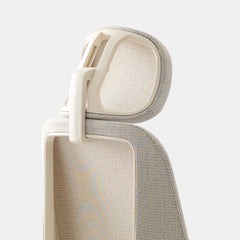
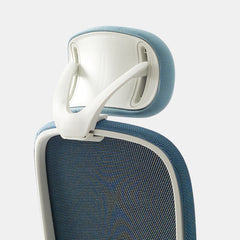
A headrest is not for constant use during upright typing. It can be valuable for supported recline, short rest periods, and call posture where you are not leaning forward.
Reading, calls, thinking time, and micro-breaks in a reclined position.
Precision typing in a forward-oriented task posture, especially if the headrest pushes the head forward.
If you are adding head and neck support for reclined comfort, choose the accessory built for your chair so adjustability and fit remain clean. For our chairs, that means the Novo Headrest and the Muse Headrest.
When pain spikes mid-day, the goal is not to force a perfect posture. The goal is to reduce guarding and restore a supported position. These are gentle resets, not aggressive stretches.
1. Sit fully back so your hips touch the backrest.
2. Place feet flat and let your knees relax outward slightly.
3. Exhale slowly and fully, allowing ribs to drop rather than lift.
4. Add a small recline so the backrest shares load.
5. Keep shoulders down and let arms rest lightly.
Stand tall beside the chair, place one foot slightly behind you, and gently shift weight forward until you feel a mild stretch at the front of the hip on the back leg side. Keep ribs down and avoid arching your low back to “get more stretch.” Switch sides. The goal is to reduce the pull that can tip the pelvis and keep the low back tense.
With feet hip-width apart, lightly press both heels into the floor as if you are preparing to stand, then relax. Repeat several times. You should feel gentle engagement in the glutes, not a squeeze in the low back. This cue helps distribute effort away from the lumbar area.
Many chair adjustments fail because the desk setup forces you out of the supported position. If your chair is tuned but your keyboard is too far forward, you will drift. If your screen is too low, you will fold. If your mouse sits too far to the side, you will twist.
A screen that is too low encourages a forward head and a rounded trunk. A screen that is too far away encourages reaching and drifting.
You should be able to read without leaning forward. If you notice yourself creeping toward the screen, bring it closer or adjust height.
A laptop often forces a low screen and cramped keyboard at once. Separating screen height and keyboard placement usually stabilizes posture quickly.
Small reach errors repeat all day.
If the mouse is far to one side, you rotate the trunk slightly for hours. Move it closer and keep it at a height where your shoulder stays relaxed.
Bring the keyboard closer so your elbows can stay near your sides. When elbows flare, shoulders protract and the low back often loses support.
If your feet cannot anchor, your body braces elsewhere.
When feet slide, legs do micro-work to stabilize. That can increase low-back tension. A stable mat or footwear choice can help.
A footrest can help when the desk is high and you must keep the seat high. It can also worsen compression if it encourages you to tuck feet back and slouch. Use it only if it supports full-foot contact and keeps hips back.
Sometimes the limiting factor is not your effort, it is that the chair cannot support your proportions or work style. We think about chair matching in a practical way: does it let you set height and depth appropriately, does the backrest support you through small reclines, and does it fit your desk without forcing forward perching.
Use this as a filter when you are comparing chairs, including options from our catalog.
| Fit cue that drives pain | What to look for in a chair | How it should feel when correct | Who benefits most |
|---|---|---|---|
| You slide forward and lose backrest contact | Seat depth that fits your legs, backrest that meets you when fully back | You can stay back without knee pressure | People who slouch without noticing |
| Upright sitting makes your low back tired | Supported recline with tension you can control | You can recline slightly and relax the low back | Long focused desk days |
| One-sided low back pinch | Arm support that does not force leaning, desk fit that avoids perching | Torso feels centered, no twisting to mouse | Mouse-heavy work and design tasks |
| Tailbone sensitivity | A seat that distributes pressure and encourages neutral pelvis | You feel supported without sinking into a slump | People who sit still for long stretches |
Review the adjustability approach of the Muse Chair if you are looking for a chair that can be tuned for shared or changing work styles.
Explore the design and adjustment details on the Onyx Chair and compare the setup range to your pain map priorities.
Take a look at the Seashell Chair if you prefer a lighter feel and want to assess how its structure aligns with your desk and posture needs.
A new chair should solve a specific mismatch, not just look different.
Confirm you can sit fully back with comfortable knee clearance and consistent lumbar contact.
Make sure the chair can get close enough to your desk for comfortable reach without forcing you forward.
Your back should feel supported when you recline, not as if you must brace to stay balanced.
Even a perfect setup can drift. Workdays change, tasks change, and your posture changes with stress and attention. A durable strategy is the one you can repeat quickly.
If multiple people use the same chair, create a simple baseline.
Choose a height that allows full-foot contact and relaxed shoulders at the keyboard.
Set enough depth for thigh support while keeping comfortable space behind the knees.
Set tilt tension so a small recline is supported and controllable.
At home, people often work at dining tables, couches, or makeshift desks. Those environments change screen height, reach, and foot stability. Even if the office chair is good, the surrounding setup can sabotage it.
Check screen height, keyboard reach, and whether you are perching forward. Fixing reach is often the fastest home improvement.
When you are coordinating a chair and accessories for a real work environment, logistics and after-purchase support influence the outcome as much as product choice. Our team keeps those details clear on the delivery and support details for office furniture orders page.
Fast relief is valuable, but lasting comfort comes from a system: a chair that fits, a desk that does not pull you forward, and a sitting style that moves. The goal is supported posture that can change shape throughout the day.
Support should reduce effort. Movement should prevent accumulation. If you feel like you are “holding posture,” something is off. Often it is height, depth, or reach.
Once a week, re-check the basics:
Can you sit fully back with steady foot contact?
Do you still have comfortable knee clearance?
Are you reaching for mouse or keyboard, or are they within easy range?
Can you recline slightly without bracing?
Return to the order that prevents confusion:
1. Seat height
2. Seat depth
3. Recline and tilt tension
4. Lumbar placement
5. Armrests and desk reach
That sequence keeps the chair working as intended and keeps your low back from becoming the default stabilizer for everything else.


You have unlocked free shipping!
You're saving $29 and unlocked free shipping!
Leave a comment