










In-Desk Power Ideas That Make Shared Tables Feel Cleaner

Cleaner Shared Tables Start With Power That Feels Built In
Shared tables collect activity quickly. A laptop lands near one edge, a phone charger stretches across the middle, a notebook opens beside a coffee cup, and someone eventually reaches for an outlet behind a chair. The table may be beautiful, but the experience can start to feel improvised once cords, adapters, and devices take over the surface.
In-desk power helps solve that problem at the furniture level. Instead of treating charging as an afterthought, power becomes part of how the shared table functions. The result is not only a cleaner visual field, but also a smoother work experience. People can plug in without interrupting the group, crossing someone else’s workspace, or dragging a power strip into view.
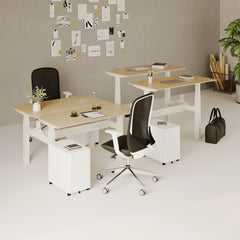
The cleanest shared table setups begin with furniture that supports repeated use, flexible seating, and daily device needs. Well-chosen desks and workstations create a stronger foundation because the surface, proportions, and placement possibilities all influence how power will be used. A shared table is not just a place to sit. It is a working surface that has to support collaboration, focus, technology, and quick resets throughout the day.
The Visual Problem Is Usually a Planning Problem
Messy tables rarely happen because people want clutter. They happen because the table does not clearly tell users where devices, cords, and chargers should go. When there is no built-in access point, users create their own solution. That solution usually includes visible extension cords, charger blocks, tangled cables, or devices clustered around the one reachable outlet.
In-desk power reduces that improvisation. A power module, recessed outlet, or compact charging point gives every user a more obvious way to connect. The tabletop can stay open for the real work: notes, laptops, samples, documents, coffee, conversation, and shared decision-making.
Clean Power Supports Faster Starts
A shared table feels cleaner when people can sit down and begin without searching for an outlet. That matters in meeting rooms, touchdown areas, studio workspaces, private offices, and hybrid work zones. The less time people spend arranging cables, the more intentional the table feels.
Clean power also makes the room easier to reset. When cords have a clear place to return, the table is less likely to hold onto the mess of the last meeting. That small detail has a large effect on how polished and prepared the space feels to the next group.
Table Shape Should Guide the In-Desk Power Strategy
The best power placement depends on how people gather around the table. A round meeting table, a long shared desk, and a compact bistro table all create different patterns of movement and reach. Power should follow those patterns instead of forcing people to work around them.
Round Tables Need Equal Access From Every Seat
Round tables are naturally collaborative because no single side dominates the conversation. Power placement should support that same sense of balance. A center-mounted or recessed power point can keep charging access within reach without making one side of the table more functional than the others.
A 48-inch round meeting table works well as an example of how circular surfaces can support focused group use while keeping the center visually organized. When power is placed thoughtfully, users do not have to stretch cords across the tabletop or rotate devices toward the nearest wall outlet.
Center Placement Reduces Cord Crossing
Cord crossing is one of the fastest ways for a shared table to look messy. On a round table, cords that begin at the edge and reach toward a wall can cut across notebooks, laptops, and personal space. A central access point shortens those paths. Each user can plug in from their own seat zone, and the table keeps its balanced appearance.
The center zone should still be managed carefully. A power module should not become a pileup area for adapters, cables, and phones. A cleaner approach is to use the center for access while encouraging users to keep devices in their own working area.
Rectangular Tables Need Power Spaced by Work Zones
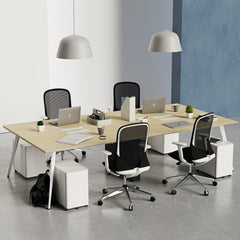
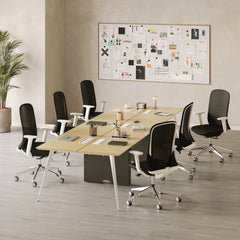
Long shared tables often support multiple people at once. A single outlet at one end is rarely enough because it encourages cord stretching and charger sharing. A more practical approach is to think in work zones. Each pair of seats, or each natural seating section, should have access that feels nearby and easy to use.
This does not mean the table needs excessive hardware. It means the power plan should match actual use. A team table used mostly for laptop work may need more frequent access points than a display table used for occasional presentations. Clean design comes from matching the power layout to real behavior.
Small Shared Tables Need Restraint
Small tables can feel cluttered faster than large ones because every object takes up more visual space. A laptop charger, phone, lamp, and notebook can quickly overwhelm the surface. For that reason, in-desk power for compact shared tables should feel minimal and intentional.
A Bistro Table with optional in-desk power fits the kind of compact setting where a small charging solution may support quick laptop sessions, informal conversations, or café-style work moments. The goal is not to turn every small table into a full technology hub. The goal is to give users enough access without sacrificing the clean, open feel of the surface.
Cable Paths Matter as Much as the Outlet Itself
A power module can look clean from above while still creating clutter underneath. True shared-table cleanliness depends on the full cable path: where the cord enters, where it travels below the surface, where excess length is stored, and where power finally reaches the wall or floor.
The Tabletop Is Only the First Layer
The visible outlet is the most obvious part of in-desk power, but it is not the entire system. If cables drop randomly under the table, gather around chair legs, or hang into knee space, the setup still feels messy. Clean design continues below the surface.
Under-table cable trays, clips, bundled routes, and planned drops help keep power from spilling into the user experience. These pieces are often quiet and unseen, but they are the reason a powered table feels orderly instead of improvised.
The Clean-Cable Stack for Shared Tables
A simple cable-management stack can help shared tables stay cleaner during daily use:
-
Recessed or low-profile tabletop power access
-
Short charging paths from each seat zone
-
Under-table storage for excess cord length
-
Bundled cable routes that follow one direction
-
A single planned drop toward wall or floor power
-
Clear space for knees, bags, and chair movement
-
A simple reset habit after group use
This kind of system prevents the most common clutter pattern: cords that start neatly, then slowly spread across the surface and beneath the table as different users plug in throughout the day.
One Direction Is Easier to Maintain
A shared table becomes harder to keep clean when cables escape in several directions. One cord drops near a chair, another runs toward the wall, and another is pulled toward a bag on the floor. Even if each cord is functional, the combined effect looks disorganized.
Routing cables in one planned direction creates a more predictable system. It also makes the table easier to inspect and reset. When everything has a clear path, clutter is easier to notice before it takes over.
Device Needs Should Shape the Power Mix
Shared tables now support more than one kind of device. Some users need laptop charging. Others need phone power, tablet support, or access for a shared monitor, speaker, or presentation tool. The cleanest tables acknowledge these different needs without letting adapters dominate the surface.
AC, USB-A, and USB-C Serve Different Roles
AC outlets remain useful for laptop power bricks, larger devices, and equipment that needs a standard plug. USB-C is increasingly useful for newer laptops, tablets, and phones. USB-A can still support older charging cables and accessories.
A thoughtful power mix helps reduce the need for extra blocks and adapters. When the table provides the right access, users are less likely to bring their own visible charging solutions. The result is a cleaner tabletop and fewer interruptions during shared work.
Avoid the Adapter Pile
The adapter pile usually appears when the table does not offer enough usable power. One person plugs in a block. Another adds a multi-port charger. Someone else connects a longer cable. Soon, the center of the table becomes a small charging station, even if that was never the intention.
A cleaner approach is to provide power where people naturally sit. When access is close, users can keep devices within their own zone rather than clustering everything around the nearest outlet.
Seating Clearance Keeps Power From Becoming Floor Clutter
The area beneath a shared table is just as important as the surface above it. Cords that interfere with chairs, knees, bags, or foot traffic make the entire table feel less clean. Good in-desk power planning includes enough clearance for people to move naturally.
Chairs Should Move Without Catching Cords
Seating and power should be planned together. A table can have a clean outlet layout, but if the cable drop lands where chairs slide back, the setup will not stay neat. A conference chair for meeting rooms belongs in the same planning conversation as power access because seating movement affects how cords behave around collaborative tables.
The chair pull-out zone should stay clear. Users should be able to sit, stand, turn, and leave without stepping over cords or dragging cables with the chair legs.
The Hidden Mess Begins Beneath the Surface
Many messy shared tables look acceptable from above at first. The problem builds underneath. A laptop charger falls into knee space. A cord wraps near a table leg. A cable drop shifts into the path of a chair. Once users notice these small issues, they begin moving cords around, and the tabletop starts to collect the clutter.
Keeping the underside organized protects the clean surface above. It also makes the table safer and more comfortable to use, without turning the room into a visible cable-management project.
Lighting Can Make Powered Tables Feel Warmer and More Intentional
Power is practical, but a shared table should not feel like a utility station. Lighting can soften the technical look of outlets, laptops, and charging devices. It gives the table a more finished presence while supporting the work happening on the surface.
Lamps Create a Visual Anchor Near Shared Work Surfaces
A lamp can make a powered table feel more considered, especially in lounges, meeting corners, reception work areas, and smaller collaborative settings. The key is balance. The lamp should support the table without competing with laptops, chargers, and shared materials.
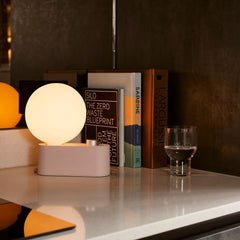
The Shore Table Lamp made from recycled glass is best suited to a paragraph about visual warmth because the linked page identifies the lamp through its material character. A lamp like this can help soften a work surface that might otherwise feel dominated by devices and ports.
Flexible Task Lighting Helps Preserve the Table Surface
Some shared tables need focused light for reading, writing, sketching, or reviewing materials. Others need soft light that makes a laptop-heavy setting feel less stark. In either case, lighting should be planned alongside power rather than added after the table is already crowded.
The Alumina Lamp for desk or wall use supports that flexible planning because the linked product page presents it for both desk and wall use. Wall placement can be especially useful when the table surface is small or when the goal is to keep the work area open.
Off-Surface Lighting Can Protect Compact Tables
For smaller shared tables, a wall-mounted lighting option or nearby lamp placement can help keep the tabletop clear. This matters when the table already supports laptops, drinks, notebooks, and charging. The less the surface has to hold, the cleaner it feels.
Cleaner Power Placement by Shared Table Type
Different shared tables need different power decisions. A formal conference table has different visual expectations than a casual café table. A coworking bench has different charging demands than a small huddle surface.
| Shared Table Type | Clean Power Placement | Why It Works | What to Avoid |
|---|---|---|---|
| Round meeting table | Center-mounted or recessed access | Keeps power equally reachable from all seats | Letting adapters gather in the middle |
| Long shared workstation | Evenly spaced access by seat zone | Reduces cord crossing and outlet competition | Relying on one outlet at the far end |
| Compact bistro table | Small module or nearby wall power | Preserves limited surface area | Oversized power strips |
| Conference table | Center channel with underside routing | Keeps the room visually polished | Exposed cable drops in chair paths |
| Touchdown table | Edge access for quick plug-in use | Supports fast arrival and reset | Dangling cords along the seating edge |
| Creative review table | Mixed AC and USB-C access | Supports laptops, tablets, and shared devices | Chargers crowding samples or notes |
This table-first view helps keep decisions practical. The right power idea is not always the most visible or the most complex. It is the one that supports the table’s real purpose while keeping the surface calm.
Room Planning Determines Whether the Table Stays Clean
A shared table does not operate alone. Wall outlets, floor access, walking paths, chairs, lighting, screens, storage, and room entrances all affect how clean the table feels. In-desk power works best when the whole room supports it.
Power Should Follow the Way People Actually Use the Space
Some shared tables support short check-ins. Others host long working sessions, client meetings, design reviews, or hybrid calls. Each use case creates different power needs. A table that only supports brief conversations may need less built-in access than one used by several laptop users throughout the day.
Thoughtful workspace furniture planning support helps connect furniture choices with the way a room functions. The better the planning, the less likely users are to solve power problems with visible cords and improvised accessories.
Traffic Flow Affects Cable Cleanliness
A cable path that works in an empty room may fail once people start using the space. Chairs move. Bags land near table legs. People walk behind seated users. Someone pulls a laptop closer during a call. These movements can disturb cords unless the power path has been placed with traffic flow in mind.
Clean shared tables allow people to move naturally. Power should be close enough to use, but not placed where it interferes with standing, sitting, or walking.
Common Power Planning Mistakes That Make Shared Tables Feel Messy
Even small power-planning decisions can create daily clutter. The most common mistakes are not dramatic. They are simple choices that make users work harder than they should.
Too Few Access Points for the Number of Users
When several people share one outlet, cords begin to overlap. Users pass chargers around, add adapters, or leave devices in awkward places. A cleaner setup gives users reasonable access from where they sit.
Power Placed in the Most Valuable Work Zone
Power should be reachable, but it should not occupy the exact area where people place notebooks, laptops, samples, or drinks. If the module sits in the wrong spot, users either cover it or work around it. Neither result feels clean.
Cable Drops in Knee and Chair Zones
A vertical cable drop should not land where people naturally place their legs or push back a chair. Even if the tabletop looks organized, the table will feel messy once cords interrupt comfort and movement.
Lamps and Chargers Competing for the Same Access
Lighting and charging should be planned together. If a lamp uses the only convenient outlet, users may add power strips or stretch cords across the table. A cleaner setup accounts for both atmosphere and function.
No Reset Habit After Shared Use
Shared tables need a simple reset rhythm. Cables should return to their place. Chargers should not remain scattered across the top. Chairs should slide back into position without trapping cords. Clean furniture design works best when daily habits support it.
Quietly Powered Shared Tables Feel Better to Use
The best in-desk power ideas do not draw attention to themselves. They make shared tables feel ready, open, and easier to use. People can sit down, plug in, focus, collaborate, and leave without the table collecting evidence of every cord and device that passed through.
A cleaner shared table is created through connected decisions: the right surface, balanced power placement, hidden cable routing, comfortable seating clearance, thoughtful lighting, and room planning that reflects actual use. When those choices work together, the table feels calm even when it supports active work.
Shared tables will continue to carry more devices, more flexible work styles, and more frequent transitions between users. The spaces that feel most polished will not be the ones that ignore those needs. They will be the ones that make power feel natural, quiet, and easy to reset.
Related Articles
-
 Desktop Power Outlet Planning Without Visible Cable Mess
-
 How In-Desk Power Helps Desks With Charging Stations Work
-
 How In-Desk Power Makes Charging Easier During Workdays
-
 Best In Desk Power Outlet Placement Tips for a More Efficient Workspace
-
 Clamp On vs Built In Desk Power Outlet: Which One Works Best for Your Desk?
-
 How to Set Up Under Desk Cable Management Without Losing Easy Access


