















Skip to content
For Teams
Summer Sale Ends Soon : Save Up to 20% + Free Shipping on Orders $65+ | Use Code SUMMER
FAQ
need to know

Useful articles

How to Choose a Table Lamp That Complements Modern Office Furniture

How to Choose a Table Lamp That Complements Modern Office Furniture

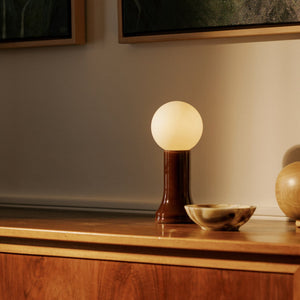
Alumina lamp featured in styled home décor

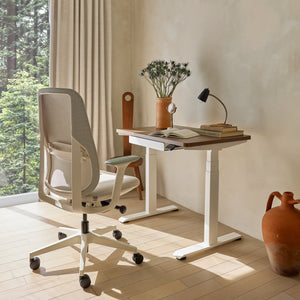
A table lamp can change the entire character of a modern office. It softens hard edges, defines the work zone, supports focus, and makes furniture feel more intentional. The right lamp does more than sit on a desk. It works with the desk surface, chair profile, storage pieces, monitor setup, power access, and overall room palette.

Modern office furniture is often clean, efficient, and visually restrained. That means a table lamp has to earn its place. A lamp that is too ornate can distract from the furniture. A lamp that is too small can look accidental. A lamp that creates glare, takes up too much desk space, or leaves cords exposed can weaken the polished feel of an otherwise well-designed workspace.

Choosing well starts with one principle: the lamp should support the office as a complete working environment. Style matters, but proportion, light quality, material harmony, and placement matter just as much.

Modern Office Lighting Starts With the Furniture Around It

A table lamp should never be chosen in isolation. In a modern office, every visible element contributes to the room’s rhythm. The desk establishes the main horizontal plane. The chair adds shape and movement. Storage controls clutter. Accessories influence how clean or busy the workspace feels. Lighting ties these pieces together.

The lamp should support the workspace, not compete with it

Modern office furniture usually emphasizes simplicity, structure, and function. A lamp that complements this kind of furniture should follow the same logic. It should provide useful light, preserve desk space, and add visual interest without overwhelming the room.

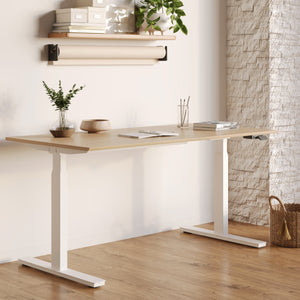
For example, a slim desk with a clean silhouette usually pairs best with a lamp that has a narrow base, controlled height, and simple form. A larger executive-style desk can handle a lamp with more visual weight, such as a glass body, sculptural base, or broader shade. A compact home office may need a lamp that feels light, flexible, and easy to position.

The broader workspace also matters. A lamp chosen for a room built around ergonomic modern office furniture should reinforce comfort, order, and usability. It should not create new obstacles on the desk or force awkward lighting angles during daily work.

Four questions to ask before choosing a modern office lamp

Before looking at finishes or shapes, evaluate the lamp through four practical questions:

1. Does the lamp fit the scale of the desk?
A lamp should feel proportional to the furniture surface it sits on.

2. Does the material connect with nearby furniture?
Metal, glass, wood, and matte finishes should relate to something already in the room.

3. Does the light support real work habits?
Reading, writing, laptop work, video calls, and screen use all need controlled illumination.

4. Does the placement keep the desk organized?
A beautiful lamp loses its effect if the cord crosses the work surface or the base crowds the keyboard.

These questions keep the decision grounded in function and design, which is where modern office furniture performs best.

Scale the Lamp to the Desk, Chair, and Room Proportions

Scale is one of the most important details in choosing a table lamp. A lamp may look attractive on its own, but if it does not fit the furniture around it, the office can feel unbalanced.

Lamp height should feel intentional from a seated position

A table lamp should illuminate the work area without shining directly into the user’s eyes. When seated, the shade or light source should feel controlled and comfortable. If the lamp is too short, it may only brighten a small patch of the desk. If it is too tall, it may dominate the furniture or create glare.

For a modern writing desk, a medium-height lamp with a compact shade often works well. For a deeper desk, a slightly taller lamp or adjustable arm may help light reach the center of the surface. For a desk with monitors, the lamp should sit below or beside the main sightline rather than fighting for attention with the screen.

Base size affects how useful the desktop remains

Modern offices often rely on clean surfaces. A lamp with a large base may look stable, but it can reduce usable desk space quickly. This is especially true in laptop-first workstations where the desk may also hold a keyboard, notebook, phone, mouse, docking station, and personal items.

A narrow or low-profile base usually works better for compact desks. A heavier base may be appropriate for larger furniture, but it should not interrupt the work zone. The best base feels stable without becoming the main object on the desk.

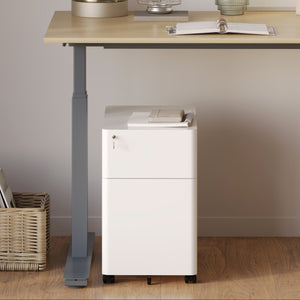
Storage plays a role here. When documents, supplies, and small office items have a dedicated place, the desktop has more room for lighting. A file storage cabinet can help keep the work surface clearer, which makes the lamp feel like an intentional design feature instead of one more object competing for space.

Desk type should guide lamp proportions

Desk Type Lamp Profile That Often Works Best Why It Complements the Furniture What to Avoid
Compact writing desk Small-base table lamp or slim LED lamp Preserves surface space and keeps the desk visually light Oversized shades or bulky bases
Executive desk Taller lamp or sculptural glass lamp Balances a larger desktop and adds presence Tiny lamps that look underscaled
Standing desk Stable, low-profile lamp with clean cord routing Reduces wobble and keeps movement practical Heavy lamps near adjustable edges
Shared workstation Minimal lamp or movable task light Supports flexible work habits Highly personal decorative pieces
Laptop desk Narrow-base lamp with controlled light direction Protects keyboard, mouse, and laptop zones Wide bases that crowd devices


Match Lamp Materials to Modern Office Furniture Finishes

Material is where a lamp begins to feel connected to the rest of the office. A modern workspace rarely needs everything to match exactly. It usually looks better when one or two design details repeat with purpose.

Metal, glass, wood, and matte finishes create different moods

A metal lamp often feels architectural and precise. It can work beautifully with modern desks that feature metal legs, aluminum accents, or black hardware. Matte finishes can reduce visual glare and create a quieter presence, which is helpful in focused workspaces.

Glass introduces lightness and reflection. It can make a desk feel more refined without adding heavy visual bulk. Wood or wood-toned lamp details can warm up a modern office, especially when the furniture includes walnut, oak, or other natural textures.

The goal is not to match every material. A workspace with a black metal desk frame might only need one repeated black detail in the lamp. A glass lamp can echo transparent accessories, polished surfaces, or a lighter room palette. A warm-toned shade can soften a desk with sharp edges and technical equipment.

A lamp can blend in or become the accent

Some offices need a lamp that disappears into the composition. This works well when the furniture already has strong lines, bold color, or distinctive materials. A simple white, black, or metal lamp can support the design without adding noise.

Other offices benefit from a lamp that becomes a quiet focal point. If the desk is minimal and the room uses neutral furniture, the lamp can introduce texture, transparency, or form. A recycled glass table lamp fits naturally into this kind of design conversation because the anchor clearly reflects the product’s table-lamp and glass-material identity.

Material pairings for a cohesive modern office

Existing Furniture Finish Lamp Material Direction Best Visual Effect Risk to Watch
White desk or white storage Frosted glass, white metal, pale ceramic Clean, bright, and calm A space that feels too sterile
Walnut or warm wood desk Smoked glass, soft metal, warm neutral shade Balanced and inviting Too many competing wood tones
Black metal frame Black metal, aluminum, clear glass Focused and architectural Excessive dark visual weight
Light oak furniture Linen shade, matte metal, subtle glass Soft modern warmth Bulbs that make the palette too yellow
Mixed-material workspace One repeated finish from the desk or chair Cohesive without overmatching Random accent finishes


Choose Light Quality for Screens, Paperwork, and Long Work Sessions

A lamp that looks right still needs to perform. Modern offices are often screen-heavy, but paper tasks, reading, planning, sketching, and video calls still matter. The lamp should support these activities without creating glare or fatigue.

Color temperature should match the office’s purpose

Warm light can make an office feel relaxed and inviting. It works well in softer home offices, reading corners, and executive-style spaces where atmosphere matters. Neutral light is often more practical for everyday work because it supports concentration without feeling too clinical. Cooler light may feel crisp, but it can become harsh when used as the main source of desk lighting.

A modern office does not need the brightest lamp possible. It needs controlled, useful light. Dimmable lighting is often valuable because the office changes throughout the day. Morning work, evening reading, video calls, and focused writing may all need different brightness levels.

Glare control is essential near monitors

Screen glare is one of the most common reasons a desk lamp feels wrong. A lamp placed too close to the monitor can reflect on the screen. A bare or exposed bulb can create eye-level brightness. A shade that sends light outward instead of downward can make the workspace uncomfortable.

The best placement usually keeps the lamp slightly to the side, angled toward the work surface, and away from direct screen reflection. A diffused shade can soften light. A downward-facing design can help illuminate paper without washing the monitor. For dual-monitor setups, the lamp may work best at the outer edge of the desk or behind the main work zone.

Task, ambient, and accent lighting each play a different role

Task lighting focuses on the surface where work happens. Ambient lighting softens the overall room. Accent lighting highlights a corner, shelf, wall texture, or object. A table lamp may serve more than one of these roles, but it should still have a primary purpose.

A desk used for writing and reading needs stronger task lighting. A lamp placed on a side cabinet or shelf may function more as ambient light. A lamp on a large desk can sometimes do both, especially when the shade diffuses light gently across the surface.

Coordinate the Lamp With Devices, Stands, and Desk Accessories

Modern office furniture is designed around how people actually work. That often means laptops, monitors, chargers, keyboards, tablets, notebooks, and accessories all need space. A table lamp should improve this setup, not interrupt it.

The lamp should respect ergonomic sightlines

Laptop stands and monitor risers change how the desk is used. When a screen is elevated, the lamp should not block the view, reflect into the screen, or crowd the device footprint. A slim laptop stand belongs in the same planning conversation as desk lighting because both affect posture, sightlines, and desktop organization.

A laptop-first workstation usually needs a tighter lamp footprint. The lamp should sit far enough from the laptop hinge, keyboard, and mouse path. For small desks, rear-corner placement often works best. For larger desks, side placement can provide better task lighting without interrupting the main device zone.

Dual-monitor desks need asymmetrical lamp placement

A dual-monitor desk is already visually strong. Placing a lamp in the center can make the setup feel crowded. Instead, consider an asymmetrical layout. The lamp can sit on the side opposite the dominant monitor, behind the monitor line, or near the outer edge of the desk.

The important detail is light direction. The lamp should brighten the work surface without reflecting across the screens. If the office includes a second work zone, such as a reading corner or side credenza, the table lamp may be more effective there than on the main monitor desk.

Video-call lighting should feel natural

A table lamp can improve how a workspace appears on video calls, but placement matters. A lamp behind the head can create distracting backlight. A lamp aimed directly at the face can look harsh. A lamp placed slightly in front and to the side can soften shadows, especially when combined with natural light or ambient room lighting.

The office background also benefits from thoughtful lighting. A lamp placed near storage or shelving can add depth to the room, making the workspace feel warmer without distracting from the furniture.

Plan Power Access Before Deciding the Final Lamp Position

A lamp’s cord can either disappear into the workspace or disrupt the entire design. In modern offices, power planning is part of the visual experience. Even a well-proportioned lamp can look messy if the cord runs across the desk or tangles with chargers.

Built-in power supports a cleaner permanent workstation

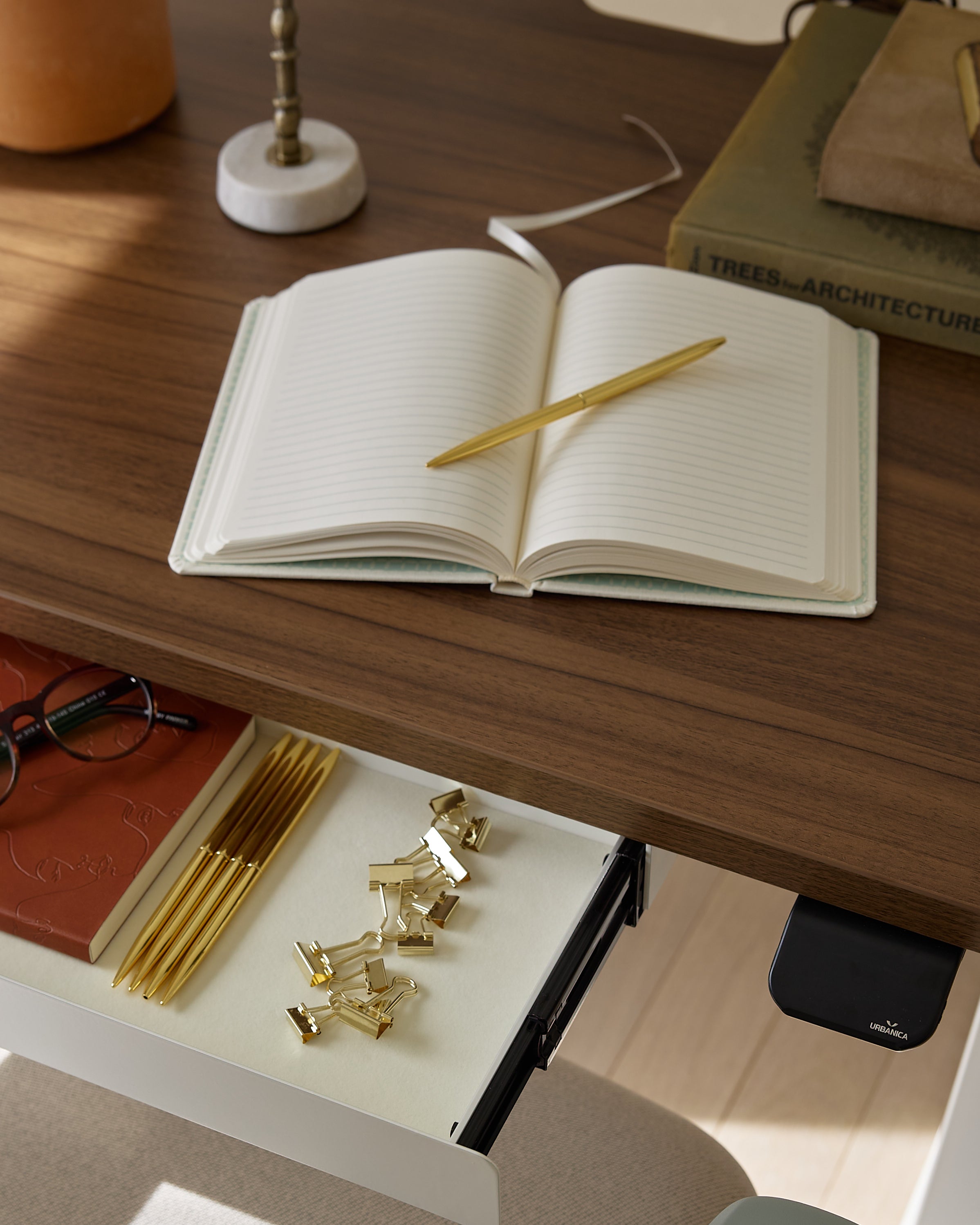
For a desk with a fixed layout, power access should be planned early. If the lamp, laptop charger, phone charger, and accessories all need regular access, the outlet strategy matters. An in-desk power module can support a cleaner arrangement by placing power closer to the work surface and reducing the need for cords to stretch across visible areas.

This is especially useful for modern desks where a clean top surface is part of the design. The lamp cord can route toward the rear or side instead of cutting through the center of the desk. The result feels more organized and more aligned with the furniture’s clean lines.

Clamp-on power works for flexible office layouts

Not every desk setup should be permanent. Some workstations move often. Some desks are used by more than one person. Some home offices need practical power access without altering the furniture. In those cases, a clamp-on power outlet can make sense because the anchor accurately reflects a desk power accessory that attaches without becoming part of the desk surface.

Flexible power access can also help determine where the lamp belongs. If the outlet can move closer to the side or rear of the desk, the lamp may be easier to place where it looks best and works best.

Cord routing should be part of the lamp decision

A clean powered workspace usually follows a few simple rules:

  • Keep the lamp cord behind or along the desk edge.

  • Avoid running cords through the keyboard or writing zone.

  • Separate lighting cords from frequently used charging cables when possible.

  • Leave enough slack for adjustable desks or moveable surfaces.

  • Choose a lamp position after checking outlet access, not before.

  • Use the furniture layout to conceal cords naturally.

Power planning may not be the most decorative part of choosing a lamp, but it has a major impact on how modern the office feels.

Use Lamp Shape to Reinforce the Office’s Design Language

Shape has a strong effect on how a lamp relates to furniture. Straight lines, curves, domes, cylinders, cones, and sculptural profiles all send different signals.

Linear lamps suit minimalist and architectural offices

A linear lamp works well with rectangular desks, metal frames, slim drawers, and structured chairs. It reinforces order and precision. This style is especially useful in offices where the furniture is already clean and functional. The lamp adds light without changing the character of the room.

Linear forms also help preserve visual calm. They do not interrupt the geometry of a modern desk. They can make a workstation feel efficient and focused.

Rounded lamps soften technical workspaces

Many modern offices contain screens, metal hardware, monitor arms, and charging accessories. A rounded lamp can soften these elements. Curved bases, globe shades, and gently rounded silhouettes add contrast without feeling traditional.

This approach works especially well when the office furniture includes rounded chair backs, curved desk corners, or softer storage shapes. The lamp becomes part of a balanced visual rhythm rather than a separate decorative object.

Multi-use lighting supports layered work zones

Some offices need lighting that can adapt to different parts of the workday. A desk may be used for focused laptop work in the morning, document review in the afternoon, and reading or planning later. A multi-use LED table and wall light fits naturally within a discussion of adaptable lighting because the anchor reflects the product’s described table and wall light function.

Multi-use lighting is not about overcomplicating the office. It is about giving the workspace enough flexibility to support real habits without adding unnecessary visual clutter.

Place the Lamp Where It Improves Workflow

A lamp should not fill empty space just because a corner looks bare. Placement should support how the desk is used.

Dominant hand affects shadow direction

For writing, sketching, or reviewing printed documents, lamp placement should reduce shadows. Right-handed users often benefit from placing the lamp on the left side of the desk. Left-handed users may prefer the right side. This prevents the hand from casting a shadow over the page.

Even in digital offices, this still matters. People still sign documents, take notes, mark up printed pages, and use notebooks during calls. A table lamp should support these moments instead of interfering with them.

Rear-corner placement keeps the desk open

Placing a lamp in the rear corner often works well for modern desks. It keeps the front work zone clear and makes cord routing easier. This placement also helps the lamp feel integrated into the furniture instead of floating in the middle of the surface.

Rear-corner placement is especially useful for compact desks, laptop desks, and workstations where the keyboard and mouse need a clear central zone. The lamp remains visible, but it does not dominate the main working area.

Side placement gives stronger task light

A side-positioned lamp can provide better light for reading and writing. It works well on wider desks where the lamp can sit outside the main device zone. The key is to angle the light toward the task area without reflecting on the monitor.

Side placement can also make the office feel more balanced. If one side of the desk has a monitor arm or storage accessory, a lamp on the opposite side can create visual equilibrium.

Avoid Lamp Choices That Clash With Modern Office Furniture

Some lamp mistakes are easy to avoid once the full workspace is considered.

Choosing decoration before function

A lamp that looks good but does not provide useful light will not support a working office. The design should be attractive, but brightness, diffusion, shade direction, and placement all matter. Modern furniture is rooted in function, so the lamp should be too.

Ignoring measurements

Desk depth, shade width, lamp height, base diameter, and cord length all affect whether a lamp works in the space. Measuring before buying prevents awkward proportions and crowded surfaces.

Mixing too many finishes

A workspace can feel cluttered even when the desk is physically clean. Too many finishes in one sightline can create visual noise. A good rule is to repeat one existing finish, then add one supporting texture. For example, a black metal lamp can echo black chair legs, while a glass shade adds lightness.

Forgetting the office is device-heavy

Modern offices are rarely just desks and chairs. They include laptops, monitors, chargers, docking stations, phones, and accessories. A table lamp should fit into this environment with discipline. It should support the work surface, not fight for space.

A Well-Chosen Table Lamp Makes Modern Office Furniture Feel Complete

The right table lamp brings structure, warmth, and usability to a modern office. It complements the furniture by respecting scale, repeating materials thoughtfully, controlling glare, preserving desk space, and supporting real work habits. It also helps the office feel finished without relying on unnecessary decoration.

A strong choice comes from seeing the lamp as part of the full workspace. The desk surface, chair profile, storage, laptop setup, power access, and room lighting all influence what will feel natural. When these elements work together, the lamp becomes more than an accessory. It becomes part of a calm, focused, and well-composed office environment.

Previous article How to Arrange Two Monitors and a Laptop Without Clutter

Leave a comment

* Required fields

Get 10% off your first order

Find the office furniture that’s designed to match your style, comfort, and needs perfectly. Subscribe

My Office

You have unlocked free shipping!

You're saving $29 and unlocked free shipping!


Your cart is empty.
Start Shopping

Contact Us