









How Team Desks and Panels Create Better Daily Work Zones
Team desks and workstation panels do more than organize seating. Together, they define personal work areas, manage sightlines, support smoother cir...
Learn more

Visit quiz page to see how we makes it easy to create an inspiring workplace


Desk lamp placement often becomes more complicated than expected. A lamp may fit physically yet interfere with a monitor, reduce writing space, create distracting reflections, or place its cord across an active part of the workstation. The best position must support the way the desk is actually used, not merely complete a styled arrangement.
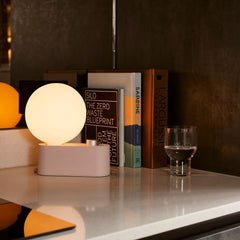
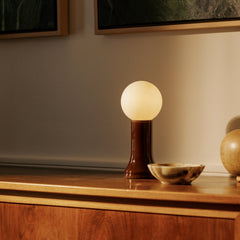
The mouth-blown recycled-glass Shore Table Lamp is especially suited to flexible placement because it serves as a mood-oriented table light rather than a narrowly focused task lamp. Its product information lists a recycled-glass base, an LED bulb, and a weight of 1.9 pounds. Those characteristics allow it to contribute light and visual warmth without requiring the precise aiming position associated with an articulated reading lamp.
That flexibility does not mean every position works equally well. Effective Shore lamp placement still depends on usable surface area, monitor sightlines, comfortable access, safe cable routing, and the relationship between the desk and surrounding furniture.
A lamp is easier to place when its purpose can be fulfilled from more than one location. The Shore lamp can work from a rear desk corner, a side return, a nearby cabinet, or another surface within the same visual zone. This gives the user room to prioritize desktop function before deciding where the lamp belongs.
Task lighting is normally positioned to illuminate a defined activity such as reading, handwriting, drawing, or reviewing printed documents. Its usefulness depends heavily on direction, distance, and the position of the user’s hands.
Ambient lighting performs a different role. It adds a layer of light around the workstation and helps the space feel less dependent on overhead fixtures or monitor brightness. Because the Shore lamp is presented as lighting designed to match different moods, it does not have to sit directly over a notebook or point toward one narrow task area.
This distinction creates more placement options. The lamp can remain useful even when it is moved away from the center of the desk or placed on an adjacent surface.
A desk rarely stays arranged in exactly the same way. A laptop may be replaced by a monitor, paperwork may occupy the surface for part of the day, or the desk may need to support a video call, design review, or brief conversation.
At a listed weight of 1.9 pounds, the Shore lamp can reasonably be repositioned when those needs change. That does not make it cordless or designed for constant movement, but it does make occasional rearrangement less cumbersome than moving a substantially heavier decorative object.
The Shore lamp uses a recycled-glass base rather than the armature commonly associated with adjustable task lamps. Its visual role comes from the glass form, color, and illumination rather than from joints, springs, or directional hardware.
That simpler silhouette can make the lamp easier to integrate beside a monitor, books, storage accessories, or a plant. It still needs sufficient clearance, but it does not have to dominate the workstation to establish a recognizable lighting zone.
The easiest lamp position is not automatically the empty corner closest to an outlet. Placement should begin by identifying how the desk functions during a normal workday.
The wider collection of office and standing desks includes compact desks, conventional office desks, height-adjustable models, and multi-person workstation formats. Each type creates different requirements for lamp clearance, cable movement, and visual balance.
The active work zone includes every part of the surface used repeatedly. It usually contains the keyboard, mouse, notebook, documents, phone, and frequently handled tools. On a smaller desk, this zone may occupy nearly the entire surface.
Placing the Shore lamp inside that area can make the workstation feel crowded even when the lamp itself has a modest footprint. A rear corner is often a better starting point because it leaves the center and front edge available for active work.
The test should be based on real objects. Open the largest notebook or binder normally used. Move the mouse through its full range. Place a phone or tablet where it usually sits. The remaining space is a more reliable placement zone than an empty surface viewed before work begins.
A lamp can stay outside the keyboard area and still create visual interference. Its position should also account for the primary screen, secondary displays, webcam, nearby windows, and sightlines toward colleagues or visitors.
From the normal seated position, the lamp should not cover part of the monitor or create a bright point directly beside an area of concentrated viewing. A small lateral adjustment can often improve the relationship without requiring the lamp to leave the desk.
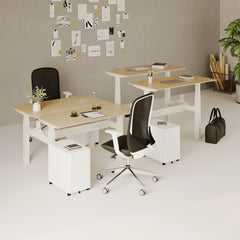
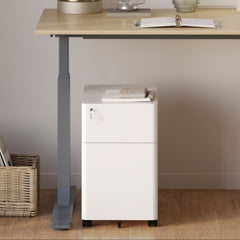
Drawers, monitor arms, control panels, desktop accessories, and adjustable desk mechanisms all affect lamp placement. A position that works on a stationary surface may become unsuitable when the desk rises or when a drawer opens beneath it.
The lamp and its cable should therefore be treated as one system. Both need enough clearance to remain stable and accessible throughout normal desk use.
A systematic placement method removes much of the guesswork. The following four zones can be evaluated in order, beginning with the work surface and ending with the complete cable route.
Start by preserving the area between the user and the monitor. This is where the keyboard, mouse, notebooks, and loose documents usually collect. The lamp should sit beyond that corridor rather than forcing essential objects closer together.
A desk that feels spacious during computer work may become crowded when a sketchbook, sample board, or document folder is opened. Place that item on the surface before selecting the lamp position.
If the lamp must be moved every time the item appears, another location will probably be more practical. A side cabinet or desk return can maintain the ambient effect while protecting the main surface.
Sit at the desk and look straight toward the primary screen. The Shore lamp should have visible separation from the monitor edge rather than appearing to merge with the display.
A dark screen makes reflections easier to identify. Check the powered-off monitor or open a dark interface, then look for reflections from the bulb, glass base, window, and polished desktop. Moving the lamp sideways often solves the problem more effectively than moving it farther back.
The lamp should be accessible without requiring the user to lean across the keyboard or reach behind a monitor. Reachability matters most when the lamp is switched on or off regularly.
Comfortable access also depends on surrounding objects. A lamp may be within arm’s length but difficult to use when a speaker, plant, stack of books, or monitor stand blocks the approach.
Follow the cable from the lamp to the power source. It should not cross the mouse area, hang where a chair can catch it, interfere with a drawer, or become strained when adjustable furniture moves.
A clean cable route is more important than perfect visual symmetry. The safest position is one that remains predictable during everyday work.
1. Sit in the position used for most desk work.
2. Check whether the lamp overlaps the monitor in your sightline.
3. Move the mouse through its complete working range.
4. Open the largest notebook or file used regularly.
5. Look for reflections on a dark screen.
6. Reach the lamp without leaning across the desk.
7. Trace the cable to the outlet.
8. Test every normal desk height or movable component.
Different workstation layouts create different placement priorities. The rear corner may work beautifully on one desk and fail completely on another.
For a single-monitor setup, begin with the rear corner opposite the user’s main writing or mouse area. A right-handed user might first test the left rear corner, while a left-handed user might begin on the right.
Handedness is only a starting point. Window reflections, outlet access, monitor position, and nearby storage may make the opposite corner more effective. The final decision should protect the dominant work area while keeping the lamp visually separate from the display.
A lamp placed between two monitors can make the display area feel fragmented and crowded. The gap between screens also tends to contain stands, cables, webcams, or docking equipment.
A better position is usually beyond the outer edge of the less frequently viewed monitor. This preserves a unified screen zone while allowing the lamp to add light from the perimeter.
When dual monitors occupy most of the desk depth, forcing the Shore lamp onto the remaining surface may reduce usability. A nearby cabinet or shelf can be more effective because ambient light does not need to originate from the center of the workstation.
Laptop workstations are often rearranged throughout the day. The computer may move forward for focused work, shift sideways during note-taking, or leave the desk entirely.
Place the Shore lamp behind and diagonally away from the laptop rather than directly beside its screen. This creates separation between the light source and the concentrated viewing area while leaving room for an external mouse, notebook, or charging cable.
A position approved only at seated height is incomplete. When the desk rises, the relationship between the lamp, outlet, wall, and cable-management system changes.
The Shore lamp should remain clear of height controls, monitor-arm clamps, and desktop edges at both the lowest and highest regularly used positions. The cable should retain enough slack to move without pulling against the lamp or power source.
Raise the desk slowly while watching the complete cable path. Check whether the cable catches on storage, tightens near the outlet, or moves into a chair path.
The safest placement is not merely stable at one height. It should remain predictable throughout the desk’s normal range of motion.
On a compact desk, usable depth matters more than decorative symmetry. If the lamp displaces the keyboard, notebook, or mouse, move it to an adjacent surface. Ambient lighting can still support the workspace without sitting on the desktop itself.
An L-shaped desk offers another option. The less active return can become a dedicated lighting zone, leaving the central corner available for docking equipment, documents, or secondary screens. The Shore lamp can then visually balance the longer surface without interrupting primary work.
The Shore lamp is not the only way to introduce lighting around a desk. Comparing it with a product designed for another placement problem helps clarify where Shore performs most naturally.
The Alumina desk lamp and wall sconce is described as a sustainably made light that can function in either of those two positions. Its listed construction includes powder-coated aluminum and an LED bulb.
Shore is the more natural fit when the goal is mood-oriented light, recycled-glass character, and a decorative accent that can sit on a desk or nearby surface. Its usefulness is not tied to wall installation or a tightly directed work angle.
This makes placement easier when the surface arrangement changes. The lamp can shift from a rear corner to a cabinet without losing its broader role in the room.
Alumina addresses a different constraint because it can be used as a desk lamp or wall sconce. Wall placement may preserve desktop space, although the suitability of that arrangement depends on mounting conditions and access to power.
Neither approach is universally better. The right choice depends on whether the user needs a movable ambient element, a desk-based light, or a wall-positioned option.
| Placement consideration | Shore Table Lamp | Alumina Lamp |
|---|---|---|
| Confirmed material | Recycled-glass base | Powder-coated aluminum |
| Confirmed light component | LED bulb | LED bulb |
| Listed weight | 1.9 pounds | 1.7 pounds |
| Stated role | Mood-oriented table lighting | Desk lamp or wall sconce |
| Main planning question | Where can ambient light add balance without crowding the desk? | Would desk or wall placement preserve more usable surface? |
Glare is not limited to a clear reflection of the bulb on the monitor. A lamp can also become distracting when it sits inside peripheral vision or competes visually with the screen.
First, test for a visible reflection on the display. Then look at the screen normally and notice whether the lamp itself feels unusually prominent beside it.
These are different problems. A lateral adjustment may eliminate a reflection, while a change in height or distance may reduce peripheral distraction. The aim is not to hide the Shore lamp completely. It is to create enough separation for the screen and lamp to perform distinct visual roles.
A placement that works during daylight may feel brighter or more noticeable after dark. Window reflections also change as exterior light decreases.
Evaluate the lamp during the hours when the desk is used most. A position near a window may be comfortable during the afternoon but visually busier in the evening. Small adjustments can preserve the lamp’s atmosphere without allowing it to compete with the monitor.
A perfectly centered lamp may look orderly in a photograph but reduce working space in practice. An off-center position can still feel balanced when it relates visually to a monitor, plant, shelf, or storage unit.
The most successful arrangement creates equilibrium without sacrificing movement, sightlines, or access.
Desk lamp placement becomes more complex when other people move around the furniture. Guest seating, collaborative tables, and circulation paths all increase the need for clearance.
A conference chair for meeting rooms introduces pullback space, arm movement, bags, and repeated approaches to the desk or table. The linked chair is presented for meeting rooms and collaborative spaces, which makes surrounding clearance especially relevant.
Keep the Shore lamp away from a guest-facing desk edge where it could be contacted while someone sits down or stands up. A rear corner behind the primary user or a supporting surface beside the desk is usually safer than a prominent front corner.
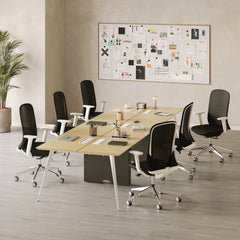
A round table designed for meeting spaces is intended to support shared use, and its product page notes two size options and optional in-desk power. Decorative lighting should not obstruct the area where people place laptops, notebooks, documents, or shared materials.
The Shore lamp can support the room from a credenza, cabinet, or perimeter surface. This preserves the table’s collaborative function while maintaining a visual connection between the lighting and the meeting zone.
A minimalist bistro table for collaborative spaces may serve short meetings, informal laptop work, or casual conversation. Its page describes a versatile desktop with two size options and optional in-desk power.
Because the surface may be used differently from one hour to the next, the Shore lamp is often better placed nearby rather than at the center. A shelf or side cabinet can provide ambient light while leaving room for devices, drinks, and temporary work materials.
People approach collaborative tables from several directions. A lamp placed in the middle can limit seating positions, divide the surface, or create a cable route through an active area.
Perimeter placement keeps the atmosphere without assigning valuable shared space to a fixed decorative object.
Creative and hybrid offices often move between individual work, review sessions, short meetings, and material-based tasks. The lamp placement should be able to respond without requiring the entire room to be redesigned.
A page focused on office furniture for creative and flexible workspaces discusses settings such as design studios, remote work areas, and coworking environments. Those spaces illustrate why adaptable placement can be more useful than a rigid lighting arrangement.
Consider a studio with an individual desk, two visitor chairs, a round meeting surface, and a small cabinet between work zones.
The Shore lamp can begin in the rear corner of the individual desk during focused computer work. When large documents or samples are needed, it can move to the cabinet. From there, it can continue supporting the desk visually while also contributing atmosphere near the meeting area.
The visitor approach remains clear, the meeting table stays open, and the lamp does not need to occupy every surface it helps define.
A lamp does not have to sit at the center of an activity to belong to that zone. From a carefully chosen perimeter position, the Shore lamp can visually connect individual and collaborative areas while preserving the function of both.
This is where flexible placement becomes most valuable. The lamp adapts to changing work patterns rather than forcing those patterns around a permanent decorative arrangement.
Even a flexible table lamp can feel awkward when it is positioned according to appearance alone.
Center placement may create visual symmetry, but it can also reduce room for typing, writing, or document handling. Begin with function, then use surrounding objects to create balance.
The Shore lamp is presented as mood-oriented lighting. It should not automatically be treated as the only light source for detailed reading, drawing, or other precision work.
A separate task-lighting solution may be appropriate when concentrated illumination is required. This distinction keeps expectations realistic and allows the Shore lamp to perform the role its design supports.
A neat visible cable can still create a problem behind the desk. Check whether it crosses a drawer, hangs near chair casters, or tightens when adjustable furniture moves.
The complete route should remain stable, not only the section visible from the seated position.
A front corner or open meeting-table edge may display the lamp clearly, but it also increases exposure to hands, bags, and passing movement. Recessing the lamp slightly or moving it to a supporting surface can preserve visibility with less risk of accidental contact.
A lamp arrangement should be tested during typing, writing, video calls, document handling, and desk adjustment. A position that survives these activities is more useful than one that works only when the desk is staged.
Reliable Shore lamp placement can be reduced to four priorities: protect the active surface, maintain clear sightlines, preserve comfortable reach, and plan the complete cable path.
Start with a rear corner, but treat it as a test position rather than a fixed rule. Move the lamp beyond the monitor edge when screens dominate the desk. Use a side return, shelf, or cabinet when the desktop is shallow. Test seated and standing positions whenever the furniture moves.
The Shore lamp makes these decisions easier because its ambient role allows several workable locations. Its recycled-glass form can contribute character from the desk or its perimeter, while its listed weight supports practical repositioning as work needs change.
A successful lighting layout is not permanently frozen. Screens, documents, collaboration patterns, and furniture arrangements evolve, and the Shore lamp is most effective when its placement evolves with them.


You have unlocked free shipping!
You're saving $29 and unlocked free shipping!
Leave a comment