










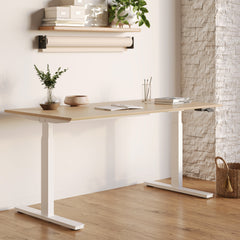

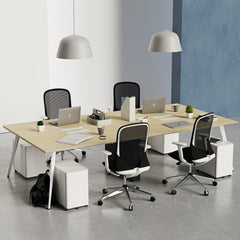

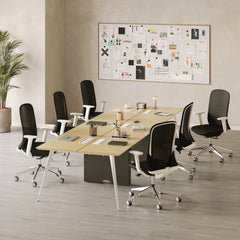


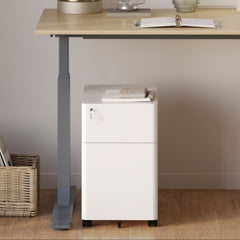






How In-Desk Power Helps Desks With Charging Stations Work

A desk with a charging station is only as useful as the power access built into its daily workflow. A nearby wall outlet may technically provide electricity, but it does not automatically create a clean, comfortable, or dependable charging experience. Modern work surfaces support laptops, phones, tablets, monitors, desk lamps, video call accessories, and small personal devices. When those devices compete for limited outlets or rely on loose cords stretched across the room, the desk begins to work against the person using it.
In-desk power solves that problem by bringing charging access to the point of use. Instead of making people reach under furniture, move chairs, or rearrange equipment, a built-in module places outlets and USB access within the work zone itself. The result is not about adding technology for its own sake. It is about making the desk behave like a more complete workstation.
A thoughtfully powered desk supports focus, cleaner cable paths, better posture, and smoother transitions between individual work, shared work, and meetings. When charging is integrated into the surface, the desk becomes easier to use because the most common device need is already accounted for.
Built-In Power Turns Desk Charging Into Everyday Workspace Infrastructure
Why a Wall Outlet Is Not the Same as a Desk Charging Station
A wall outlet can power a device, but it often does so from the wrong location. Many offices place outlets along walls, while desks, meeting tables, and collaborative work zones sit in positions chosen for movement, visibility, and teamwork. This gap creates small but repeated problems: laptop cords crossing walkways, phone chargers disappearing behind furniture, and employees leaning awkwardly to find an open plug.
A true desk charging station reduces those workarounds. The power source becomes part of the desk rather than something the user has to search for. When a laptop battery runs low during focused work or a phone needs charging before a meeting, the user can plug in without breaking the flow of the task.
The value of an In-Desk Power Module for AC and USB access is that it supports this exact point-of-use need. It places charging access into the desk surface, helping the workstation function as a more complete and practical work area.
How Point-of-Use Charging Reduces Small Interruptions
The smallest interruptions are often the ones that quietly weaken a workspace. A user may stop working to find a charger, crawl under the desk to locate a plug, or move a laptop closer to a wall. Each action seems minor, but together they make the desk feel less prepared for modern work.
In-desk power helps desks with charging stations work by making charging visible, reachable, and predictable. The user knows where power is. The device stays close to the working position. The desk remains organized because cords do not need to travel across the room.
The practical role of reach and visibility
Charging access should be close enough to use while seated, but not so dominant that it crowds the work surface. The best placement gives users a clear plug-in point while preserving room for typing, writing, reading, and video calls.
Powered Desk Surfaces Support the Devices People Actually Use
Laptops Remain the Primary Charging Priority
For many workers, the laptop is the main work hub. It carries files, video meetings, messaging tools, calendars, and browser-based applications. When laptop charging depends on a distant outlet, the workstation becomes less dependable. A cord might stretch across the floor, block a path, or force the user to sit in an uncomfortable position.
In-desk power gives the laptop a more natural charging route. The cable can connect near the work area and travel through a cleaner path beneath or behind the desk. This does not remove the need for sensible cable planning, but it gives the setup a better starting point.
Phones, Tablets, and Accessories Need Their Own Charging Logic
A desk charging station should not focus only on laptops. Phones, tablets, earbuds, desk lamps, and other small devices are part of daily work behavior. A phone may be needed for authentication, scheduling, calls, or quick messages. A tablet may support note-taking or creative review. Accessories may need power throughout the day.
The goal is not to turn every desk into a crowded device dock. The stronger approach is to identify the devices that regularly sit within the user’s work zone and plan charging around them. This keeps the desk useful without making it feel overloaded.
Device Mix Shapes the Right Desk Layout
A person who only uses a laptop and phone may need a simpler setup than someone who works with a monitor, docking station, tablet, and task lighting. Shared workstations have different needs again because users arrive with different devices and habits.
A desk with charging stations should reflect the real equipment placed on it. That means thinking about cord direction, available surface space, monitor placement, and the user’s seated reach before deciding where power belongs.
Desk Selection Determines How Well Charging Stations Perform
Surface Size Changes Power Placement
The desk surface sets the boundaries for every charging decision. A compact desk needs power access that does not take over the usable area. A larger desk may allow a rear or side placement that keeps outlets accessible while maintaining a clean visual field. Shared desks need a location that serves more than one person fairly.
When evaluating desks designed for modern work setups, charging should be considered alongside size, shape, adjustability, and layout. The best desk for charging is not simply the biggest desk. It is the desk that gives devices, cords, and people enough room to work together comfortably.
Fixed Desks and Standing Desks Need Different Cable Planning
A fixed desk can often route cords in a stable path because the surface height does not change. A standing desk requires more care because cables must move safely with the work surface. The cord path should allow height adjustment without pulling, tangling, or interfering with the user’s legs.
Workstation benches bring another layer of planning. Multiple users may need power access from the same general area, so outlets should not favor one seat while leaving another user dependent on extension cords or awkward cable paths.
The seated reach test for powered desks
Before finalizing a charging setup, the desk should pass a simple reach test:
-
Can the user plug in a laptop without standing?
-
Does the charging cable avoid the keyboard and mouse area?
-
Is the outlet still reachable after monitors and accessories are placed?
-
Can the chair move freely without catching cords?
-
Does the surface still support writing, typing, and device use?
If the answer is no, the charging station may need a different placement, a different desk surface, or better cable routing.
In-Desk Power and Clamp-On Power Serve Different Workspace Needs
Built-In Power Works Best for Stable Desk Layouts
In-desk power is strongest when the desk layout is planned and relatively stable. It suits dedicated workstations, private offices, reception areas, and meeting tables where a clean surface and integrated appearance matter. Because the power module is built into the desk, the charging station feels like part of the furniture rather than an add-on.
This approach works especially well when the work surface has a clear role. A dedicated desk used every day can benefit from consistent power placement. A meeting table can support shared charging when access is positioned with multiple users in mind.
Clamp-On Power Supports Adaptable Work Areas
Not every workspace should be modified with a built-in module. Some offices change layouts frequently. Some teams use temporary workstations. Some desks may need power access without cutouts or permanent installation decisions.
In those cases, a Clamp-On Desk Power module can be a practical alternative. It supports desk-level power access while allowing the charging position to remain more adaptable. The visible form is different from in-desk power, but it can still create a cleaner setup than relying on distant outlets or loose power strips.
Built-In and Clamp-On Power Compared for Charging Stations
| Workspace Priority | In-Desk Power | Clamp-On Power |
|---|---|---|
| Integrated appearance | Strong fit when the module is planned into the surface | More visible, but still organized |
| Flexible placement | Best after the desk layout is settled | Easier to adjust when layouts change |
| Dedicated workstations | Works well for consistent daily use | Useful when permanent modification is not preferred |
| Shared desks | Effective when placed for equal reach | Helpful when teams need adaptable access |
| Cable control | Very clean with thoughtful under-desk routing | Clean when cords are guided carefully |
| Long-term planning | Strong for furniture layouts with a defined role | Strong for evolving or temporary layouts |
A practical selection principle
Choose in-desk power when the desk should feel complete, permanent, and visually clean. Choose clamp-on power when flexibility and non-permanent placement are more important than a fully integrated surface.
Cable Management Makes a Charging Station Feel Professional
Built-In Power Still Needs a Clean Cable Path
A powered desk can still feel messy if cords are unmanaged. In-desk power improves access, but the surrounding cable plan determines whether the charging station feels polished. Loose cords under the desk can catch on chair wheels, hang near feet, or create visual clutter that weakens the look of the workspace.
Cable trays, clips, grommets, and planned cord exits help preserve the clean surface that in-desk power is meant to support. A professional setup considers both what users see above the desk and what happens below it.
Above-Surface and Below-Surface Cable Flow
Above the desk, cables should be short, purposeful, and easy to identify. A laptop cord should not cross over the writing area if it can be routed from the side or back. A phone charging cable should have a resting place rather than being left loose in the middle of the surface.
Below the desk, cords should be gathered and directed away from chair movement, knees, and foot traffic. The goal is not to hide every cord at all costs. The goal is to create a charging station that remains safe, usable, and visually calm during normal work.
Common cable mistakes that weaken powered desks
-
Installing power behind a monitor where it becomes hard to reach
-
Letting cords drop near chair wheels
-
Placing outlets where laptop cables cross the keyboard area
-
Ignoring cable slack on height-adjustable desks
-
Using too many loose adapters on the main work surface
Powered Workstations Support Hybrid Work and Shared Desk Flow
Shared Desks Need Clear and Predictable Charging Access
Hybrid offices rely on workstations that can serve different people on different days. A shared desk should not require each user to search for outlets or troubleshoot the setup before starting work. Charging access should be obvious enough that a person can sit down and begin using the desk with minimal friction.
This is where powered desks become part of the broader office experience. A clean desk with reachable power feels prepared. A desk with hidden outlets, tangled cords, or awkward plug placement feels incomplete even if the furniture itself looks good.
Charging Stations Help Teams Plan Around Work, Not Wall Outlets
When power is built into desks and tables, office layouts can respond more naturally to how people work. Focus areas can be placed where they make sense. Collaboration zones can be arranged for conversation and visibility. Shared workstations can be organized around team flow rather than only around the nearest wall outlet.
A well-planned workspace connects furniture, movement, and device use. That is why ergonomic modern office furniture matters in charging-friendly environments. The furniture has to support people physically while also supporting the devices that keep work moving.
A Shared Desk Scenario That Shows the Difference
Picture a team returning to the office for a collaborative workday. One person brings a laptop with a low battery. Another needs phone charging during back-to-back calls. A third uses a tablet for notes. If the desk has visible power access, each person understands how to use the workstation without disrupting others.
Without desk-level charging, the same situation creates small conflicts. Someone borrows a charger. Someone moves closer to a wall. Someone stretches a cord behind a chair. In-desk power does not remove every coordination need, but it gives the shared desk a more dependable foundation.
Meeting Tables With Charging Stations Keep Collaboration Moving
Meeting Rooms Need Power at the Table
Meetings often depend on laptops, phones, presentation tools, and shared screens. When power sits across the room, people may choose seats based on outlet access rather than conversation flow. A presenter may need to move equipment during a discussion. A participant may hesitate to use a device because the charging path is inconvenient.
A powered meeting table helps avoid those disruptions. It keeps charging within the collaboration zone, so the table supports the work happening around it.
Round Tables Need Equal Access for Shared Use
A round table naturally supports participation from multiple sides. Charging access should follow that same logic. If one seat controls the only easy power source, the table becomes less balanced. A well-positioned module can make charging feel shared rather than limited to one user.
The Round Meeting Table with optional in-desk power fits this kind of planning because it connects the table’s collaborative shape with the option for integrated power. The key is to place charging where it supports the way people actually sit, talk, and use devices.
Seating Influences How Usable Table Power Feels
Power access at the table works better when the seating also supports comfortable movement. Users should be able to sit naturally, reach the table, and plug in without leaning awkwardly or blocking someone else’s space. Chair spacing, mobility, and posture all affect the charging experience.
A Conference Chair for meeting rooms belongs in this conversation because powered tables and meeting seating function together. The table provides access, while the chair helps users interact with that access comfortably.
Meeting room charging questions worth asking
-
How many people typically use the table at once?
-
Are laptops common for every participant or mainly for presenters?
-
Will users need phone charging during longer discussions?
-
Can cords stay clear of chair legs and walking paths?
-
Is power reachable without interrupting the meeting?
Compact Tables Can Become Useful Charging Zones
Small Surfaces Need More Careful Power Planning
Compact tables can be very useful in breakout spaces, lounges, private corners, and informal meeting areas. They are often used for quick calls, short laptop sessions, one-on-one discussions, or a change of scenery during the workday. Because the surface is smaller, charging clutter becomes visible much faster.
A small table with a poorly placed power source can feel crowded. A laptop, phone, notebook, drink, and charging cable may compete for the same limited area. The best compact charging station gives users access without taking over the surface.
Bistro-Style Work Areas Benefit From Intentional Charging Access
A Bistro Table with optional in-desk power can support casual work moments when power is planned with restraint. The table does not need to imitate a full workstation. It simply needs to support the likely use case: a laptop check-in, a phone charge, a brief meeting, or a focused task away from the main desk.
For compact tables, placement is especially important. Power should be reachable, but cords should not cross food, drinks, notebooks, or shared table space. The charging station should support the work moment without making the table feel overloaded.
Smart power placement for small shared surfaces
-
Keep outlets accessible from the natural seating position
-
Avoid cord paths across the center of the table
-
Preserve open space for laptops, notebooks, and drinks
-
Use charging access to support short work sessions, not overcrowded setups
Safe, Realistic Power Planning Protects the Workspace Experience
Device Loads Should Match the Charging Setup
A desk charging station should be planned around the devices it will actually support. Phone charging is different from laptop charging. A workstation with monitors, lighting, and accessories has different needs than a simple touchdown desk. Counting the device mix helps prevent unrealistic expectations and supports a safer, more organized setup.
Users should also avoid careless power habits, such as plugging too many high-demand devices into a setup not intended for that purpose or linking multiple power strips together. Desk power works best when it is selected, installed, and used in a way that matches the workspace.
Installation Details Shape Daily Usability
The usefulness of in-desk power depends heavily on practical installation details. The module should not conflict with monitor arms, laptop stands, drawers, or under-desk supports. Cords need a clean exit direction. Users need enough clearance for their legs and chairs. Height-adjustable desks require special attention to movement and cable slack.
These details are not decorative. They decide whether the charging station feels natural or frustrating after daily use begins.
A practical planning checklist for charging-friendly desks
-
Identify the devices used during a normal workday
-
Decide whether the desk layout is stable or flexible
-
Select built-in or clamp-on power based on the installation need
-
Place charging access before finalizing monitors and accessories
-
Route cords below the surface where possible
-
Test reach from a seated position
-
Keep the main work area open for typing, writing, and device use
Seamless Charging Stations Feel Built Into the Work Habit
The Best Powered Desks Are Easy to Understand
A good desk charging station does not need explanation. The user should see where power is, reach it comfortably, and plug in without rearranging the desk. That simple experience is what makes in-desk power valuable. It turns charging from a workaround into a normal part of the workstation.
The most effective setups are not necessarily the most complex. They are the ones that match the user’s behavior. A focused workstation needs clean laptop and phone access. A meeting table needs shared reach. A compact table needs restrained placement. Each powered surface should support its specific role.
Consistency Across the Office Builds Confidence
When power access follows a predictable logic across desks, meeting tables, and shared spaces, people move through the office more easily. They know where to place devices. They know how to charge without disrupting others. They know which surfaces are ready for connected work.
That consistency helps the entire workspace feel more organized. In-desk power is not only a product feature. It is part of a larger furniture strategy that supports comfort, clarity, and everyday productivity without overcomplicating the office.
Power-Ready Work Surfaces Make Connected Work Feel Natural
Desks with charging stations work best when power is planned as part of the furniture, not added as an afterthought. In-desk power helps by placing outlets and USB access directly where people use their devices. It reduces dependence on distant wall outlets, supports cleaner cable paths, and helps workstations feel ready for modern tasks.
The strongest powered desk setups are honest and practical. They do not promise to solve every workspace issue on their own. They solve a specific and important problem: making device charging easier, cleaner, and more aligned with the way people actually work.
As laptops, phones, tablets, and shared meeting tools remain part of daily office life, charging access will continue shaping how desks and tables are selected. A power-ready desk gives the workspace a better foundation because it supports both the person and the technology they rely on, all from the place where work already happens.
Related Articles
-
 Desktop Power Outlet Planning Without Visible Cable Mess
-
 How In-Desk Power Makes Charging Easier During Workdays
-
 In-Desk Power Ideas That Make Shared Tables Feel Cleaner
-
 Best In Desk Power Outlet Placement Tips for a More Efficient Workspace
-
 Clamp On vs Built In Desk Power Outlet: Which One Works Best for Your Desk?
-
 How to Set Up Under Desk Cable Management Without Losing Easy Access


