










How a Conference Chair Makes Shared Work Tables Easier Now
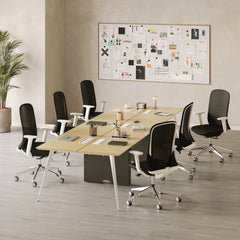
A conference chair can make shared work tables easier to use by improving comfort, posture, movement, spacing, device setup, and focus. This ...
Learn more
Visit quiz page to see how we makes it easy to create an inspiring workplace


Two monitors can fit on a surprisingly shallow desk. The problem is that “fit” and “feel good for eight hours” are completely different standards. At Urbanica, we look at desk depth as a posture tool because it determines two things your body cares about every minute: how far your eyes sit from the screens, and whether your head stays stacked over your shoulders instead of drifting forward.
When screens are too close, most people do not consciously lean. The chin simply creeps forward to sharpen focus, especially when reading small text. Over time, that small shift loads the neck and upper back. A deeper desk gives you space to keep screens farther back so you can stay upright without fighting your own habits.
Dual monitors often create a “primary zone” and a “reach zone.” If the second screen sits too far to the side, you turn your head more often and for longer. Desk depth does not directly change left to right spacing, but it does affect your ability to angle monitors inward and keep them within a comfortable turn range.
If your eyes work hard to maintain focus at a close distance, the day can end with heavy eyelids, a dull headache, or the sense that you need to rub your eyes. The screen is not “bad.” The viewing distance is just demanding.
Close screens often come with intense concentration. Blink rate tends to drop during detailed work, and leaning closer can make that worse. A desk that lets you sit back comfortably supports a more natural blink rhythm.
The most useful way to think about desk depth is to separate “workable” from “comfortable.”
A 24-inch deep surface can hold two screens, but once you add a keyboard, mouse space, and a natural palm-rest area, the usable distance to the monitor face shrinks quickly. Many people end up pulling the monitors forward to make room for cables or stands, which is the opposite of what your neck needs.
At 30 inches, you can keep the input zone where it belongs near the front, while still setting the screens far enough back to avoid chin drift. That extra depth also makes it easier to angle monitors inward without crowding the center of the desk.
As monitor size increases, the “comfortable glance” zone expands. More depth helps you take in the screen without constantly moving your head or tightening your facial muscles.
Design, editing, data dashboards, and multitasking across many windows can reward a slightly larger viewing distance. More depth gives your eyes a calmer, more consistent focus point.
Instead of asking only “how deep is the desk,” measure this: the distance from your seated eye position to the screen surface when you are sitting back naturally. A desk can be deep on paper, yet feel shallow if monitor stands push the screens toward you.
Here is the quick setup logic we use when planning dual-monitor workstations.
Comfort is not one number that fits everyone. People with different vision needs, font sizes, and tasks will settle into different distances. The goal is to choose a desk that allows that distance without forcing you to perch forward.
A large monitor stand can eat multiple inches of depth. A monitor arm can reclaim surface area, but it can also tempt you to pull the screens forward if you do not set a clear “screen line” first.
If your hands have to reach forward, your shoulders lift and your head follows. The keyboard zone should feel close, stable, and easy.
1. Sit in your normal working posture with your back supported, and place your keyboard where your elbows can rest comfortably at your sides.
2. Put your mouse where you can use it without reaching or tensing your shoulder.
3. Now place both monitors so you can read the primary screen without leaning forward.
4. Angle the secondary screen inward so it becomes a glance, not a head-turn.
5. If you cannot keep that posture because the monitors end up too close, the desk is functionally too shallow for your setup.
A reliable target is to keep the front face of your primary monitor behind the midpoint of the desk surface, not hovering near the front edge. When the screen line lives farther back, you get a natural cue to sit back rather than inch forward.
Numbers can help, but comfort signals are often more trustworthy.
A common mistake is to push a monitor closer because text looks small. Often, a better fix is to increase text size, adjust scaling, or refine contrast so you can keep a healthier distance.
Micro-squinting and jaw tension often show up when screens are close and bright. Moving screens back, reducing glare, and improving ambient lighting can make reading feel effortless.
Side-by-side monitors require more lateral scanning. If both screens are close, your eyes and head tend to move more frequently. A bit more distance makes the visual field easier to manage, especially when the secondary screen holds reference material you check repeatedly.
Sit back into your chair and relax your shoulders. If you can read the primary screen clearly without leaning forward, your distance is in a good place.
Look from primary to secondary and back. If your head stays mostly still and your eyes do most of the work, your angles and spacing are working.
Even with perfect desk depth, poor monitor height can create neck strain.
When screens sit too high, you subtly lift your chin. That can compress the back of the neck over long sessions. When screens sit too low, you tend to slump and round your shoulders. Aim for a setup where your gaze naturally lands on the upper portion of the screen without needing to lift your head.
If one monitor is higher or lower, your neck ends up constantly adapting. Align the top edges of the displays as closely as possible, then adjust tilt so both screens feel visually similar.
Glare makes people inch closer and tilt their head to “find” a clear angle. Solve glare with monitor tilt, careful placement relative to windows, and balanced room lighting. Your desk depth should support a stable posture, not become a workaround for reflections.
Monitor placement has a bigger impact on comfort than most people expect.
Place the primary monitor directly in front of you. Position the secondary screen slightly to the side and angle it inward. This lets your eyes shift more than your neck. It is especially effective for workflows where one screen is dominant and the other is supportive.
If you truly use both monitors equally, a shallow V arrangement can help keep your head centered. The key is to keep the center seam between monitors near your midline so neither screen becomes a “far corner.”
More depth cannot fix a secondary monitor that sits too far to the side. First, tighten the layout and refine angles. Then evaluate whether you still need additional depth for viewing distance.
The goal is not to “free up space.” The goal is to place screens where posture stays neutral, then organize the rest of the surface around that decision.
Many stock stands push the display forward or require a wide footprint. That reduces the space available for a comfortable keyboard zone while also shrinking viewing distance.
Arms can reclaim surface area and make it easier to center the primary screen and angle the secondary. They also create leverage on the desk, so a stable surface and thoughtful clamp placement matter.
Set your preferred screen line first. After screens are comfortable, decide what support method keeps them there without wobble or constant readjustment.
Desk depth fails when the input zone moves too far back or too far forward.
A relaxed setup allows elbows to stay close to your sides and forearms to rest comfortably. If your keyboard is far away, shoulders rise. If shoulders rise, your neck tightens. Then you start leaning toward the screens.
Large desk mats and low-sensitivity mousing can push your keyboard forward. That sounds harmless until it moves your whole body closer to the screens. If you need a large mouse zone, protect the keyboard position first.
A chair that supports your back makes it easier to sit back and maintain consistent viewing distance. When the chair does not support you well, you tend to perch forward, and every desk feels shallow. If you are building a setup around long work sessions, our collection of ergonomic office chairs is designed to support that sit-back posture so desk depth can do its job.
The ranges below are meant to be safe and realistic, not overconfident. Monitor stands, arms, keyboard habits, and text size can shift what feels best.
| Dual-monitor setup factor | Depth that often feels workable | Depth that often feels comfortable | Why the difference matters |
|---|---|---|---|
| Two 24-inch monitors on standard stands | 24 inches | 30 inches | More space to keep screens back without crowding the keyboard zone |
| Two 27-inch monitors, text-heavy work | 24 to 30 inches | 30 inches or more | More distance reduces facial tension and “lean in” habits |
| Larger displays or frequent window tiling | 30 inches | 30 inches or more | Extra depth supports a calmer viewing distance and easier scanning |
| Monitor arms with a full keyboard and mouse zone | 24 inches | 30 inches | Arms can reclaim space, but you still need depth to keep screens back |
Two 24-inch displays often convince people that a shallow desk is “enough.” The catch is that the desk ends up doing double duty as a monitor platform and an input platform. If you constantly feel like the keyboard and mouse are fighting for space, the desk is likely at the edge of workable, not truly comfortable.
With two 27-inch monitors, the viewing field is larger. If the screens are close, your eyes work harder to scan and refocus, especially when you are moving between small UI elements and dense text. Depth becomes the simplest way to keep your head back and your gaze relaxed.
Pull the keyboard slightly closer to you, and push the monitors back as far as practical. Consider a slimmer stand or an arm that helps move screens rearward. Keep the primary monitor centered. These changes reduce the urge to lean forward, even on a shallower surface.
Standing can feel energizing, but it also makes subtle leaning more likely.
When feet fatigue or attention gets intense, many people shift weight forward and lean toward the screens. A bit more viewing distance helps counteract that habit.
If screens wobble, people often pull them closer for control. That creates the very neck and eye strain you were trying to avoid. Stability and screen line come first.
If your workflow includes standing blocks, the Standing Desk is designed around movement and adaptability, which helps you preserve viewing distance without turning the desk into a cramped platform for two screens.
Depth is crucial, but it works best when width and layout match your monitor plan.
A desk can be deep but too narrow, forcing one monitor into an awkward corner. A desk can be wide but shallow, forcing screens too close. The goal is a surface that lets the primary screen stay centered with the secondary angled in, while still leaving room for an uncluttered input zone.
If you want a straightforward, stable surface for a dual-monitor setup, the Office Desk provides a clean footprint with size options that make it easier to choose a depth aligned with your monitor plan, especially if you are deciding between a more compact depth and a more spacious one.
If you are still narrowing down what depth and style fits your room, browsing the desks collection helps you compare shapes and dimensions as part of the same decision, rather than trying to force one desk to solve every layout challenge.
Multi-user environments amplify every small ergonomic compromise. Depth planning becomes a team decision, not a personal tweak.
When two people share a surface, each needs a true primary monitor zone. The desk should allow both users to keep screens back while still leaving a comfortable input zone. If screens drift forward, elbows and shoulders follow, and posture breaks down quickly.
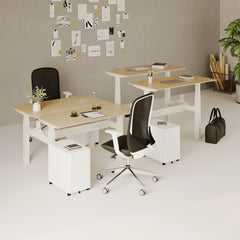
Monitor arms and cable routing require clear zones near the back edge. If the desk is shallow, those zones compete with the screen line and you end up with awkward compromises. The Two-Person Standing Desk is built for shared sit-stand workflows, which makes it easier to plan two independent screen lines without crowding the center.
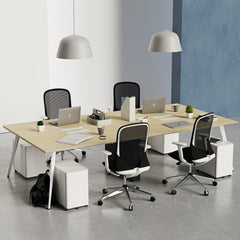
A four-person station can be productive, but only if each seat has a consistent viewing distance and clear monitor placement rules. Depth helps keep screens back while still leaving room for daily work tools, documents, and shared power and cable management.
When each person has the same usable depth, it is easier to standardize monitor placement and reduce posture variation. The Quad Workstation Desk supports collaborative layouts while still giving each user a meaningful personal zone to keep screens at a comfortable distance.
A desk can look perfect online and still feel wrong once your body is in the chair.
Sit down and place your keyboard where your arms naturally want it. Then imagine your monitors sitting far enough back that you can keep your shoulders relaxed and your back supported. If the screen line ends up near the front edge, you will likely spend the day creeping forward.
When you are choosing furniture for a specific area, the practical questions matter just as much as the dimensions. If you want a single place to check policies, help options, and common ordering questions, our delivery and support FAQs page is built around those details without requiring a showroom visit.
Monitor setups change. Workloads change. A desk that supports comfort today should not force a full reset tomorrow.
A deeper desk gives you more flexibility if you upgrade to larger monitors, add a laptop side screen, or experiment with a stacked arrangement. The goal is not to chase an ideal number, but to protect a comfortable viewing distance as your setup evolves.
When depth is sufficient, you can adjust the keyboard zone, the screen line, and monitor angles without breaking posture. That flexibility is the real benefit. Two monitors should feel like an extension of your workflow, not a daily negotiation with your neck and eyes.


You have unlocked free shipping!
You're saving $29 and unlocked free shipping!
Leave a comment