








Filing Cabinet vs Open Shelves: Which Storage Works Better for Everyday Use?

Everyday Storage Is Really a Workflow Decision
The choice between a filing cabinet and open shelves is rarely just about where to put things. It is about how a workspace behaves during a normal day. A storage solution can either make daily tasks smoother or quietly create friction every time paperwork, supplies, books, chargers, notebooks, or reference materials need a home.
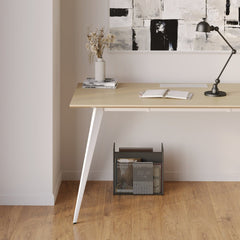
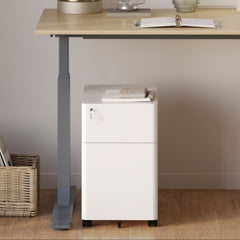
A filing cabinet is built around containment. It keeps items grouped, protected from view, and easier to separate by category. It is especially useful when everyday work includes documents, private records, office supplies, manuals, receipts, contracts, or other loose items that quickly make a room feel cluttered. A compact filing cabinet supports that kind of controlled storage because it gives paperwork and small essentials a defined place instead of letting them drift across the desk.
Open shelves solve a different problem. They make items visible. Books, baskets, display objects, active project materials, samples, binders, and frequently used tools can stay easy to scan and reach. For people who organize visually, shelves can feel more natural than drawers because nothing disappears behind a closed front.
The better choice depends on the kind of mess that appears most often. If the workspace fills with papers, cables, mail, and personal records, closed storage usually works better. If the workspace depends on books, materials, objects, and visual reminders, open shelves may be more useful. Many everyday rooms need a thoughtful mix of both.
Why Storage That Looks Good Once May Fail During Busy Weeks
A shelf can look beautiful after a reset, but daily use tests whether it can stay organized without constant styling. A cabinet can hide clutter quickly, but it can also become a messy drawer if categories are unclear. The real question is not which option looks better on the first day. The better question is which option is easier to maintain on a crowded Tuesday, during a project deadline, or after several days of household paperwork piling up.
Storage succeeds when it matches behavior. Someone who files documents regularly may love a cabinet. Someone who needs to see every notebook and reference book may forget what is inside a drawer. Everyday use reveals these habits quickly.
Closed Retrieval and Visible Access Serve Different Minds
Filing cabinets support closed retrieval. Items are hidden until needed, then found through labels, folders, drawer divisions, or categories. Open shelves support visible access. Items stay in view, so memory is triggered by sight rather than by a filing system.
Neither approach is universally better. They simply support different kinds of work. A calm, minimal desktop often depends on closed storage nearby. A creative, material-rich workflow often depends on open access to tools, books, and visual cues.
Filing Cabinets Keep Paperwork, Private Items, and Loose Essentials Under Control
A filing cabinet remains one of the most practical storage choices for paper-heavy routines. Even in digital workspaces, physical documents still appear: tax forms, insurance papers, school documents, signed agreements, invoices, receipts, warranties, medical records, product manuals, meeting notes, and printed references. Without a defined place, these items often become stacks.
A cabinet makes paperwork easier to sort because it creates boundaries. One drawer can hold active files. Another can hold archive records. A smaller section can hold supplies that should not stay on the desk. The closed format keeps the room calmer while still keeping important items close.
Drawers Make Document Categories Easier to Maintain
Paper organization depends on categories that can survive everyday use. A filing cabinet works well because each category can have a physical location. Current bills, household records, client documents, project notes, personal files, and long-term records should not all compete in one pile.
Folders, labels, and drawer zones help reduce decision fatigue. Instead of asking, “Where should this go?” the system answers for you. This is especially useful for recurring paperwork, where the same types of documents return month after month.
Active Files and Archive Files Need Separate Homes
Active files are documents used often. These might include current project paperwork, forms waiting for signatures, recent invoices, school schedules, or household admin tasks. Archive files are kept for reference but do not need daily access.
Mixing active and archive files slows everything down. The drawer becomes full of items that technically matter but do not matter right now. A stronger setup separates current documents from stored records, making everyday retrieval faster and reducing the chance that important papers disappear into an overfilled drawer.
Closed Storage Reduces Visual Noise Around the Desk
Visual clutter affects how a workspace feels. A stack of papers, a handful of cords, extra notebooks, and scattered office supplies can make a desk feel unfinished even when everything is technically useful. Filing cabinets help because they remove clutter from sight without moving it too far away.
This matters most in shared rooms. A home office in a bedroom, living room, guest room, or dining area cannot always stay in work mode. Closed storage helps the room reset at the end of the day. Instead of leaving office supplies visible, the cabinet allows the space to feel calmer and more complete.
Filing Cabinets Are Better for Items That Need Boundaries
Some items should not sit on open shelves. Personal records, financial documents, client information, private notes, small valuables, backup devices, and sensitive household paperwork need more discretion than open storage provides. A filing cabinet is not a replacement for every type of secure storage, but it offers a more appropriate everyday boundary than leaving important materials visible.
This is where filing cabinets have a clear advantage over open shelves. Shelves display what they hold. Cabinets protect the room from seeing everything at once.
Open Shelves Make Books, Tools, and Visual Materials Easier to Reach
Open shelves work best when storage needs to stay visible. They are useful for items that are meant to be browsed, referenced, displayed, or grabbed quickly. Books, binders, decorative boxes, baskets, design samples, notebooks, plants, trays, and frequently used tools all make sense on open shelves when they are arranged with intention.
For visual organizers, open shelves can reduce the “out of sight, out of mind” problem. A folder in a drawer may disappear mentally, while a labeled basket on a shelf can keep a task visible enough to finish.
Visible Storage Supports Visual Memory
Some people remember what they need because they see it. A row of binders, a stack of notebooks, or a tray for active projects can act as a reminder system. Open shelves are especially helpful for creative work, teaching materials, design references, product samples, craft supplies, and reading-heavy routines.
This does not mean every item should be visible. Open storage works best when the visible items earn their place. The more random the shelf becomes, the less useful it is as a memory tool.
Shelves Add Warmth to Functional Rooms
A filing cabinet is practical, but open shelves can make a workspace feel lived in. Books, ceramics, framed pieces, plants, baskets, and personal objects can soften the look of a work area. In a home office, this balance matters. A room that feels too utilitarian can be hard to enjoy, while a room with too much display can become distracting.
Open shelves are strongest when they combine utility and atmosphere. A basket can hold office supplies. A row of books can provide reference material and texture. A small object can break up visual weight. The shelf becomes part of the room’s design rather than just a storage surface.
Open Shelving Requires More Editing Than Drawers
The main weakness of open shelving is maintenance. Everything stays visible, including clutter. If shelves become a landing zone for mail, loose papers, random cables, and unfinished tasks, they can make a workspace feel busier than it is.
A practical shelf setup needs rhythm: grouped objects, repeated containers, negative space, and clear categories. The goal is not perfection. The goal is easy resetting. If returning an item takes too much thought, the shelf will eventually become a catchall.
The One-Touch Return Rule for Open Storage
Open shelves work better when items can be returned in one motion. A book goes back to a clear row. A notebook goes into a labeled tray. A charger goes into a basket. A sample goes into a dedicated bin. If every return requires rearranging, open storage becomes fragile.
Filing Cabinet vs Open Shelves by Everyday Use Case
The strongest storage choice depends on what the room handles most often. A paperwork-heavy office has different needs than a creative studio. A shared living space has different standards than a private workroom. The table below compares how each option performs in everyday situations.
| Everyday Need | Filing Cabinet | Open Shelves | Better Fit |
|---|---|---|---|
| Paperwork and records | Strong for folders and private files | Works with bins or binders | Filing cabinet |
| Quick visual scanning | Limited unless labeled well | Strong because items stay visible | Open shelves |
| Visual calm | Strong because clutter is hidden | Depends on editing | Filing cabinet |
| Books and references | Limited for browsing | Strong for access and display | Open shelves |
| Confidential items | Better suited to closed storage | Poor fit for private materials | Filing cabinet |
| Decorative objects | Not designed for display | Strong for styling | Open shelves |
| End-of-day reset | Easy for loose supplies | Requires visual tidying | Filing cabinet |
| Creative materials | Useful for overflow | Strong for active tools | Open shelves |
| Shared rooms | Helps hide work clutter | Can look polished or crowded | Filing cabinet for mess, shelves for display |
| Flexible work routines | Useful near the desk | Useful for rotating references | Often both |
Paper-Heavy Workflows Favor Filing Cabinets
People who manage forms, reports, client notes, invoices, household records, school papers, or recurring documents usually benefit from filing cabinets. The reason is simple: paper needs order before it needs display. When paperwork sits on shelves, it often needs binders, boxes, or magazine files to stay controlled. Without those extra systems, papers slump, spread, and become harder to search.
A filing cabinet gives paper a more natural format. Folders can stand vertically. Labels can face the user. Current and archived documents can stay separate. The result is less surface clutter and fewer piles.
Creative Workflows Often Favor Open Shelves
Open shelves work better when the materials need to be seen and handled often. A designer may need samples. A teacher may need books and classroom materials. A maker may need tools and containers. A reader may want reference books within sight. In those cases, hiding everything in drawers can slow down the work.
Shelves also encourage rotation. Current materials can stay at eye level, while less-used items move higher or lower. This makes shelves flexible for project-based routines.
Shared Spaces Usually Need More Closed Storage
When a workspace shares space with daily life, visual control becomes more important. A desk in a living room or bedroom needs to settle down when work ends. Filing cabinets help because they contain the unfinished parts of work: papers, supplies, cords, and small tools.
Open shelves can still work in shared spaces, but they should carry items that look intentional. Books, baskets, plants, and a few useful objects belong there. Loose admin clutter usually does not.
Desk Clutter Often Reveals the Wrong Storage Setup
A messy desk is not always a discipline problem. Often, it means the storage system is too far away, too hidden, too visible, or poorly matched to the work. When there is no convenient place for active documents, they stay on the desk. When shelves are overloaded, new items land wherever there is room. When drawers are unlabeled, items are set aside “for now” and never filed.
The best storage setup supports the desk rather than competing with it. A desk surface should hold the work being done, not every item related to work.
A Desk Needs a Nearby Storage Zone
Daily storage should be close enough to use without interrupting the task. A drawer beside the desk can hold folders, extra pens, chargers, sticky notes, and documents waiting for action. A nearby shelf can hold reference books, project trays, and display-worthy tools.
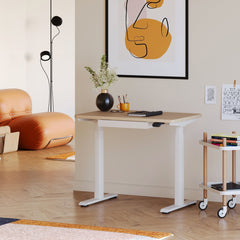
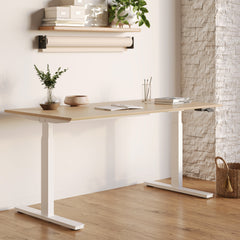
The desk itself also matters. A work surface that fits the room and the routine makes storage easier to plan. An office desk collection can help frame that decision because desk size, shape, and function influence whether a cabinet fits underneath, beside, or nearby.
The Best Storage Is Usually Within One Chair Turn
Items used daily should be reachable with minimal movement. This does not mean everything belongs on the desk. It means the most-used storage should sit within the primary work zone. A filing cabinet can hold active documents beside the chair. Open shelves can sit slightly farther away for books or materials used throughout the week.
This simple reach-zone approach prevents overloading the desktop. Hourly items stay closest. Daily items sit in the nearest drawer or shelf. Weekly items can move farther away. Rarely used items should not occupy prime workspace space.
Device Accessories Can Protect the Work Surface
Technology often creates hidden clutter. A laptop, charger, external keyboard, notebook, mouse, and paperwork can fill a desk quickly. Small accessories can make the surface easier to manage. A laptop stand can help give a laptop a dedicated position, leaving more room for writing, sorting, or handling documents.
This does not replace storage, but it supports it. When the desk has clear zones, shelves and drawers do not have to absorb random overflow as often.
Visual Calm and Visual Access Affect How the Room Feels
The difference between a filing cabinet and open shelves is also emotional. Storage affects the mood of a workspace. Some people think better when fewer things are visible. Others feel more prepared when their tools and references are in sight.
The right choice should reduce stress, not simply hold more things.
Filing Cabinets Help People Who Focus Better With Fewer Objects in View
Closed storage creates a quieter visual field. For focused work, that can be valuable. A clear desk with a cabinet nearby can make tasks feel more contained. It also helps create an end point for the day. Papers go into folders. Supplies go into drawers. The room stops looking like work is still unfinished.
This is especially helpful in rooms that serve more than one purpose. When the cabinet closes, the workspace becomes less visually demanding.
Open Shelves Help People Who Need Visible Cues
For some routines, hidden storage creates missed tasks. A notebook tucked away may be forgotten. A sample in a drawer may not be used. A reference book out of sight may stay untouched. Open shelves keep visual cues active.
The challenge is deciding which cues deserve visibility. If everything is visible, nothing stands out. Strong open shelving depends on editing, not just access.
Productive Clutter Can Become Background Stress
A shelf full of useful items can still feel overwhelming. Too many books, containers, colors, papers, and objects create visual competition. What begins as inspiration can become noise.
A practical rule is to display the useful and contain the messy. Attractive books, a few objects, and active trays can stay visible. Loose papers, cords, spare supplies, and private files usually belong in closed storage or containers.
Lighting Can Make Storage Easier to Use and Easier to Live With
Lighting is often overlooked when comparing filing cabinets and open shelves. Yet storage is only useful when it is easy to see, access, and reset. A dark drawer corner makes filing harder. A poorly lit shelf can look crowded. Good lighting helps both storage types feel more intentional.
Task Lighting Supports Filing and Sorting
Filing requires reading labels, checking papers, and returning documents to the right place. A lamp near the desk or cabinet can make those small tasks easier. The Alumina Lamp fits naturally in this conversation because focused light can support a workspace where documents, devices, and storage all need to function together.
A well-lit filing zone also encourages follow-through. When sorting papers feels easy, documents are less likely to become piles.
Softer Light Helps Open Shelves Look Intentional
Open shelves can feel flat or busy under harsh lighting. Softer ambient light helps create depth and makes shelves feel like part of the room rather than a utility zone. This is useful in home offices, reading corners, and shared rooms where storage is always visible.
Lighting does not hide clutter, but it can make a well-edited shelf feel warmer and more settled.
Light Placement Helps Separate Work Mode From Living Mode
In a multipurpose room, lighting can create boundaries. A task lamp signals work time. A softer lamp helps the room shift after work. Storage supports that rhythm when the cabinet closes, shelves are edited, and the room no longer feels like an active office.
Small Offices and Shared Rooms Need Storage That Resets Quickly
Small rooms make storage decisions more visible. A filing cabinet, open shelf, desk, and chair all compete for space. The better solution is the one that resets easily without making the room feel crowded.
Compact Closed Storage Works Well When Floor Space Is Limited
A compact filing cabinet can make sense in a small office because it concentrates storage in a defined footprint. It can sit near the desk and hold items that would otherwise spread across the room. This is especially helpful for documents, cords, extra office supplies, and small tools.
Closed storage also helps prevent a small room from feeling visually full. Even when the cabinet holds many items, the room only sees one clean form.
Open Shelves Work Best When the Room Can Handle Visual Volume
Shelves use vertical space well, but vertical visibility can make a small room feel busier. Open shelves work best in compact spaces when they are edited carefully. Repeated baskets, a limited color palette, and open gaps between objects help reduce visual weight.
If every shelf is filled edge to edge, the room may feel smaller. If shelves hold only useful and attractive items, they can add height and function without overwhelming the space.
Hybrid Storage Solves the Most Common Small-Space Problem
Most small workspaces need both hidden and visible storage. A cabinet can handle clutter-prone items. Shelves can handle books, baskets, and display-worthy materials. This division keeps the workspace practical without making it feel sterile.
A balanced setup might include a cabinet near the desk for paperwork, one shelf for books, one basket for active projects, and a few personal objects. The system stays simple because each storage type has a clear job.
Adaptable Rooms Need Furniture That Supports Change
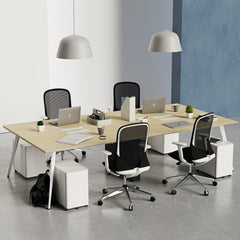
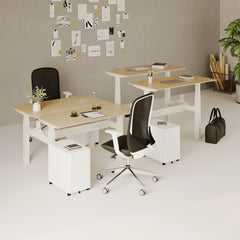
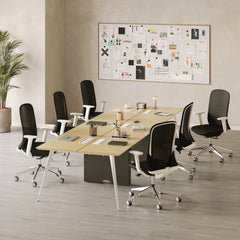
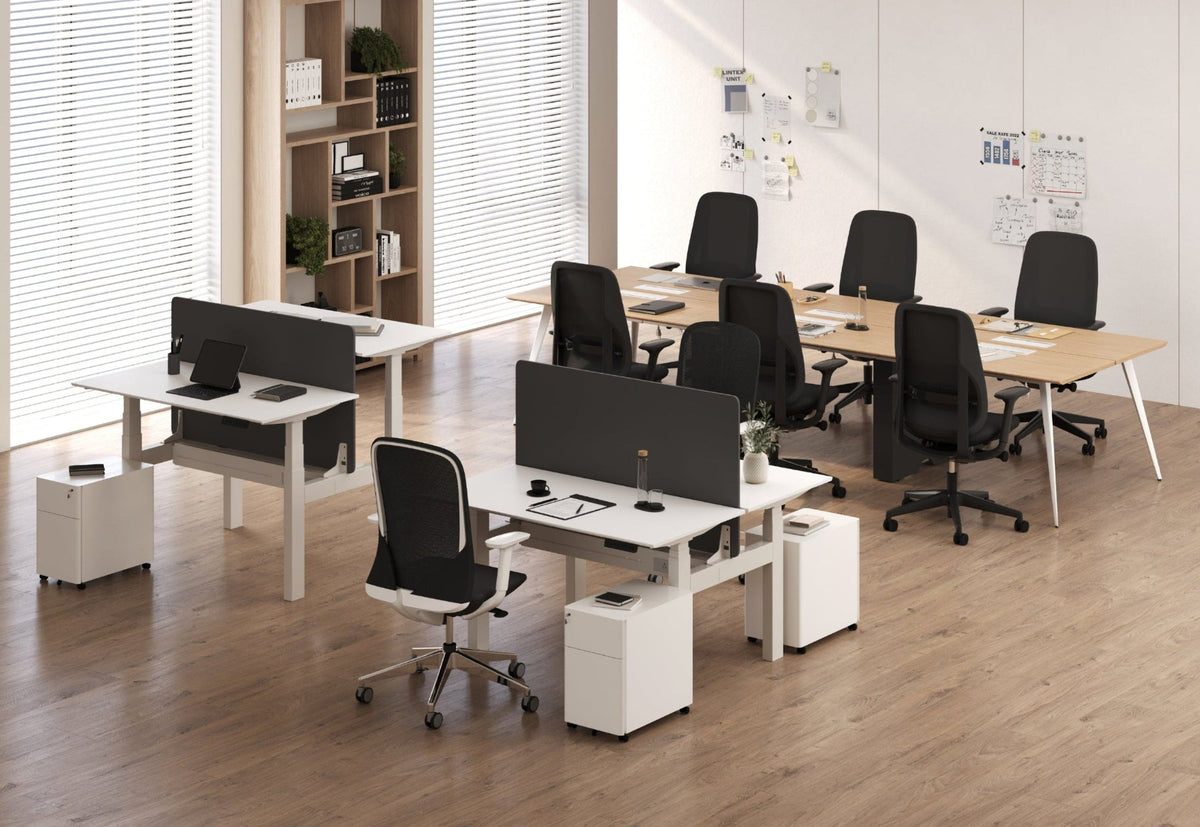
Some rooms change roles throughout the day. A dining area becomes a work area. A guest room becomes an office. A studio supports meetings, focused work, and creative tasks. In these rooms, storage should adapt without becoming visually chaotic. Thoughtfully selected workspace furniture for adaptable offices can support that kind of planning because desks, seating, storage, and accessories work best when chosen as parts of one daily system.
How to Decide What Belongs in Drawers, on Shelves, or on the Desk
Choosing between a filing cabinet and open shelves becomes easier when every item is sorted by use. The goal is not to store more. The goal is to store things where they make the most sense.
Sort Items by Visibility Need
Some items need visibility. Books, active project trays, notebooks, design samples, and frequently used tools may belong on shelves. Other items do not benefit from being seen. Receipts, spare cords, private documents, manuals, extra supplies, and loose papers usually work better inside drawers or containers.
Visibility should be earned. If an item helps the workday by being seen, shelves make sense. If it creates noise, it belongs behind a closed front.
Sort Items by Access Frequency
Frequency is one of the most useful storage filters. Items used many times a day deserve the closest position. Items used daily should stay within easy reach. Weekly items can sit on shelves or in secondary drawers. Rarely used items should not occupy the best storage zones.
A simple storage checklist can clarify the decision:
1. Choose a filing cabinet when the main problem is loose paper, private records, office supplies, receipts, or visual clutter.
2. Choose open shelves when the main need is visible books, binders, samples, baskets, or tools used during active work.
3. Choose both when the room supports paperwork, creative materials, and personal display.
4. Keep hourly-use items closest to the desk.
5. Move rarely used items away from the main work zone.
6. Store messy items in closed drawers or containers.
7. Keep shelves edited enough that returning items feels easy.
Sort Items by Privacy and Visual Mess
Privacy matters. Some items should not be part of the room’s visual story. Personal records, financial documents, client notes, backup drives, and sensitive household papers deserve closed storage. Visual mess also matters. An item does not have to be private to belong in a drawer. Spare cables, tape, small tools, and extra supplies may be useful, but they rarely improve an open shelf.
Storage Should Feel Functional Without Making the Workspace Cold
Practical storage does not need to make a workspace feel plain or corporate. A filing cabinet can be softened with lighting, texture, and thoughtful placement. Open shelves can be made more disciplined with containers, spacing, and a clear visual rhythm.
Closed Storage Feels Better With Warm Details Nearby
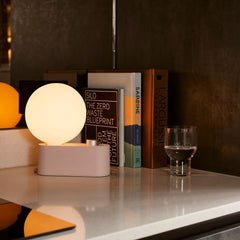
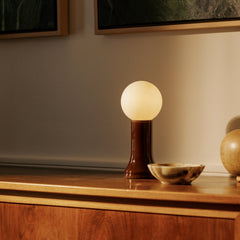
A cabinet solves clutter, but surrounding details help the room feel complete. A lamp, plant, framed image, textured tray, or well-chosen object can balance the utility of closed storage. The Shore Table Lamp fits this kind of setting because warm lighting can soften a storage-heavy zone and make the workspace feel more inviting.
The key is restraint. A few warm details can make the area feel intentional without turning the cabinet top into another clutter zone.
Open Shelves Need a Clear Visual Rhythm
Open shelves look better when they have structure. Group books by size or subject. Use baskets for small items. Leave some negative space. Repeat materials or colors where possible. Avoid mixing paperwork, decor, supplies, and random objects without separation.
A shelf should not have to be perfect to work well. It only needs enough rhythm that the eye understands what belongs there.
Seating, Surfaces, and Storage Should Work Together
Storage is part of a larger workspace system. A desk supports the work surface. A chair supports posture and movement. Storage supports access and reset. When these pieces do not work together, the room feels harder to use.
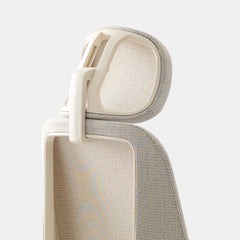
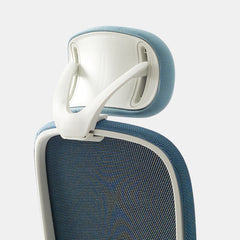
An office chair collection belongs in the broader planning conversation because seating affects reach, movement, and how naturally someone uses nearby drawers or shelves. A cabinet that is close but awkward to access will not be used well. A shelf that requires constant standing may become decorative instead of functional.
The Strongest Everyday Storage Setup Matches What You Hide, See, and Reach
A filing cabinet works better for everyday use when the main challenge is paper clutter, privacy, visual calm, and fast resetting. It gives documents and small essentials a contained home, helps shared rooms feel cleaner, and makes it easier to separate active files from archived records.
Open shelves work better when the main challenge is visibility, browsing, creative access, and room warmth. They keep books, baskets, tools, samples, and display objects easy to see and reach. They also make a workspace feel more personal when they are edited with care.
The most reliable everyday setup often combines both. Use filing cabinets for what should disappear: paperwork, private records, cords, supplies, and clutter-prone items. Use open shelves for what benefits from visibility: books, attractive containers, active materials, and objects that make the room feel considered. When each storage type has a clear purpose, the workspace becomes easier to use, easier to reset, and better suited to daily life.
Related Articles
-
 How Filing Cabinet Storage Supports Office Desk Must Haves
-
 Filing Cabinet Ideas for Better Office Furniture Accessories
-
 Best File Cabinet for Home Office Storage That Feels Easy
-
 Better Multiple Monitor Desk Setup Starts With One Stand
-
 Make Laptop and 2 Monitor Setup Work With Better Stands
-
 Why Dual Monitor Comfort Needs a Monitor and Laptop Stand


