








Can a Bistro Table Work as a Laptop Table for Daily Productivity?
A bistro table can serve as a productive laptop workstation when the setup matches the demands of daily work. This post explores where bistro...
Learn more
Visit quiz page to see how we makes it easy to create an inspiring workplace


Work has become fluid. Teams split time between focused solo work and fast collaboration, often across multiple locations. Static desks were built for a different era, where posture rarely changed and tools rarely moved. Today our customers ask for surfaces that keep pace with varied tasks, changing energy levels, and evolving team structures. When posture can shift easily, comfort lasts longer and focus stays consistent. This is the design lens we apply to every table we build.
Human bodies operate best with gentle cycles of motion. Long bouts of stillness increase muscular load and reduce circulation, which shows up as stiffness, distraction, and fatigue. Tables that invite small movements support healthier mechanics. Height ranges that match elbow level, clear leg space that encourages stance changes, and stable tops that make typing and sketching feel grounded are not extras. They are the foundation of reliable performance over long days.
A useful test for any table is whether a user can keep a neutral spine without strain. Height should allow elbows to rest near 90 degrees, wrists should glide on the surface without bending, and the primary display should sit at or just below eye level. Reach zones matter as much as height. Frequently used items belong in a near zone that minimizes shoulder elevation and twisting. The table shape and the placement of grommets, cable trays, and accessory rails all influence this reach pattern.
Adjustment only helps when the motion feels smooth and the structure remains solid. Wobble undermines typing accuracy and discourages standing. We design lift mechanisms that move cleanly and frames that stay steady across the height range. The result is a surface users trust when they change posture many times per day.
Monitor arms, keyboard platforms, and modest privacy screens expand what the table can do without creating clutter. When the table supports these add-ons natively, users gain more adjustability and a cleaner layout. Power access should be simple, and cable pathways need to keep lines clear of knees, feet, and casters.
| Criteria | Fixed Desk | Flexible Ergonomic Table |
|---|---|---|
| Primary Use | Single posture | Multiple postures and tasks |
| Height Range | None | Broad, seated to standing |
| Stability While Typing | Often adequate when seated | Stable across full range |
| Cable Management | External add-ons | Integrated trays and routes |
| Daily Comfort | Declines over time | Encourages movement and balance |
Switching positions resets spinal loading and changes muscle groups, which reduces tension in the back and shoulders. People also report a moderate boost in focus when they stand for planning, quick calls, or reading, then sit for typing and precision tasks. The goal is rhythm, not extremes. We encourage gentle cycles, paying attention to how the body feels rather than chasing strict timers.
Simple cues help teams build better habits. Keep the surface just below elbow height when standing. Use a supportive mat for long standing blocks. Place a foot rail or small block near the base to allow alternating leg positions, which eases lower back load. Encourage brief movement checks when switching tasks, such as aligning the monitor and relaxing the shoulders before starting focused work.
Experience how to maintain posture and energy with a standing desk designed for active workdays.
Not every workspace has room for a large setup. Compact tables can deliver the same ergonomic principles when engineered carefully. The surface should remain deep enough for correct monitor placement, the frame should feel steady even at full height, and storage should avoid encroaching on legroom. Good compact design preserves movement and reach without swallowing square footage.
Creators, consultants, and students often reposition their table to match the task or share a single room with other activities. Lightweight frames with clean cable routing, protective feet that glide without scraping, and tops that resist stains make daily reconfiguration easier. Compact pieces should also pair well with slim monitor arms and low-profile lighting so the entire station remains tidy and supportive.
Discover how a mini standing desk adapts to small home offices.
Teams need proximity for quick exchange, then separation for deep work. The most effective modular tables allow short rotations between these modes. Shared power access keeps devices alive without clutter. Optional dividing panels introduce privacy where it helps, and soft treatments around the stations temper echo in active rooms.
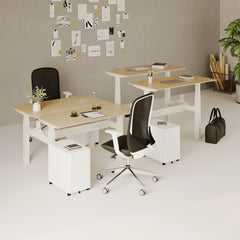
Pair-based work benefits from a station that supports quick stand-up reviews, then seated production. Independent height controls help each person work comfortably, even when they switch roles.
Explore a two-person standing office desk for adaptable collaboration.
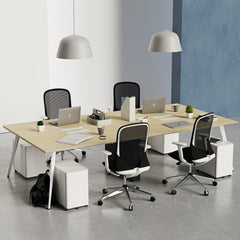
Studios and product teams often move between sketching, critique, and build steps. Stations that position people in a balanced grid reduce shoulder-to-shoulder crowding and make cable runs predictable.
Enhance flow in open spaces with a quad workstation built for team synergy.
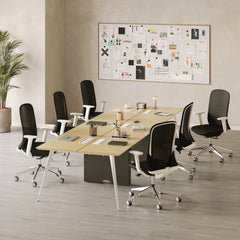
When many people share a zone, walkway planning and personal reach areas become essential. A sturdy shared platform with consistent spacing helps everyone find a natural posture and stay aligned with their tools.
Organize larger setups with a six-person workstation desk optimized for shared efficiency.
| Team Size | Primary Goals | Helpful Features |
|---|---|---|
| 2 people | Rapid co-creation, personal comfort | Dual height controls, shared power strip |
| 4–6 people | Balanced collaboration and focus | Grid layout, modular partitions, cable trays |
| 6+ people | Order and access in busy zones | Defined walkways, uniform spacing, durable frames |
Ergonomic safety is practical. Users should sit or stand with relaxed shoulders, wrists in a neutral line, and a clear view of the primary display. The table’s height, shape, and accessory placement should make this easy to achieve. When these fundamentals are built in, strain-related issues become less common and people can work longer without discomfort.
Trusted guidance helps teams set consistent standards for posture, reach, and task alignment. Investing in proven ergonomic principles protects people while supporting consistent output.
Reference the OSHA ergonomics principles for safe and healthy work environments.
Daily flexibility means frequent transitions and contact. Tops should resist scratches, clean easily, and feel comfortable under the hands. Edges need a radius that prevents pressure points. Finishes should limit glare for clear visibility. We pair these details with frames that remain stable at full extension, because a table can only encourage movement if it feels solid when users lean, write, or type.
A well-built frame carries weight without flexing. Cross members, leg geometry, and properly engineered fasteners work together to keep everything steady. Cable trays sit within this structure, not bolted on as an afterthought, so the finished station looks intentional and functions cleanly across years of use.
Experience refined functionality through modern office desk craftsmanship and design detail.
Tables sit at the center of a real workspace ecosystem. Chairs must support neutral posture without dictating it, lighting should avoid glare on the work surface, and the acoustic environment should allow conversation without disrupting focused neighbors. We plan table zones alongside these elements so that task switching feels natural.
Flexible work depends on reliable power without clutter. Integrated under-surface trays, vertical cable channels, and simple grommets keep lines tidy. For shared tables, distributed power bars limit crossovers and trip points. When the infrastructure is clean, the station remains adaptable and safe.
Browse the complete collection of ergonomic desks for evolving workplaces.
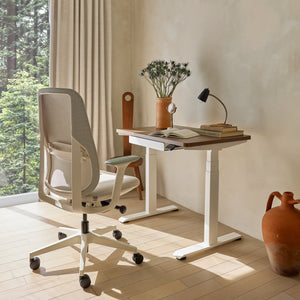
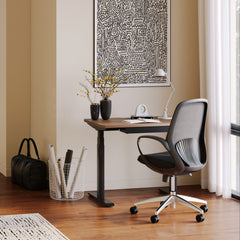
A compact adjustable table pairs with a slim task chair and a light that angles away from the display. The monitor sits at eye level, and a small mat invites short standing intervals. Cable routes exit toward the wall to keep the footwell clear.
Two height-adjustable stations sit face to face with a shared power channel between them. Lightweight screens define personal space without blocking sightlines. People stand for short planning or sketching, then sit for production tasks.
A deeper table supports sketchbooks, samples, or small tools. The surface finish prevents glare for photo capture and sketching. A rail-mounted arm holds a light or camera so the surface remains free for materials.
1. Align the top just below elbow height before typing.
2. Stand for short planning blocks, sit for precision tasks.
3. Keep frequently used items within an easy reach zone.
4. Relax the shoulders and check wrist position after every posture change.
5. Take short movement breaks to reset circulation and focus.
Ergonomic support must accommodate substantial height variation among users. Height ranges should fit both shorter and taller individuals without creative workarounds like foot stacks or makeshift risers. Controls need to be reachable from a comfortable seated or standing posture. Legroom must stay clear across the full range to prevent contact points against knees and thighs.
Furniture works best when people understand how to use it. Provide simple orientation moments that cover correct height setting, safe cable routes, and how to switch positions without interrupting the task at hand. Post a quick-reference card near shared stations so teams can restore neutral posture quickly when they sit down.
You can see the impact of a flexible table in how people move and how long they remain comfortable. Look for relaxed shoulder posture, easy transitions between positions, and fewer ad hoc supports piled under monitors or laptops. Teams that reach for the adjustment controls regularly are using the table as intended, which correlates with fewer complaints about stiffness.
Create brief check-ins that ask about comfort, accessibility, and cable clutter. If users report persistent issues, adjust reach zones, monitor height, or accessory placement before assuming a new product is needed. Small refinements often deliver the largest gains.
Libraries, co-working floors, and training rooms put furniture through heavy use. Edges must resist chipping, finishes should clean easily, and hardware must tolerate frequent height changes. When tables are designed for public use, simple and clearly labeled controls prevent confusion and reduce service calls.
Shared environments benefit from consistent heights within zones and clear walk paths around tables. Meeting accessibility needs means leaving adequate turning radius, keeping cable routes out of aisles, and ensuring adjustment controls can be operated with limited strength. These details make flexibility inclusive.
Thoughtful material choices reduce environmental load while improving user experience. Components that can be repaired or replaced extend the life of the table. Fasteners that allow re-tightening, finishes that can be restored, and frames that accept future accessories will serve teams through multiple layout changes.
Protective packaging that avoids messy fillers, clearly labeled hardware, and step-by-step assembly sequences reduce setup errors. When the unboxing process is clean and intuitive, teams begin using height adjustment and cable routes correctly from day one.
The most responsible path forward is not chasing novelty, but refining the fundamentals that help people feel and work better. Smoother motion, quieter frames, clearer cable paths, and more intuitive controls will continue to raise the baseline for daily comfort. As work changes, the tables that succeed will be the ones that keep the human body at the center, support healthy movement patterns, and integrate gracefully into varied rooms and routines.


You have unlocked free shipping!
You're saving $29 and unlocked free shipping!
Leave a comment