

























Table Lamp Buying Guide: What to Look For Beyond Just Style
Choosing a table lamp takes more than finding the right style. This buying guide explains how to evaluate lamp height, shade type, brightness...
Learn more
Visit quiz page to see how we makes it easy to create an inspiring workplace


Long workdays do not punish people because sitting is inherently bad. The strain usually builds because a chair either concentrates pressure in the same few areas for too long or it restricts the small posture changes that keep tissues and joints from getting cranky. For long hours, the goal is not to feel like you are sitting on a cloud. The goal is to distribute load across the hips, thighs, and back while keeping you supported enough to stay focused.
A chair can feel great at first and still fail you later. The common pattern is support drift. Your body starts in a decent position, then gradually slides forward, rounds through the mid-back, and cranes at the neck. That drift is not a character flaw. It is often a mismatch between your body and the chair’s seat shape, back contour, or arm support.
When the front edge of the seat presses into the underside of the thighs, circulation can feel “off,” especially if you are shorter, the seat is too deep, or the chair is set too high. People compensate by perching forward or crossing legs. Both can create new tension patterns. A long-hours chair should let your feet rest steadily on the floor while keeping the seat edge gentle enough that you do not feel compelled to shift constantly just to get relief.
Low-back fatigue often shows up as an ache that makes you want to slump. Mid-back fatigue often shows up as a need to stretch your chest and shoulders or roll your upper back. The difference matters because chair categories tend to emphasize different zones. Some chairs push hard into the lumbar area. Others spread contact higher up the back. For desk work, the best support is usually the kind you forget about, present enough to keep the spine from collapsing but not so aggressive that it locks you into one shape.
Long sessions reward chairs that permit small changes. Think of it as giving the body permission to move without sacrificing support. Micro-movement includes subtle recline, pelvic rocking, repositioning the shoulders, and shifting the legs. When a chair restricts these, people often overcorrect by slouching or reclining too far, which can create its own strain.
These are the checks we come back to when we help customers compare chair styles for work-first comfort.
A stable pelvis usually starts with a seat that feels balanced and not pitched too far back. If you feel like you are sliding forward, you will likely fight the chair all day. Seat height range and seat shape influence this more than most buyers expect.
The best back support adapts to you. If it forces you into a dramatic curve, your muscles may tense to resist it. If it is too flat, you may collapse into it. A supportive chair should encourage neutral alignment, not impose a rigid posture.
Armrests are not just about resting your arms. They are about reducing shoulder lift and neck tension while you type or use a mouse. If armrests are too high, too low, too wide, or too far back, the shoulders do extra work. Over hours, that adds up.
When customers start their search, we recommend first looking at chair shapes and support styles rather than labels like “gaming” or “office.” Our Urbanica office chairs collection makes it easier to compare silhouettes and identify what looks compatible with your body and workspace before you dive into details.
Gaming chairs and office chairs often feel different because they were popularized for different usage patterns. Many gaming chairs borrow visual cues from racing seats. Many office chairs evolved to support desk work, especially typing, mousing, and frequent posture changes during tasks. Those origins still show up in the geometry.
Gaming chair designs often emphasize a high back, prominent side bolsters, and a recline-forward experience. Office chair designs often emphasize upright stability, easier shoulder movement, and task posture support.
Side bolsters can make some people feel centered, especially if they like a defined seat “lane.” The tradeoff is that bolsters can restrict how you rotate hips or shift legs, which many people naturally do to stay comfortable in long work blocks. If you sit cross-legged, tuck a leg, or frequently change positions, bolsters can become the thing you are always negotiating with.
A tall back can feel supportive when reclining or resting. For keyboard work, shoulder blades need room to move. A chair that is wide enough through the upper back or shaped to avoid pinching shoulders often feels better for long typing sessions.
Seat shape influences circulation, pelvic position, and how easy it is to maintain an upright posture.
A bucket-like seat can be comfortable if your hip width and thigh angle match the contour. If not, pressure can concentrate at the edges, or the seat can subtly rotate the pelvis in a way that pulls the lower back into tension. For long hours of work, many people prefer a flatter seat with enough shaping to feel secure but not so much contour that it dictates posture.
If the seat is too deep, shorter users often cannot sit back fully without the seat edge pressing into the legs. That encourages perching forward. If the seat is too shallow, taller users can feel under-supported through the thighs, which can also increase shifting and fatigue. Getting seat depth right is one of the most practical differences between chairs that work for eight-hour days and chairs that only feel good for shorter sessions.
Recline can be helpful, but it depends on whether the chair supports you during both upright work and relaxed breaks.
A gentle, controlled recline that allows small movement can reduce the feeling of being locked into one posture. That can be useful during calls or reading. The key is that you can return to a stable work position without feeling like you are constantly balancing.
Some gaming chairs are built for dramatic recline. That can be enjoyable for breaks. For long work, the chair still needs to offer a stable, supportive upright position that does not push your head forward or collapse your mid-back.
People sometimes assume that more knobs and levers guarantee comfort. In reality, the right adjustments are the ones that match your daily tasks and your body. Extra features that do not change your working posture can be noise.
Start with a simple check. Sit back with your feet flat. If your heels lift or your thighs are pressed hard into the seat, adjust height until the feet feel steady. This is foundational because it influences how the pelvis sits and how the spine stacks.
If your desk is high and the chair must be raised, a stable foot support can help maintain a comfortable leg angle. This is not about chasing perfection. It is about removing the most obvious driver of leg discomfort and fidgeting.
For desk work, armrests should reduce shoulder load, not interfere with your ability to get close to the desk.
If you game with a controller, you might prefer armrests that support the forearms while reclined. For keyboard and mouse work, you often want armrests that allow the elbows to rest close to the body while the hands reach the input devices without the shoulders creeping up. Width, height, and fore-aft position affect this more than most people expect.
Lumbar support can be a game-changer when it fits, and a constant irritation when it does not.
Sit back and relax your shoulders. You should feel the support contact your lower back without pushing you forward. If you feel like you must brace your abs to tolerate it, it is likely too aggressive. If you feel nothing and immediately slump, it may be too subtle for your needs. The goal is a gentle cue that helps you maintain posture without effort.
Headrests can provide relief during rest. For active desk work, a headrest that pushes the head forward can encourage forward head posture. If you want a headrest, it should allow your head to rest without forcing your chin down or your neck forward.
The most honest way to compare gaming chairs and office chairs is to map them to what you do most of the day. A chair that supports your real workflow tends to feel better than one that wins on aesthetics or hype.
If your day is built around typing, spreadsheets, design tools, or coding, your posture is mostly upright with small shifts. Many office chairs are designed for that pattern. They tend to prioritize shoulder freedom, stable upright support, and armrest placement that helps desk work.
Ideally, elbows can stay near your sides while you work. If you must reach forward to the keyboard or mouse, the shoulders lift and the upper back tires. If a chair’s armrests prevent you from getting close to the desk, you can end up reaching all day.
If you spend hours in meetings, you might recline more, lean back while listening, or change positions frequently. In that context, a chair that supports semi-recline can feel helpful, as long as it still supports upright work when you return to tasks.
The best “call day” chair does not trap you in a lounge posture. It lets you recline for listening and return to a productive posture for note-taking and follow-up tasks.
When your day includes writing, browsing, calls, and creative work, you benefit from a chair that makes posture changes effortless. If the chair demands constant re-adjustment, many people give up and default to slouching.
A supportive back that you can comfortably return to, plus armrests that do not block desk proximity, can make a surprising difference in how often you naturally reset your posture.
There is no universal best chair category for everyone. Fit matters.
Seat depth and the relationship between seat height and desk height become critical. If you cannot sit back comfortably, you will perch. If the desk forces you to raise the chair too high, feet stability becomes the limiting factor.
Upper-back width and armrest spacing matter. A chair that presses in at the shoulders can feel restrictive during typing.
Overly firm seats and sharp edges can feel uncomfortable sooner. A balanced cushion that supports without feeling hard can be more important than extreme adjustability.
For long work hours, heat and friction can distract you and increase fidgeting. Breathability and surface feel matter more than people expect.
PU leather can feel smooth and easy to clean, but it can also trap heat. Fabric can feel breathable and cozy, though it may require more attention to cleaning. Mesh backs can improve airflow, which some people find more comfortable across long stretches.
When a chair gets warm, people tend to shift, perch forward, or lean away from the backrest to cool down. That posture change can reduce support and increase strain.
Some seats feel plush at first but compress in a way that reduces support. Over time, a seat that maintains shape and distributes pressure evenly tends to feel better during long workdays.
If you feel pressure concentrating at the sit bones or the frame, the seat may be compressing too much for your body. That can create soreness that builds across days.
Hard edges can show up as hip discomfort or thigh pressure. A well-designed seat edge reduces that sensation and supports circulation.
A chair that fits your lifestyle reduces stress. If you eat at your desk, have pets, or work in a multipurpose space, a material that stays presentable with normal care can be a practical advantage.
A chair can only perform as well as the workstation around it. Many “chair problems” are really desk-height or monitor-position problems.
If a desk is too high, shoulders lift. If it is too low, you hunch. Either way, the chair gets blamed.
Sit with shoulders relaxed. If your forearms cannot approach level while your hands rest on the keyboard, desk height or chair height needs adjustment. Small changes can reduce neck and shoulder fatigue dramatically.
If you cannot place feet comfortably under the desk, you will twist or perch. Even small obstructions can change how you sit for hours.
A beam or drawer that forces your knees outward can lead to asymmetrical sitting. Over long hours, that can create one-sided discomfort.
A chair cannot prevent forward head posture if the monitor is too low or too far away. Laptops intensify this because the screen and keyboard are connected. If you use a laptop, consider elevating the screen and using an external keyboard and mouse when possible.
A systematic setup helps avoid overcorrecting.
1. Set desk placement and legroom.
2. Adjust chair height so feet feel stable.
3. Adjust armrests so shoulders relax while hands reach keyboard and mouse.
4. Position the screen so your head does not drift forward.
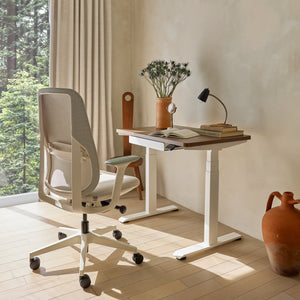
If you are coordinating a desk and chair together, a stable work surface makes the chair setup much easier to dial in. The Urbanica Office Desk is a straightforward reference point when thinking about how surface height and leg clearance interact with chair height, arm position, and long-hour posture.
“Ergonomic” gets used loosely in furniture, so it helps to focus on practical outcomes: stable upright support, breathable contact points, and adjustments that meaningfully change your working posture. Two common approaches show up often in office chairs built for long sessions.
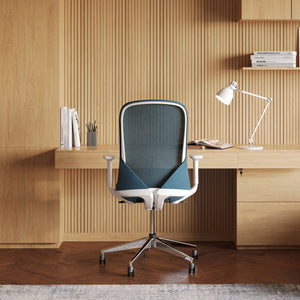
Many people want a chair that looks modern and blends into a home office while still supporting long hours. In that category, the best chairs focus on consistent back support, a comfortable seat for extended use, and adjustability that fits desk work.
A breathable back can reduce heat buildup and encourage you to use the backrest consistently. If you avoid the backrest because it feels sticky or warm, posture drift becomes more likely.
For a concrete example of this style, the Onyx ergonomic office chair is positioned as a work-first ergonomic option and is designed to support extended desk use with a clean, modern look.
Some chairs lean more heavily into adjustment points that help you tune the fit. For long hours, the most meaningful adjustments tend to be those that influence upright posture, arm support during typing, and how the backrest supports you across movement.
Adjustments can help accommodate different body shapes and desk setups. They can also help you fine-tune comfort over time as your work patterns change.
What adjustments cannot solve is a fundamentally mismatched seat depth or a desk height that forces shoulder lift. Those issues still need setup attention.
For a workday-focused example in this category, the Novo Chair ergonomic support is positioned as an ergonomic chair designed for long-hour use with multiple adjustments that can help align fit to your workstation.
Some people want a chair that looks refined and intentional in a modern space. That is a valid goal. The key is being honest about whether the chair is intended to carry eight-hour desk days or whether it should play a supporting role in the room.
A visually soft chair can still lack the structure needed for long work. If a chair’s design prioritizes shape and silhouette over adjustability and back support, it may feel best for shorter sitting periods or mixed use rather than full workdays.
Minimal adjustment mechanisms, fixed arm positions, and shallow back support can indicate that a chair is intended more as a stylish seating option than a long-hour task tool. That does not make it bad. It just changes the best use-case.
Design-forward chairs can fit beautifully into a home office and still support daily work when they provide stable seating and a backrest shape that encourages upright posture. For many people, the sweet spot is a chair that looks intentional but does not force a rigid posture.
A design-led example worth considering in that context is the Muse Chair adjustable office chair, which is positioned as an office chair with an adjustable structure and a modern aesthetic that can complement a workspace.
A strategy that works well in real homes is a two-seat setup. Use a task chair for focused desk work and a secondary chair for breaks, reading, or quick resets between work blocks. Changing seats can reduce stiffness and help you avoid staying in one posture for too long.
A practical example of a secondary seat that can support short sits and visual balance in a room is the Seashell Chair performance chair, which can function as an everyday chair for non-desk moments in a workspace or adjacent area.
Long-hour comfort is not only about day one. It is about consistency across repeated use. Chairs that maintain support and stay pleasant to sit in tend to feel like the better choice, even if the differences felt subtle at first.
These are the areas that most directly influence long-term daily satisfaction.
Materials that feel fine in short tests can become irritating when you sit for hours. Heat, stickiness, and friction can change how often you shift positions.
If the seat compresses too much, your pelvis position changes and the backrest support no longer lines up the way it did initially. That is when people start stacking cushions or sitting forward to compensate.
Armrests that wobble or feel uncomfortable can push you toward shoulder tension. Over long workdays, that can matter as much as lumbar support.
A chair should arrive in good condition, be straightforward to assemble, and feel stable. Those factors influence confidence and day-to-day experience. A chair that is difficult to set up or does not feel secure can create doubt, which often leads to constant adjustments and distraction.
Sometimes discomfort comes from the environment, not the chair category. Adjusting monitor height, improving foot stability, or changing keyboard and mouse placement can transform comfort without chasing a new chair type.
Different chair types can work well, but they excel in different patterns. Use this matrix as a practical starting point, then validate with fit and workstation setup.
| Long-hours factor | Gaming chair tendencies | Office chair tendencies | What to prioritize for work |
|---|---|---|---|
| Upright typing posture | Can be supportive but may encourage recline-first behavior depending on design | Typically designed for upright task posture | Stable upright position that feels effortless |
| Freedom to shift positions | Bolsters can restrict leg and hip movement for some users | Often allows easier posture variety | Ability to change positions without losing support |
| Arm support for keyboard and mouse | May favor relaxed or reclined support | Often optimized for desk proximity and typing posture | Armrests that reduce shoulder lift and allow you to sit close |
| Heat and breathability | Upholstery choices vary, some trap heat | Many ergonomic designs emphasize airflow | Back comfort that encourages you to use the backrest consistently |
| Neck and head positioning | High backs can be comfortable, headrests can push forward in some setups | Usually avoids forcing head position, varies by model | Head stays neutral in upright work |
| Best fit for workdays | Works well if you prefer defined seating and recline breaks | Often the safer default for desk-heavy days | Choose based on workflow and body fit, not labels |
A chair test does not need to be complicated. It needs to reveal whether the chair supports your natural work posture and whether any pressure points appear quickly.
Use a timer and test in your most common posture.
1. Minute 1: Sit back and relax shoulders. Notice if you immediately feel pushed forward in the lower back or if the seat edge presses the thighs.
2. Minute 3: Mimic typing posture. Check whether shoulders lift or whether armrests block desk proximity.
3. Minute 5: Shift slightly and return to upright. Notice whether the chair encourages you back into a stable position or whether you drift forward.
4. Minute 7: Recline lightly and come back upright. Confirm that the chair supports both positions without feeling unstable.
Thigh pressure, forced shoulder position, a headrest pushing the head forward, or a sense that you must brace your core to be comfortable are signals that the chair may be a long-hours mismatch.
If a chair feels wrong at home, first check desk height, screen height, and legroom. Many “chair issues” disappear when the workstation stops forcing awkward angles.
Adjust chair height first, then armrests, then back support. Making multiple changes at once makes it hard to identify what actually helped.
Many people want their home office to feel intentional, not pieced together. Cohesion includes look, function, and how the pieces support daily work habits. For customers furnishing a workspace in Southern California, we built a dedicated page that highlights what is available and how to shop by category with practical context around ordering and fulfillment. That experience is captured in fast-shipping modern office furniture so shoppers can compare chairs, desks, and office essentials with confidence.
A chair category label cannot tell you whether a chair will suit your long workdays. Work-session compatibility can. That mindset keeps expectations realistic and helps you choose based on your body, your tasks, and your space.
The simplest way to avoid regret is to validate these three areas.
You should be able to sit back without the seat edge digging into your thighs. Your feet should feel stable. If you cannot achieve both, you will end up perching or crossing legs as a workaround.
Armrests should support your arms without forcing shoulders up or pushing your elbows away from your body. If you use a mouse heavily, arm support that reduces shoulder tension matters a lot across long sessions.
If the backrest feels uncomfortable, warm, or restrictive, people avoid it. That is when posture drift begins. A chair that makes it easy to stay in contact with the backrest often wins over time.
Many people try to pick one chair for everything. That can work if the chair supports upright desk work and relaxed breaks. The trick is not to chase extremes.
One chair can work when it supports upright posture and offers comfortable recline without forcing the head forward. Two chairs can work when you want a dedicated task posture at the desk and a separate seat that supports breaks. The right choice depends on space and how different your work and leisure postures are.
A chair is part of the room, not just a tool. For video calls, many people want something that looks intentional and modern. The safest approach is to prioritize task support first and then choose a chair style that complements your space. When aesthetics and ergonomics both matter, a chair that supports movement and stable upright posture tends to feel like the most honest long-hour upgrade.


You have unlocked free shipping!
You're saving $29 and unlocked free shipping!
Leave a comment