

























Smarter Seating Ideas for Modular Conference Furniture Today
Smarter seating ideas can transform modular conference furniture into a more flexible, comfortable, and productive workplace system. This pos...
Learn more
Visit quiz page to see how we makes it easy to create an inspiring workplace


A desk lamp becomes much more than a finishing touch when the workday stretches across emails, calls, reading, writing, reviewing, planning, and late-afternoon problem solving. The lamp sits beside the tools that carry the day, quietly shaping how clearly documents read, how comfortable a screen feels, how much surface area remains usable, and how often the body has to compensate for poor visibility.
Long-hour work exposes every weakness in lighting. A lamp that feels fine for occasional use may become frustrating when it creates glare on a monitor, casts shadows across notebooks, occupies too much desk space, or offers only one harsh brightness level. The most useful desk lamp features are not gimmicks. They are practical details that reduce friction hour after hour.
The right lamp should help the desk feel calmer, more adaptable, and easier to use. That means brightness that adjusts to the task, light quality that supports screen work, a form that fits the workspace, and controls that make sense during real daily use. When a desk is used for long stretches, the best features are the ones that make the lamp feel almost invisible because it simply works where and when it should.
A full workday rarely happens under one lighting condition. Morning light may fill the room. Afternoon sun may create glare. Evening work may rely almost entirely on artificial light. A desk lamp that has only one brightness level forces the user to adapt to the lamp rather than allowing the lamp to adapt to the work.
Adjustable brightness is one of the most reliable desk lamp features worth prioritizing because it supports different tasks without changing the whole room. Reading printed notes may need stronger task lighting. Typing beside a bright monitor may need a softer glow. Reviewing forms, drawings, labels, or handwritten notes may require a more focused beam.
A lamp with useful dimming makes these shifts feel natural. It prevents the desk from feeling overlit during light computer work and underlit during detailed review. For long sessions, that flexibility matters because visual comfort changes as the day goes on.
A very bright lamp is not automatically a better lamp. If the light is harsh, poorly diffused, or difficult to control, extra brightness can make the workstation less comfortable. The more valuable feature is range. A good lamp should offer enough brightness for focused task work while also allowing lower settings for relaxed evening work, video calls, or screen-heavy tasks.
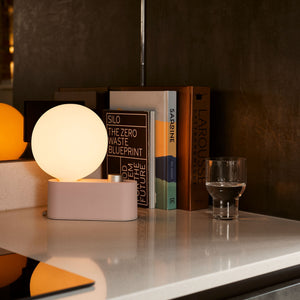
For a desk that supports many kinds of work, a versatile option such as a multi-use LED lamp can fit into a broader lighting plan without requiring the workspace to revolve around one fixed lighting style.
A lamp can have excellent lighting potential and still feel inconvenient if the controls are awkward. Long-hour workers benefit from controls that are reachable, intuitive, and simple enough to adjust without breaking concentration.
Useful brightness controls often include:
A switch or touch point placed where the hand naturally reaches
Smooth dimming or several clear brightness levels
A setting that does not reset unexpectedly during normal use
Controls that are easy to identify in low light
A design that avoids requiring the user to move the whole lamp just to adjust it
The goal is not complexity. The goal is steady, usable light that can be changed quickly as the task changes.
Color temperature shapes how a workspace feels. Warm light can feel softer and more relaxed. Neutral light often works well for everyday reading and typing. Cooler light can help some detail-heavy tasks feel clearer, although it may become uncomfortable when used too aggressively late in the day.
A long-hour desk lamp does not need to make exaggerated claims about productivity or performance. It needs to provide lighting that feels appropriate for the work environment. The best color temperature feature is flexibility, especially when the same desk handles daytime work, evening planning, calls, and reading.
Warm light often works well in lower-light settings where the goal is to reduce visual harshness. It can be useful for reading, planning, or winding down with administrative work. Neutral light is usually a strong choice for general desk use because it balances clarity and comfort. Cooler light may help when reviewing small details, but it should still be controlled to avoid glare.
A single-tone lamp can feel limiting when the room changes throughout the day. A tone that feels pleasant at night may be too muted for midday paperwork. A tone that feels crisp during detail work may feel too sharp during evening computer tasks.
| Light Tone | Best Desk Use | Long-Hour Advantage | Potential Drawback |
|---|---|---|---|
| Warm light | Evening reading, planning, relaxed admin | Softer visual feel in low-light settings | May feel too subdued for precision work |
| Neutral light | Writing, typing, calls, mixed tasks | Balanced for everyday desk routines | Still needs diffusion to avoid glare |
| Cool light | Detail review, short periods of focused visual work | Can make small details easier to see | May feel harsh during late sessions |
| Adjustable tone | Desks used across many tasks | Matches light to changing work conditions | Only useful if controls are simple |
One common problem during long work sessions is contrast. A bright monitor in a dark room can feel uncomfortable, while a bright lamp aimed poorly at a screen can create reflections. The best desk lighting fills the surrounding work area enough to soften that contrast without shining directly into the eyes or bouncing off the display.
A useful lamp should support the screen, not compete with it. The light should help the keyboard, notebook, and nearby work surface remain visible while keeping the monitor easy to read.
Glare is one of the fastest ways a lamp becomes tiring. It can come directly from an exposed bulb or LED source. It can also come indirectly from light bouncing off glossy desks, tablets, glass frames, or monitor surfaces. Over time, glare encourages small habits that make work harder: squinting, leaning, shifting documents, or turning the screen away from the light.
A desk lamp worth using for long hours should control glare by shaping, softening, or directing the light. This does not mean the lamp has to look technical or severe. It means the light should be comfortable where the work happens.
A softer, better-distributed beam can be more useful than a bright hotspot. Diffusion helps spread light across the work surface, which is especially helpful when switching between a keyboard, notebook, printed documents, and small accessories.
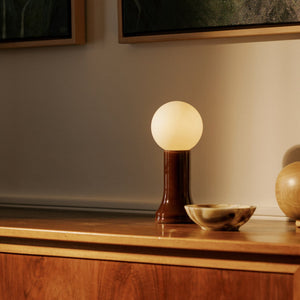
Decorative lighting can still have a place on a work surface, especially when the goal is to create a softer atmosphere around the desk. A recycled glass table lamp can support the visual character of a workspace while contributing to a more considered lighting environment.
The shape and material of a shade affect how light leaves the lamp. A shade that exposes too much of the light source may feel sharp. A shade that directs light only downward may be useful for paperwork but less helpful for general desk ambiance. A wider or softer spread can reduce contrast across the surface.
Good glare control often comes from a combination of placement, shade design, lamp height, and surface finish. Even the best lamp can create glare if it is pointed directly at a screen or placed where the light reflects into the eyes.
Work rarely stays in one fixed spot on the desk. The center of activity may shift from the keyboard to a notebook, then to printed documents, then to a tablet, then back to the screen. A lamp with flexible positioning makes these changes easier by allowing the light to move with the task.
Adjustable arms, movable heads, swiveling shades, and compact forms can all help direct light without rearranging the entire workstation. This is especially important for people who combine digital and analog work throughout the day.
A lamp with poor reach may force the user to slide documents into an awkward position just to see them clearly. A lamp with too much bulk may block a monitor or crowd the writing area. The right reach allows the lamp to illuminate the active work zone while staying out of the way.
This matters for posture as well. If the light lands in the wrong place, the body often compensates. Shoulders roll forward. The neck bends toward the page. The user leans into the beam rather than working naturally. Over long hours, these small adjustments can make the desk feel more tiring than it needs to be.
For writing tasks, lamp placement should reduce hand shadows. Right-handed users often benefit from placing the lamp to the left of the writing area. Left-handed users often benefit from placing it to the right. For screen-heavy work, the lamp should usually sit where it can light the keyboard and surrounding desk without reflecting directly off the monitor.
There is no single perfect lamp position for every setup. The right placement depends on screen height, desk depth, writing habits, and the type of work being done.
A desk lamp used for long hours is touched often. It is adjusted in the morning, repositioned for reading, dimmed for calls, moved for paperwork, and switched off at the end of the day. Weak hinges, loose joints, unstable bases, and fragile controls become noticeable very quickly when the lamp is part of a daily routine.
Durability is worth considering because a lamp is not only a light source. It is a moving object on a busy work surface. The more often it is adjusted, the more important the build becomes.
A lamp that shifts when touched can make the workspace feel less dependable. A base that slides too easily, a head that droops, or an arm that refuses to stay in place adds small frustrations throughout the day. These problems are not dramatic, but they interrupt flow.
A stable lamp should feel secure when adjusted. The head should hold its position. The base should stay planted or the mounting method should feel firm. Controls should respond without making the whole lamp move.
Long-hour workspaces benefit from materials that feel solid, cleanable, and appropriate for repeated interaction. Metal elements, weighted bases, well-fitted shades, and firm adjustment points can all contribute to a better daily experience. The goal is not to chase luxury for its own sake. The goal is to choose a lamp that keeps performing under ordinary, repeated use.
Build quality also affects how calm the desk feels. A lamp that looks settled and stays where it is placed helps the whole workstation feel more intentional.
Desk lighting is often part of a larger power problem. The lamp sits near a laptop charger, phone cable, monitor cord, headphones, tablet, or speaker. When power access is poorly planned, the area around the lamp can become crowded with cords and adapters.
Long-hour work depends on uninterrupted access to tools. Reaching under the desk to find an outlet or dragging cords across the work surface creates unnecessary friction. While power access is not technically a lamp feature, it strongly affects how well the lighting zone functions.
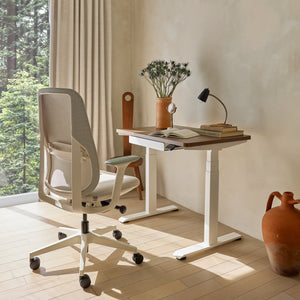
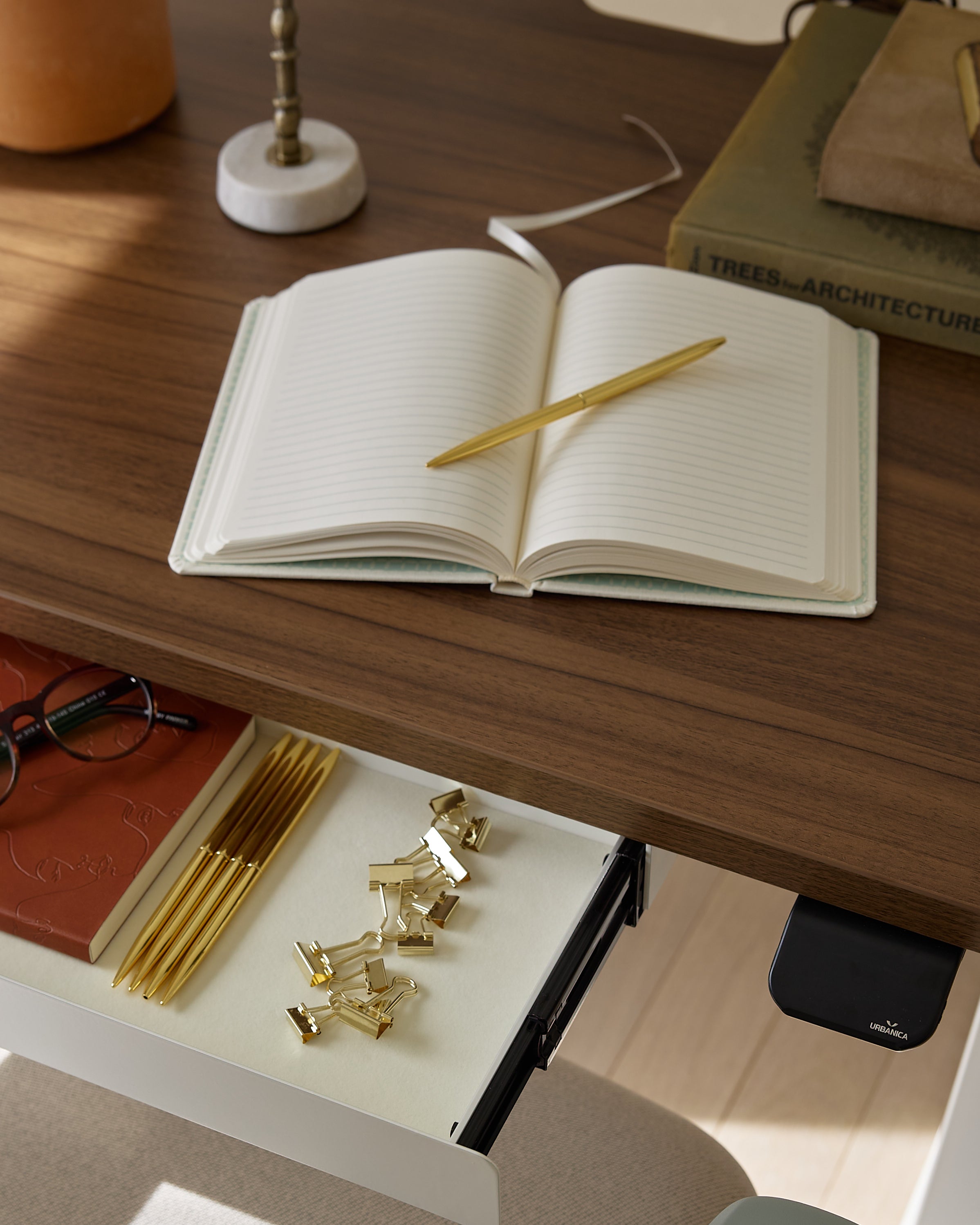
For desks used every day, integrated power can keep charging closer to the surface and reduce visible cable trails. A workstation with an in-desk power module can support a cleaner arrangement for devices that need regular access to power.
This kind of setup is especially useful when the desk has a fixed layout. A dedicated work surface, private office, studio desk, or home workstation often benefits from thoughtful cable routing because the same tools return to the same places each day.
Not every desk should be modified. Shared workspaces, rented rooms, adjustable desk arrangements, and temporary setups often need power access that can move as the layout changes. A clamp-on desk power module can provide accessible power at the edge of the work surface without requiring the same level of permanence as an integrated option.
Power planning helps the lamp do its job because the illuminated work area stays clearer. Fewer cords across the desk means fewer shadows, fewer distractions, and less visual clutter.
A desk lamp can have useful lighting features and still be the wrong choice if it consumes too much space. Base size, arm reach, shade width, and cord placement all affect how much usable surface remains. On compact desks, every inch matters. On larger desks, poor placement can still crowd the mouse area, block a notebook, or interfere with monitor sightlines.
A long-hour desk needs room for the tools that support work. The lamp should improve the surface, not dominate it.
A small lamp may be perfect for a narrow writing desk but insufficient for a wide surface. A larger lamp may provide better reach but become awkward beside dual monitors. A lamp with a heavy base may feel stable but take up valuable space near the keyboard.
Before choosing a lamp, it helps to map the desk into active zones: screen zone, writing zone, device zone, storage zone, and open space. The lamp should support the most important zone without blocking the others.
Laptop-based work creates unique lighting challenges. A low screen can crowd the center of the desk, while the keyboard and trackpad occupy the same surface that might otherwise hold notes. Raising the laptop can open up the layout and make it easier to angle light across the desk.
A slim laptop stand can support a cleaner laptop arrangement, especially when paired with an external keyboard or a more intentional task-lighting setup.
Before choosing a desk lamp for a compact or screen-heavy workspace, consider:
1. Will the base crowd the mouse, keyboard, or notebook area?
2. Can the lamp head clear the monitor or laptop screen?
3. Does the cord route cleanly behind or beside the desk?
4. Can the lamp reach the writing area without sitting in the middle of it?
5. Will the lamp still work if the setup changes later?
These simple questions help prevent a common problem: buying a lamp that looks good alone but feels awkward once the full workstation is in place.
Lighting quality depends on more than the lamp. A cluttered surface changes how light moves across the desk. Stacks of paper create shadows. Loose accessories interrupt the beam. Reflective items bounce light into unexpected places. When the desk is crowded, even a good lamp can feel less effective.
Long-hour work benefits from a surface that keeps active tools visible and inactive items nearby but out of the way. This does not mean the desk has to look empty. It means the illuminated area should serve the task at hand.
Paper-heavy work often creates the worst lighting conditions because documents spread across the desk and overlap the area where light is needed. A simple distinction helps: active documents belong under the lamp, while stored or completed documents should have another place to go.
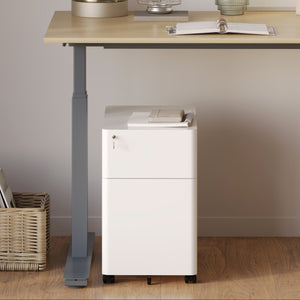
A nearby compact filing cabinet can help keep important papers accessible without allowing every file to crowd the main work surface.
Visual noise matters during long sessions. When too many objects compete for attention, the desk feels busier than the task requires. A lamp can then highlight clutter rather than support focus. Keeping the central work zone clear allows the light to define the active area, which can make reading, writing, and screen transitions feel smoother.
The best desk setups give each object a role. The lamp lights the task. Storage holds what is not immediately needed. Power access supports devices. The open surface allows work to happen comfortably.
Style may seem secondary when discussing desk lamp features, but it becomes practical when the desk is used every day. A lamp is always in view. Its shape, finish, scale, and relationship to surrounding furniture influence how the workspace feels.
A visually calm lamp can make the desk feel more settled. A poorly matched lamp can make the workspace feel temporary or cluttered, even if the light output is adequate. Long-hour work benefits from surroundings that feel intentional rather than improvised.
A desk lamp should work with the desk, chair, storage, monitor setup, and accessories. The finish does not need to match perfectly, but the overall language should feel cohesive. A slim modern desk may pair best with a lamp that has a lighter visual profile. A warmer office setting may benefit from softer materials or a lamp that adds texture.
Planning the whole workstation matters. A source for workspace furniture built for daily use can help frame lighting as one part of a broader environment rather than an isolated purchase.
A beautiful lamp that leaves the work area dim is not the right lamp for long sessions. A highly functional lamp that feels visually harsh may also become unpleasant over time. The strongest choice balances both sides: practical illumination and a form that makes sense on the desk.
The lamp should support the work without becoming the visual center of every task.
Different workers need different lighting strengths. The best desk lamp features depend on how the desk is used most often. A writer, designer, executive, student, and hybrid worker may all need good light, but they may not need the same lamp.
Writing and editing often move between a screen, keyboard, printed notes, books, and handwritten revisions. This work benefits from dimmable, diffused light that avoids harsh contrast between paper and monitor.
A lamp with flexible positioning helps keep the page visible without reflecting onto the screen. Neutral light is often useful for long reading sessions because it supports clarity without feeling overly sharp.
Designers, architects, stylists, and visual reviewers often need to examine details closely. For this type of work, lamp placement and glare control matter. The light should be directed where it helps without washing out the screen or distorting the appearance of materials.
A flexible head, stable adjustment, and controlled beam are more useful than excessive brightness. For visual work, uncontrolled light can be distracting even when the room feels bright.
Executives, consultants, and client-facing professionals often use the same desk for focused work and video calls. The lamp should support reading and typing while also contributing to a polished background. Cable control, appropriate scale, and a refined silhouette can all make the workspace feel more composed.
The lamp does not need to dominate the room. It should help the desk look organized and ready for daily use.
Students, researchers, and evening workers often use desks in shared rooms or smaller spaces. Adjustable brightness, compact size, and easy controls become especially important. A lamp that can brighten for study and soften for late-night reading is more useful than one that only provides a single intense setting.
| Work Style | Most Useful Lamp Feature | Mistake to Avoid | Workspace Priority |
|---|---|---|---|
| Writer or editor | Diffused adjustable brightness | Creating glare on paper or screen | Clear reading and typing zones |
| Designer or reviewer | Flexible positioning | Relying on uncontrolled overhead light | Precise task illumination |
| Client-facing professional | Balanced form and cable control | Choosing style with poor usability | Clean visual presentation |
| Student or night worker | Compact dimmable light | Using a harsh fixed setting | Adaptable small-space setup |
| Hybrid worker | Adjustable tone and brightness | Keeping one setting all day | Flexible daily arrangement |
Not every advanced-sounding feature improves daily work. Some features are useful only when they fit the user’s habits. Others sound impressive but add little value if the basics are missing.
The strongest desk lamp choice starts with light quality, placement, stability, and comfort before considering extra controls or decorative flourishes.
Smart controls can be convenient for some users, but they should not make basic adjustments harder. During focused work, many people prefer a simple physical switch, dial, or touch control. If changing the brightness requires too many steps, the feature may go unused.
A good control system should feel natural during the workday. It should not require attention that belongs to the task.
More light is not always better light. A lamp that is too bright, too narrow, or poorly angled can create eye discomfort and harsh shadows. A moderately bright lamp with better diffusion and placement may support work more effectively than a powerful lamp that creates glare.
Brightness should be evaluated together with beam spread, shade design, angle, and desk surface.
Some lamps add atmosphere but do not provide enough usable task light. These can still be valuable in the right setting, but they should not be mistaken for full work lamps if the desk handles reading, writing, and detailed review.
A long-hour desk lamp should earn its place through daily usefulness. Style matters, but performance has to come with it.
A thoughtful lamp choice begins with the work, not the lamp. The right question is not simply which lamp looks best. The better question is what the desk needs to support hour after hour.
Someone who works mostly on a laptop may need compact lighting with careful screen-glare control. Someone who reviews printed documents may need wider task coverage. Someone who takes calls all day may need a lamp that contributes to a clean, calm visual environment.
Lighting should be judged in the same conditions where it will be used. A lamp that looks pleasant in a bright showroom or product photo may behave differently beside a glossy screen at night.
Before committing to a desk lamp, consider:
How it performs beside a monitor
Whether it creates shadows while writing
Whether the brightness can soften in the evening
Whether the controls are easy to reach
Whether the base fits the available surface
Whether the lamp can be angled without blocking other tools
Whether cords can be routed cleanly
The features worth paying for are usually simple, not flashy. Adjustable brightness, comfortable light tone, glare control, flexible positioning, stable construction, a reasonable footprint, and clean power planning all support real work habits.
A desk lamp should not ask the user to tolerate discomfort. It should make the desk easier to use from the first task of the day to the last.
Long hours at a desk become easier when the environment supports the body, the eyes, and the flow of work. A well-chosen desk lamp helps define the active work area, reduces unnecessary strain from poor visibility, and gives the workspace a sense of order.
The best features are not about novelty. They are about repeat value. Dimming helps the lamp adapt throughout the day. Color temperature gives the light a better relationship to the task. Glare control protects comfort. Flexible positioning keeps the beam useful. Stable construction makes daily adjustments feel dependable. A compact footprint preserves working space. Thoughtful power and storage decisions keep the illuminated area clear.
A desk lamp used for long hours should feel reliable, balanced, and easy to live with. When the lighting supports the way work actually happens, the desk becomes more than a place to sit. It becomes a workspace that can carry sustained focus with less friction, fewer distractions, and a calmer rhythm from one task to the next.


You have unlocked free shipping!
You're saving $29 and unlocked free shipping!
Leave a comment