

























Why Shared Teams Work Better Around a Round Meeting Table
A round meeting table helps shared teams communicate with more balance, visibility, and ease. By reducing hierarchy, improving sightlines, an...
Learn more
Visit quiz page to see how we makes it easy to create an inspiring workplace


A workspace can feel efficient and still feel inviting. The difference often comes down to lighting. A table lamp changes more than visibility. It shapes the mood of the desk, softens the edges of modern furniture, supports evening focus, and gives a minimalist workspace a clear visual anchor without adding unnecessary decoration.
The best table lamp styles for warm, modern, and minimalist workspaces balance three priorities at once. Warmth comes from glow quality, material, and color temperature. Modernity comes from clean lines, useful features, and intentional placement. Minimalism comes from scale, restraint, and the ability to support daily work without cluttering the surface.
A good lamp should never feel like an afterthought. It should belong to the desk, work with the surrounding furniture, sit comfortably near screens and devices, and make the workspace feel calmer the moment it turns on.
Warm workspace lighting is not simply about choosing a beautiful lamp. The real measure is how the lamp changes the light around the desk. A lamp that looks striking but creates glare, harsh shadows, or uneven brightness can make a workspace feel uncomfortable, even when the design itself is attractive.
Warm, modern lighting begins with a controlled glow. The goal is not maximum brightness. The goal is comfortable illumination that supports focus while making the room feel composed.
Warm white light usually feels more relaxed than stark, cool light. In a modern workspace, that softness matters because desks are often surrounded by hard surfaces: screens, metal frames, glass accessories, painted walls, and clean-lined storage. A table lamp can soften those elements by adding a warmer visual temperature.
For reading, writing, planning, and low-light computer work, a warm lamp helps the desk feel less clinical. It also makes the workspace transition more naturally from daytime productivity to evening use. A minimalist desk does not need many decorative accents when the lighting itself brings depth and atmosphere.
Diffusion is one of the most important qualities in a workspace lamp. A bare bulb or overly bright directional source can reflect off monitors, glossy desk surfaces, framed art, or glass accessories. A diffused lamp softens the output before it reaches the eyes and the surrounding surfaces.
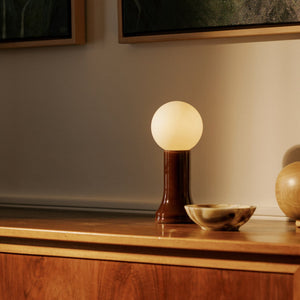
Frosted glass, fabric shades, paper-inspired shades, shaded LEDs, and translucent glass forms all help spread light more gently. For workspaces that need a softer visual tone, a Shore Lamp made from recycled glass can support a warmer mood while adding a light, sculptural presence to the desk or nearby surface.
A minimalist workspace can look clean during the day and feel flat at night if it relies only on overhead lighting. Layering light solves that problem without adding clutter. The table lamp becomes one controlled layer within the room.
A practical lighting mix may include:
1. Ambient light from a ceiling fixture, wall light, or natural daylight
2. Task light from a desk or table lamp
3. Accent glow from a shelf, side table, or softly lit corner
4. Screen-aware placement that avoids direct reflection
This layered approach gives a workspace dimension. The table lamp provides enough intimacy to make the desk feel personal, while the rest of the room remains open and uncluttered.
Modern workspace design depends on intention. A lamp should not be chosen only because it fills an empty spot. It should clarify the look and function of the desk. The strongest modern table lamp styles usually fall into a few categories: sculptural, slim and technical, material-focused, or flexible enough to move with changing work habits.
A sculptural lamp works especially well when the rest of the workspace is quiet. Orb lamps, dome lamps, arched lamps, cylindrical bases, and asymmetric silhouettes can give a desk one strong design moment without requiring several small decorative items.
This is useful in minimalist rooms because small objects can quickly become visual noise. A single well-proportioned lamp adds shape, shadow, and personality while preserving a clean surface. The lamp becomes the focal point, and everything else can stay edited.
Sculptural lamps work best when the desk is otherwise simple. A warm wood desk, a matte white surface, or a black metal frame can all support a lamp with a more distinctive shape. The key is restraint. When the lamp has presence, the surrounding accessories should be quieter.
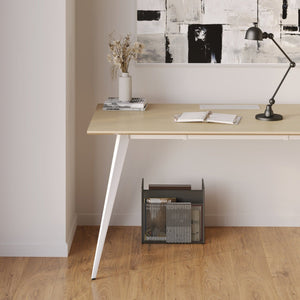
Slim metal LED lamps are ideal for modern computer-based workstations. Their appeal comes from precision. They often have smaller bases, directional heads, and narrow profiles that sit neatly beside monitors, notebooks, and keyboards.
Matte black, white, powder-coated aluminum, brushed metal, and muted neutral finishes all work well in minimalist interiors. These finishes tend to look architectural rather than decorative. They connect naturally with chair frames, monitor arms, drawer pulls, desk legs, and power accessories.
A slim LED lamp is especially useful when the desk needs clear task light. The shade or head can direct light toward a notebook, keyboard, or reading area without washing the entire room in brightness. For modern workspaces, that control is often more valuable than a larger decorative lamp.
Some workspaces do not have enough surface area for a traditional lamp. Small apartments, studio offices, compact writing desks, and multipurpose rooms often need lighting that can adapt. A lamp that can work on a desk or wall helps preserve surface space while keeping light close to the work zone.
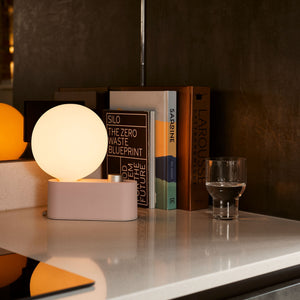
The Alumina Lamp for desk or wall use fits this kind of flexible modern workspace because it supports more than one placement style. That flexibility matters when the desk layout changes, the room serves multiple purposes, or the workspace needs a cleaner surface.
A wall-capable lamp can be the stronger choice when the desk is narrow, the surface is shared, or the work area needs to stay open for writing, drawing, packing, or daily laptop use. Moving the light source off the desk keeps the visual field clean while still giving the workspace a defined glow.
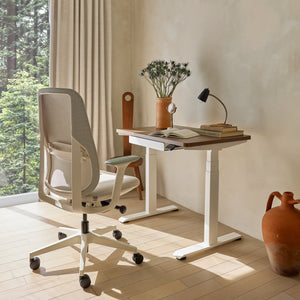
This approach also works well near floating desks, standing desks, and guest-room workstations. The lamp supports the area without claiming too much room.
Minimalist lighting is not about choosing the plainest lamp. It is about choosing the lamp that does its job with the least visual friction. Scale, height, base size, shade direction, and placement all determine whether a table lamp feels calm or distracting.
A lamp base has more visual impact than many people expect. On a compact desk, a wide or heavy base can crowd the surface and make the workspace feel smaller. On a larger desk, a tiny lamp may look under-scaled and disconnected from the furniture around it.
A good rule is to match the lamp’s visual weight to the desk. Narrow desks benefit from slim bases, small footprints, clamp options, or wall-capable designs. Larger desks can support taller lamps, wider shades, or more sculptural forms. The lamp should leave room for essential work tools, including a keyboard, notebook, mouse, laptop, and any daily documents.
Minimalism depends on breathing room. The lamp should create order, not compete for space.
Lamp height affects shadows, glare, and comfort. If a lamp is too low, it may cast hard shadows across a notebook or keyboard. If it is too high or too exposed, it may shine into the eyes or reflect on the screen.
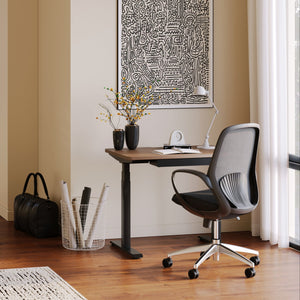
Screen-based workstations need special attention. A raised laptop or monitor changes the visual plane of the desk. When using an anodized aluminum laptop stand, the lamp should sit outside the most reflective screen angles while still lighting the working surface. This helps the setup feel ergonomic and visually balanced.
The best placement often puts the lamp to the side of the main screen rather than directly behind it or in front of it. Right-handed users typically benefit from placing the lamp on the left to reduce hand shadows while writing. Left-handed users often benefit from the opposite placement.
Every table lamp in a minimalist workspace should have a defined purpose. It may provide task light, ambient glow, accent lighting, or a mix of those functions. Problems usually happen when a lamp is chosen only for its appearance and cannot support real work.
Task lamps are designed to illuminate a specific work area. They are useful for reading, writing, sketching, reviewing documents, and working beside a screen.
Ambient table lamps create a softer glow for the room or desk area. They are helpful when the workspace needs warmth, but they may not be strong enough for detailed work on their own.
Accent lamps are primarily visual. They add mood, shape, and atmosphere. They can be beautiful, but they should not be the only light source for a desk that sees daily work.
Hybrid lamps can support more than one role. These are often the most practical choice for modern minimalist workspaces because they provide atmosphere without giving up function.
Material choice plays a major role in how warm or minimal a lamp feels. A workspace with clean furniture can feel cold if every surface is hard, dark, or glossy. The lamp is a natural place to add texture and softness because it is already meant to draw the eye.
Glass works well in warm modern workspaces because it adds presence without heaviness. Clear glass feels airy. Frosted glass softens brightness. Smoked or tinted glass adds depth. Recycled glass can introduce gentle variation that feels more organic than a perfectly uniform surface.
A glass lamp can be especially useful on a desk with a lot of straight lines. The curves and reflections break up the geometry without adding clutter. When paired with warm bulbs or diffused shades, glass can create a calm glow that supports both modern and minimalist styling.
Metal lamps suit workspaces that need clean definition. Powder-coated aluminum, steel, and matte finishes create crisp silhouettes that pair naturally with modern desks, task chairs, monitor stands, and storage pieces.
Black metal can add contrast and focus. White metal can blend into lighter spaces. Aluminum can feel technical and refined. Brass or warm-toned metal can soften a neutral workspace while still feeling modern. The best choice depends on the desk’s existing finishes and the level of contrast desired.
Ceramic, plaster-look, and stone-inspired lamps bring a grounded quality to minimalist offices. Their surfaces tend to absorb light rather than reflect it, which can make the workspace feel calmer. They also introduce tactile warmth without relying on busy patterns.
These lamps work especially well in quiet luxury, neutral, or residential-style workspaces. A matte ceramic lamp beside a wood desk, linen pinboard, or soft chair can make a modern office feel more personal without becoming decorative in a distracting way.
Minimalist workspaces often use black, white, gray, or natural wood. A lamp with a linen shade, paper-inspired shade, or wood detail can soften those contrasts. These materials make the desk feel warmer while maintaining a clean visual language.
The goal is refinement, not rustic excess. A simple linen shade, a pale wood detail, or a warm neutral texture is usually enough. In a minimalist workspace, one natural element can change the entire feel of the desk.
Different workspaces need different kinds of warmth and function. A home office, creative studio, executive office, and shared workstation may all benefit from table lamps, but the right style depends on how the space is used.
A home office should feel comfortable enough for long work sessions and polished enough for calls, planning, and focused tasks. A diffused lamp with warm light is often the most versatile option. It can soften the room during evening work, reduce reliance on overhead light, and make the desk feel more settled.
For video calls, the lamp should not sit directly behind the person or shine harshly toward the camera. A side placement with soft diffusion usually creates a more natural effect. The goal is a workspace that feels calm on screen and comfortable in person.
Creative workspaces can handle more expressive lamps, especially when the desk itself is clean. Designers, writers, photographers, and artists often benefit from lighting that sets a mood while still supporting focused work.
A sculptural lamp can give the studio a point of identity. However, it still needs to provide usable light. If the lamp is mostly decorative, it should be paired with stronger task lighting elsewhere. Good studio lighting supports both creative atmosphere and practical output.
A client-facing office should feel refined, composed, and easy to navigate. The table lamp should add warmth without dominating the desk. Controlled silhouettes, quality materials, and clean cable paths matter more than dramatic shapes.
A lamp in this setting should reinforce trust. It should look intentional, sit neatly within the workspace, and support the overall furniture plan. When desks, seating, storage, and lighting feel coordinated, the office communicates care without needing excessive decoration.
Shared workspaces require a different kind of restraint. Lamps should be durable, repeatable, and easy to integrate across multiple desks. Consistent lighting helps create a more unified office environment, especially when teams move between focused work, collaboration, and client meetings.
Coordinated desks, seating, accessories, and lighting can make a workspace feel more organized. For offices that need cohesive planning, ergonomic furniture for creative workspaces helps connect lighting decisions with the larger furniture system rather than treating the lamp as a separate styling detail.
| Table Lamp Style | Best Workspace Match | What It Adds | Strong Pairings | Watch-Out |
|---|---|---|---|---|
| Recycled glass table lamp | Warm modern home office | Soft glow, lightness, subtle reflection | Wood desks, neutral palettes, simple trays | May need task lighting for detailed work |
| Slim metal LED lamp | Minimalist computer workstation | Directional light and clean lines | Monitors, laptop stands, metal accessories | Can feel cold with overly cool light |
| Sculptural table lamp | Creative studio or design-led office | Focal point and personality | Low-clutter desks, simple walls, muted surfaces | Can overwhelm small desks |
| Ceramic or stone-look lamp | Quiet, warm minimalist office | Texture, weight, calm presence | Linen, warm wood, matte finishes | Larger bases need more surface area |
| Wall-capable lamp | Compact or multipurpose workspace | Flexible placement and open desk space | Floating desks, small rooms, shared surfaces | Requires thoughtful positioning |
The table lamp style should match the way the workspace is used. A lamp for late-night writing should feel different from a lamp for a shared workstation. A lamp for a creative desk can be more expressive than a lamp in a client-facing office. The best choice supports the work while making the room feel more complete.
A beautiful lamp cannot fully compensate for a cluttered desk. Papers, loose cables, scattered accessories, and unused devices all compete with the lamp’s shape and glow. In minimalist workspaces, organization is part of the lighting strategy because clear surfaces allow light to spread more naturally.
When the desk surface is edited, the lamp becomes more noticeable and more useful. The glow can reach the work area without being blocked by clutter. The base can sit with enough negative space around it. The overall desk feels intentional rather than crowded.
This does not mean the workspace should be empty. It means every visible item should earn its place. A notebook, laptop, pen cup, tray, or plant can belong on the desk if it supports the way the space is used. The lamp should still remain one of the primary visual anchors.
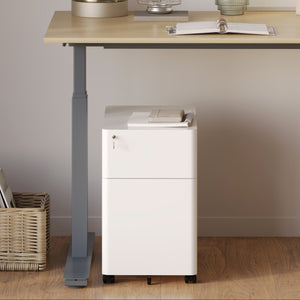
Documents, supplies, and personal items often need to be nearby, but they do not always need to be visible. Storage helps keep the desktop calm while still keeping essentials accessible. A lockable filing cabinet with rolling storage can support that kind of clean workspace by giving files and supplies a dedicated place away from the main work surface.
This matters for table lamp styling because clutter changes how light behaves. Piles of paper create shadows. Random objects interrupt sightlines. Visible storage overflow can make even a well-chosen lamp feel less intentional.
A simple styling framework can keep the workspace warm without making it busy:
1. Choose one lamp as the lighting anchor.
2. Add one ergonomic support tool that improves daily work.
3. Use one storage solution to keep the surface clear.
4. Include one soft texture, such as a plant, notebook, tray, or fabric detail.
This structure keeps the desk from feeling bare while avoiding the common problem of over-accessorizing. Warm minimalism depends on thoughtful selection, not quantity.
Power access is part of modern lamp placement. A table lamp may have the right shape, color, and glow, but if the cord stretches awkwardly across the desk, the workspace loses its clean visual rhythm. Power planning helps the lamp look integrated instead of improvised.
Cords are often the detail that breaks an otherwise calm workspace. A lamp cord running across the desktop, tangled charging cables, or a crowded wall outlet can make a modern desk feel unfinished.
Before placing a lamp, it helps to consider where the outlet is, where the cord will travel, and what other devices need power. Laptops, monitors, phones, tablets, desk lamps, and accessories often compete for the same access points. Good planning allows the lamp to sit where it functions best, not just where the cord happens to reach.
For a primary desk that stays in one place, built-in power can help keep the surface more organized. An in-desk power module with AC and USB ports gives frequently used devices a cleaner access point, which can make lamp placement feel more deliberate.
This type of setup works well when the desk supports daily work, multiple devices, and a fixed arrangement. The lamp, laptop, phone, and other essentials can be planned together rather than added one by one.
Not every desk needs a built-in solution. Renters, shared offices, changing layouts, and adjustable desks may benefit from power that can be attached without becoming permanent. A clamp-on desk power module can help flexible workstations keep power access close while reducing the need for stretched cords.
This is especially helpful when the lamp needs to move with the desk layout. A flexible power source allows the table lamp to sit in the right lighting position rather than being limited by the nearest wall outlet.
In-desk power suits stable workstations, fixed layouts, and desks used heavily every day. Clamp-on power suits adaptable spaces, temporary layouts, and desks that need to change over time. Both options support cleaner lamp placement when selected for the way the workspace is actually used.
The main point is simple: a modern table lamp is only as seamless as its power path. The cord should support the design, not distract from it.
Styling a table lamp well does not require many objects. It requires a clear relationship between light, material, scale, and surrounding details. The lamp should feel connected to the workspace rather than placed on top of it.
A lamp looks more intentional when its finish appears elsewhere in the workspace. A black lamp may connect with a black chair frame, monitor arm, or desk leg. A white lamp may blend with a pale desktop or white shelving. Aluminum can connect with a laptop stand, desk hardware, or metal accessories.
Warm finishes can also be repeated subtly. A brass-toned lamp can relate to a warm wood desk, leather pad, or tan notebook. The repetition does not need to be exact. It simply needs to feel considered.
Negative space makes a lamp feel more refined. When the area around the base is open, the lamp reads as an intentional design element rather than another object in a crowded arrangement.
This also improves daily use. It becomes easier to clean the desk, move a notebook, adjust a screen, or place a cup safely away from electronics. Minimalism is not only visual. It also supports smoother movement.
Warmth does not require many decorative pieces. A single natural texture can change the feel of the desk. A plant, linen pinboard, wood tray, felt pad, or textured notebook can soften a modern lamp without crowding the workspace.
The key is to choose supporting objects that serve the desk. A tray can organize small items. A notebook can support planning. A plant can soften the edge of the monitor. Each object should have a reason to be there.
Placement should respond to how the workspace is used. A lamp near the dominant writing hand may create shadows, so many people prefer the opposite side. A lamp facing the monitor can create glare. A lamp too close to a window may feel unnecessary during the day but useful at night.
The strongest placement usually balances three factors: the user’s hand movement, the screen angle, and the direction of natural light. When those elements work together, the table lamp feels natural in the space.
Even a beautiful lamp can make a workspace feel wrong if it ignores practical needs. The most common mistakes usually involve light quality, scale, placement, or power access.
Some lamps are designed mainly for mood. That can be useful in the right setting, but a desk used for daily work needs more than atmosphere. If the lamp cannot illuminate a notebook, keyboard, or reading material, it may need support from another light source.
A workspace lamp should be honest about its role. If it is decorative, treat it as accent lighting. If it is the main desk lamp, make sure it provides usable, comfortable light.
Cool, bright, or exposed bulbs can make a minimalist workspace feel sterile. Harsh light also increases the chance of glare, especially near screens and reflective surfaces.
A warmer, diffused source is usually more comfortable for long sessions. Dimmable options can also help because the desk may need different lighting in the morning, afternoon, and evening. The goal is not to overpower the space. The goal is to support focus without visual strain.
A lamp that looks good in isolation may not work on the actual desk. Shallow desks need compact lamps. Deep desks can handle larger silhouettes. A lamp placed too close to the work area can interfere with writing, typing, or mouse movement.
Before choosing a style, consider what must fit on the desk every day. The lamp should support those activities, not force them into a smaller area.
Cord management should not be the final step. It should influence lamp placement from the beginning. A lamp that requires an awkward cable route can make a workspace feel temporary, even when the furniture and lighting are well chosen.
Modern minimalist spaces depend on clean relationships between objects. The lamp, power source, desk surface, and devices should work as one system.
The best table lamp styles for warm, modern, and minimalist workspaces are not defined by trend alone. They are defined by how well they support the room, the desk, and the person using them. A warm lamp softens the workday. A modern lamp brings clarity and purpose. A minimalist lamp respects space, proportion, and function.
Glass lamps can add glow without heaviness. Slim metal lamps can bring precision to screen-based work. Sculptural lamps can create one meaningful focal point. Ceramic, stone-look, wood, linen, and paper-inspired details can make clean-lined workspaces feel more human.
The right lamp feels natural from the first day because it belongs to the whole setup. It sits at the correct height, avoids glare, works with the power source, leaves room for daily tasks, and adds just enough warmth to make the workspace feel settled. When lighting, furniture, storage, and power planning work together, the desk becomes more than a place to work. It becomes a calm, modern environment designed for focus.


You have unlocked free shipping!
You're saving $29 and unlocked free shipping!
Leave a comment