









Make Client Seating Feel Easier Around a Round Meeting Table

A client’s first few seconds in a meeting room can shape the tone of the conversation. When the seating arrangement is clear, accessible, and comfortable, visitors can settle in without wondering which chair they should choose or whether they are occupying someone else’s place. When the layout is crowded or ambiguous, even a well-designed room can create unnecessary hesitation.
A round meeting table offers a strong foundation for a more welcoming experience. Its circular shape removes the obvious head position found at many rectangular tables and encourages balanced eye contact among participants. Still, the table’s shape cannot solve every seating problem by itself. Chair dimensions, circulation space, tabletop organization, lighting, technology, and the surrounding office layout all affect how easily clients can approach, sit, and participate.
The most effective setup feels intuitive. Clients should be able to understand where to go, move a chair without obstruction, place their belongings comfortably, and see every participant without awkward repositioning. Thoughtful planning turns a simple round table into a client-facing environment that supports focused, natural conversation.
Use Round Table Geometry to Reduce Client Seating Pressure
Round tables change both the physical and social structure of a meeting. Instead of directing attention toward an obvious leader at one end, the circular form places participants along a continuous edge. This can make client meetings feel more conversational, particularly when the purpose is consultation, collaboration, or review rather than formal presentation.
Create Equal Sightlines Across the Conversation
A circular arrangement allows participants to see one another without repeatedly turning away from the table. This matters during discussions that depend on facial expressions, shared reactions, and frequent changes in speaker.
Balanced sightlines can help clients feel included rather than positioned as an audience. They can address different team members naturally, respond to questions from either side, and follow the conversation without looking past several people.
The effect is especially useful for:
-
Initial consultations
-
Design and project reviews
-
Creative planning sessions
-
Small contract discussions
-
Collaborative problem-solving meetings
Equal sightlines do not mean every position is automatically identical. A seat facing a doorway, bright window, busy aisle, or presentation screen may still feel different from the others. The host should evaluate what each person will see after sitting down, not simply whether the chairs appear evenly spaced from above.
Remove the Implied Head of the Table
Rectangular tables often contain built-in social signals. The end position may appear more authoritative, while the seats closest to the door can seem temporary or less important. A round table softens those distinctions by removing corners and endpoints.
This can be valuable when the goal is to build trust, invite feedback, or demonstrate that the client’s input carries weight. No one is automatically placed at the edge of the discussion.
The host’s behavior should reinforce that balance. Occupying the most accessible chair before the client arrives can unintentionally recreate a hierarchy. Leaving an easy-to-reach, well-positioned seat open communicates hospitality without requiring a formal seating instruction.
Keep the Circular Edge From Becoming Crowded
A round tabletop may look spacious when no one is seated, yet its usable perimeter can shrink quickly once wide chairs, armrests, laptops, and personal belongings are introduced. Too many chairs erase the movement advantages that made the circular shape appealing.
The goal should not be to fit the highest possible number of seats. It should be to create enough room for each person to sit, turn, write, and leave without asking someone else to move.
Size the Round Meeting Table for Typical Client Attendance
Meeting capacity should be based on real use, not occasional maximum attendance. A table that serves two to four people comfortably will usually support better client interactions than one kept permanently crowded for a larger meeting that rarely occurs.
A 48-inch round meeting table can be considered within this practical planning process by evaluating the available room, the chairs being paired with it, and the materials participants typically bring to the conversation.
Count Comfortable Places Instead of Possible Chairs
The number of chairs that physically touch the table does not represent true meeting capacity. Practical capacity depends on several connected measurements:
-
Chair width at the seat and back
-
Armrest width and position
-
Space required to pull out each chair
-
Clearance beneath the tabletop
-
Amount of personal surface needed
-
Room for shared documents or samples
-
Movement space between adjacent attendees
A meeting that involves only conversation may require less tabletop room than a session involving laptops, notebooks, printed plans, and product samples. The same table can therefore feel generous in one context and crowded in another.
Removing one chair is often more effective than trying to rearrange four crowded positions repeatedly. Open perimeter space also provides a useful location for shared materials without assigning them to someone’s personal area.
Match Seating Positions to the Meeting Format
Different client conversations benefit from different arrangements.
One Host and One Client
Sitting directly opposite one another can feel formal or confrontational, particularly during an exploratory consultation. Slightly offset positions often create a more relaxed angle while maintaining eye contact.
The open area between both participants can hold documents, samples, or a shared device without forcing either person to reach across the full table.
Two Employees and One Client
Three participants should be spaced in a balanced triangular pattern. Placing both employees side by side directly across from the client can make the visitor feel visually outnumbered.
A more distributed arrangement keeps the conversation open and allows the client to address either team member comfortably.
Two Clients and Two Hosts
Four participants can be alternated around the table or seated in pairs, depending on the purpose of the meeting. Alternating positions can encourage collaboration, while paired seating may be appropriate when each side needs to review information together.
The choice should reflect the conversational goal rather than a rigid seating rule.
Compare Client Seating Requirements
| Meeting setup | Seating approach | Tabletop demand | Common source of discomfort |
|---|---|---|---|
| One host and one client | Slightly offset positions | Low to moderate | An overly formal face-to-face arrangement |
| Two hosts and one client | Balanced triangular spacing | Moderate | The client feeling visually outnumbered |
| Two clients and two hosts | Even four-point spacing | Moderate | Chairs positioned too close together |
| Laptop presentation | Clear viewing angle for every seat | High | Technology occupying the client’s area |
| Sample or document review | Open central sharing zone | High | Materials spreading into personal space |
Build a Clear Path From the Door to the Client’s Chair
A chair is not truly accessible simply because it is unoccupied. Clients must be able to reach it without squeezing behind another attendee, stepping over a cable, or moving office equipment.
The route from the doorway to the chair should feel obvious before the host gives any instruction.
Walk Through the Room as a Visitor
Enter through the same doorway a client will use and observe the layout from that perspective. The most convenient chair may not be the one that looks best from the center of the room.
Check whether the visitor must:
-
Pass behind an occupied seat
-
Navigate around a cabinet or credenza
-
Cross the presenter’s cable path
-
Move close to a wall
-
Walk through the employee side of the table
-
Set belongings in a circulation aisle
The easiest seat to reach should usually remain available to the client. Employees who use the room regularly can adapt more easily to less convenient positions.
Test Clearance With the Chair in Use
Floor plans often show chairs tucked neatly beneath the table, but that is not how the room functions during a meeting. Each chair should be tested in three positions:
1. Fully tucked beneath the tabletop
2. Pulled out far enough for someone to sit
3. Occupied while another person passes behind it
The third test is especially important. A layout may allow someone to sit comfortably while still blocking every path around the room.
Prevent Clients From Feeling Trapped
A trapped seat is one that cannot be exited without another attendee standing or moving a chair. This becomes particularly uncomfortable during longer discussions, private meetings, or situations where someone may need to step out briefly.
Whenever possible, the client should have a direct route to the door. If one position offers noticeably better access, the host can guide the visitor there with a simple gesture rather than a lengthy explanation.
Pair the Table With Chairs That Support Natural Movement
The chair and table should be treated as one seating system. A well-proportioned table can still feel awkward when paired with chairs that are too wide, too tall, difficult to reposition, or unable to move close enough to the edge.
Evaluate Width, Armrests, and Seat-Back Shape
Chair width affects both capacity and circulation. Broad backs can cause neighboring chairs to touch even when the seats appear adequately separated. Large armrests may prevent a chair from moving inward, leaving the client too far from the tabletop.
Actual dimensions matter more than appearance. A chair with a visually slim frame may still require substantial floor space when its base and movement range are considered.
Consistent chair sizes also make the table look intentional. Mismatched chairs can create an unspoken hierarchy, particularly when one guest position appears less supportive or more temporary than the others.
Align Seat Height With the Table Surface
Poor height relationships can make even a short meeting uncomfortable. A chair that sits too low may cause the client to raise the shoulders while writing. A chair that sits too high may reduce legroom or create contact with the underside of the table.
Armrests should also be checked against the tabletop. When they prevent the chair from moving inward, the seated person may need to lean forward to reach a notebook or keyboard.
Testing the exact chair and table combination provides more useful information than reviewing either item independently.
Support Conversation, Writing, and Repositioning
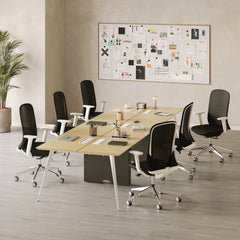
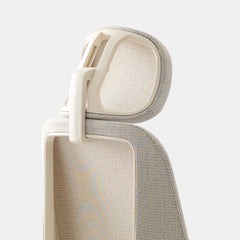
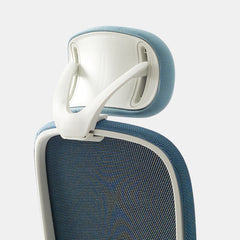
Well-chosen ergonomic conference seating can support the meeting environment while maintaining a professional, coordinated appearance. The surrounding layout should still allow each chair to move naturally on the room’s actual flooring.
Clients rarely remain completely still. They may rotate toward another speaker, lean closer to a document, move back during discussion, or reposition to see a screen. Adequate spacing should accommodate these small movements without causing chair backs or armrests to collide.
Divide the Round Tabletop Into Personal and Shared Zones
Round surfaces encourage collaboration, but they can become cluttered quickly when every item is placed in the center. A useful tabletop arrangement gives each participant a clear personal area while preserving a separate zone for shared materials.
Protect Each Client’s Personal Surface
A client may need room for a notebook, phone, laptop, beverage, or folder. These items should fit without requiring the visitor to stack belongings or place them on the floor.
Before the meeting, remove unrelated paperwork, office supplies, packaging, and employee belongings. Visible open space makes the table feel prepared and gives the client permission to settle in.
Decorative objects should be kept low and restrained. A tall centerpiece may look attractive in an empty room but interrupt sightlines once participants are seated.
Reserve the Center for Shared Work
The central area is best used for items everyone needs to see or reach, such as:
-
Drawings or floor plans
-
Material samples
-
Contracts
-
Product references
-
Shared notes
-
A presentation device
Shared materials should not spread so widely that they enter every personal zone. When the meeting requires many documents, introduce them in stages rather than covering the table before the client arrives.
Position Presentation Technology Carefully
An anodized aluminum laptop stand can raise a laptop for a more comfortable viewing position while keeping the device associated with a defined presentation area.
The screen should not become a barrier between participants. Place it at an angle that supports viewing while preserving eye contact across the table. Chargers and cables should follow the table edge or another controlled route, never the space where clients pull out their chairs.
The presenter’s keyboard, adapter, notebook, and phone should remain within the presenter’s own zone rather than gradually occupying the client’s side.
Reset the Meeting Area Before Every Client Arrives
A repeatable preparation routine prevents small problems from accumulating. Even a well-planned room can become awkward when chairs drift, cables remain from an earlier presentation, or employee materials are left on the table.
Follow a Consistent Pre-Meeting Sequence
1. Remove paperwork and objects from previous meetings.
2. Confirm the number of expected participants.
3. Remove unnecessary chairs from the immediate area.
4. Return the remaining chairs to balanced positions.
5. Pull out every chair to test movement.
6. Walk from the doorway to the intended client seat.
7. Position only the materials required for the conversation.
8. Test the laptop, screen, charger, or presentation connection.
9. Route cables away from feet and chair paths.
10. Sit briefly in each client-facing position to check lighting and sightlines.
This process should be completed from the visitor’s perspective, not only from the host’s preferred seat.
Remove Surplus Chairs Instead of Storing Them Nearby
An extra chair placed against the wall still consumes circulation space and can make the room look unfinished. It may also cause clients to wonder whether more attendees are expected.
When additional seating is not required, move it out of the immediate meeting zone. A smaller number of properly spaced chairs communicates preparation more effectively than a crowded perimeter.
Reduce Distraction With Lighting, Acoustics, and Visual Boundaries
Comfort around a round meeting table depends on more than furniture dimensions. Clients may struggle to focus when they face glare, background movement, nearby conversations, or an undefined flow of employee traffic.
Give Every Position Comparable Lighting
Lighting should be evaluated from seated eye level. A room that appears evenly illuminated while standing may create strong screen reflections or window glare after someone sits down.
Check whether one position:
-
Faces a bright window
-
Sits directly beneath a harsh fixture
-
Places the client in shadow
-
Creates reflections on a laptop screen
-
Makes printed materials difficult to read
Window coverings, table orientation, and supplemental lighting can help balance the experience without making the room feel overly controlled.
Redirect Background Movement
A client facing a busy corridor may be distracted by every person who passes. When possible, orient guest seating toward a calmer view and move routine employee circulation to the side or rear of the meeting zone.
The table should not sit in the natural path between workstations, storage, printers, and exits. Even when no one interrupts verbally, repeated movement can make the client feel exposed.
Define Nearby Work Areas Without Closing Off the Table
Modular workspace panels can help distinguish surrounding employee areas, support focus, and reduce visual or acoustic overlap while retaining an open-office character.
Panels should guide activity rather than surround the client table like a solid enclosure. The arrival side of the meeting area should remain visually open so visitors can understand where to enter and how to leave.
Furniture placement, rugs, lighting, and changes in orientation can reinforce the same boundary. The objective is to make the client zone recognizable without isolating it from the wider office.
Choose a Bistro Table for Shorter, More Informal Client Exchanges
Not every interaction requires a full meeting setup. A scheduled planning session and a brief reception-area conversation create different expectations for seating, materials, and duration.
Separate Working Meetings From Quick Conversations
A full round meeting table is useful when participants need to write, present, compare documents, or remain seated for an extended discussion. Short introductions, hospitality conversations, and informal updates may need less surface area and a lighter setting.
A compact round bistro table can serve a different role within the office, particularly when the intended interaction involves limited materials and a more casual atmosphere.
The selected table height must match the seating and the expected behavior. Clients should not be asked to complete detailed paperwork or manage several documents at a surface designed primarily for brief conversation.
Compare the Two Table Formats
| Decision factor | Round meeting table | Round bistro table |
|---|---|---|
| Primary use | Planned discussion or collaborative work | Brief or informal exchange |
| Typical materials | Laptops, notebooks, documents, samples | Drinks, tablets, limited paperwork |
| Seating need | Supportive chairs for sustained use | Seating matched to the selected height |
| Common setting | Meeting room or defined collaboration zone | Reception, lounge, or hospitality area |
| Main planning concern | Overcrowding the perimeter | Mismatching table height and interaction type |
Choose According to the Client Activity
Appearance should not be the only deciding factor. Consider what the client will actually do at the table.
A working session may involve reading, writing, typing, reviewing samples, and shifting attention between several people. A brief conversation may require only comfortable eye contact and a small surface for a drink or tablet.
Selecting the table according to the activity helps avoid asking one furniture format to serve every client interaction.
Separate Client Conversation Areas From Team Production Space
A client meeting table should not feel like an improvised extension of an employee workstation. Each area supports a different type of activity and should have a clear purpose within the office.
Distinguish Shared Conversation From Daily Desk Work
Workstations support sustained production, individual equipment, and repeated team routines. Meeting tables support shared attention, temporary materials, and face-to-face communication.
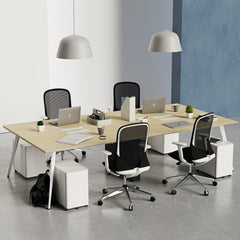
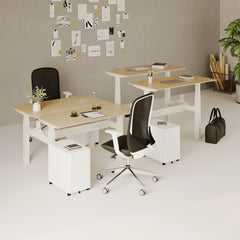
A six-person workstation desk belongs within the team production zone, where multiple employees can work in a coordinated arrangement. Keeping that function distinct from the client area prevents visitors from feeling as though they have been placed in the middle of active desk work.
The meeting table should remain visually connected to the office while offering enough separation for focused and potentially confidential discussion.
Protect Client Privacy Without Creating Isolation
Clients should not need to walk deeply through concentrated work areas to reach the meeting space. A location near reception, a main aisle, or another intuitive arrival point can reduce disruption for both visitors and employees.
Distance, furniture orientation, and partial boundaries can limit exposure to nearby phone calls and screens. Complete enclosure is not always necessary. The goal is to give the conversation a recognizable zone where participants do not have to compete with routine office activity.
Coordinate the Table With the Wider Office Design
A cohesive plan for modern office furniture for creative workspaces can connect meeting tables, chairs, desks, accessories, and supporting elements without making every zone perform the same function.
Repeated materials, colors, or forms can create visual continuity between client and employee areas. Functional differences should remain clear. The client zone should communicate welcome and shared attention, while the workstation area should support daily concentration and team output.
Guide Clients Toward a Seat Without Overdirecting Them
The host can make seating easier through subtle environmental cues. Clear space, chair placement, and prepared materials often communicate more naturally than a detailed verbal instruction.
Leave the Preferred Guest Position Visibly Open
The intended client chair should not contain a jacket, notebook, charging cable, or personal bag. It should be easy to reach and positioned at a comfortable distance from the table.
Meeting materials can also indicate where the visitor may sit. A neatly placed agenda or document can provide direction without making the arrangement feel rigid.
Offer Guidance Only When It Improves Comfort
A brief invitation is useful when one chair has easier access, a clearer presentation angle, or better accommodation for a particular need. The host might simply gesture toward the seat while welcoming the client into the room.
Long explanations can make an ordinary choice feel unnecessarily important. When several positions work equally well, allowing the client to choose can reinforce the balanced, non-hierarchical quality of the round table.
Make Every Client Seat Feel Deliberate and Welcoming
The most effective round meeting area does not call attention to the effort behind it. Clients simply enter, recognize where they can sit, move into position comfortably, and begin the conversation.
That ease comes from coordinated decisions rather than one piece of furniture. Realistic seating capacity prevents crowding. Compatible chairs support movement. Clear paths reduce hesitation. Organized materials protect personal space. Balanced lighting, controlled technology, and defined work zones help participants remain focused.
When every seat is accessible, useful, and visually intentional, the round meeting table becomes more than a convenient shape. It creates a calm client experience in which the room supports the discussion instead of becoming part of the problem.
Related Articles
-
 Round Meeting Table Choices for Smarter Shared Work Spaces
-
 How to Style a Round Meeting Table for Focused Work Talks
-
 Round Meeting Table Setups That Make Small Talks Easier
-
 Why Shared Teams Work Better Around a Round Meeting Table
-
 Round Meeting Table Ideas That Make Team Talks Smoother
-
 How a Round Meeting Table Changes Shared Work Discussions


