








Commercial Office Furniture Needs Better Visitor Seating

Visitor seating quietly shapes how people experience a workplace. Long before a client joins a meeting, a candidate begins an interview, or a vendor meets with a department lead, the office has already communicated something through its chairs, tables, spacing, and overall sense of readiness. Commercial office furniture is often judged by desks, workstations, conference tables, and storage systems, but visitor seating carries a different responsibility. It has to welcome people who do not use the office every day.
That makes it easy to underestimate.
A guest chair is not just an extra seat. It is part of the arrival experience, the meeting experience, and the trust-building experience. If the chair is uncomfortable, awkwardly placed, visually mismatched, or unsupported by a nearby surface, the visitor notices. Even when the rest of the office is polished, poor visitor seating can make the workplace feel unfinished or improvised.
Better visitor seating does not require turning a professional office into a lounge. It requires planning for real interactions: waiting, checking in, reviewing documents, holding a short conversation, joining a meeting, or sitting with a team for a project discussion. When these moments are supported intentionally, commercial office furniture works harder, the office feels more organized, and every guest interaction becomes easier to host.
Visitor Seating Has Become a Core Part of Commercial Office Furniture Strategy
Visitor seating used to be treated as a narrow reception-area decision. A few chairs near the entrance, perhaps a small table, and the need was considered solved. That approach no longer matches how modern offices operate. Guests move through multiple zones, interact with different teams, and often need to work briefly before or between meetings.
A visitor may spend five minutes in reception, 45 minutes in a conference room, and another 15 minutes near a workstation reviewing a file with an employee. Each environment needs a seating choice that feels appropriate, comfortable, and connected to the larger office design.
The First Seat Communicates the Office Standard
The first chair a visitor uses can influence how they interpret the rest of the workplace. A chair that feels stable, clean, comfortable, and visually aligned with the office gives the impression that details matter. A chair that feels like an afterthought can have the opposite effect.
This does not mean every visitor chair needs to be dramatic or expensive-looking. In many commercial offices, the strongest design choices are understated. A well-scaled chair with a clear purpose often does more for the space than a statement piece that is uncomfortable or difficult to use.
The question is simple: does the visitor feel expected?
When commercial office furniture is planned well, the answer is yes. The seating is easy to find. The chair is comfortable enough for the situation. The surrounding space makes sense. There is room for a bag, a phone, a folder, or a cup of coffee. These details help the office feel composed without requiring anyone to explain where to sit or what to do next.
Guest Seating Now Supports More Than Waiting
A waiting room is no longer just a place to pass time. Visitors often arrive prepared to continue working. They may check an email, review a proposal, take notes, or prepare for a presentation. Some guests are candidates who need a calm place to gather their thoughts. Others are clients who expect the office to support a professional conversation from the moment they arrive.
That is why visitor seating must account for more than appearance. The right seating plan considers posture, privacy, movement, and access to surfaces. A reception corner paired with a compact bistro-style table can give guests a practical place to set down a phone, notebook, or drink without turning the area into a full meeting room.
This type of planning makes visitor seating more useful. It also keeps the front desk, conference rooms, and employee work areas from becoming cluttered with improvised guest accommodations.
Better Visitor Seating Connects Comfort With Office Confidence
Comfort influences behavior. A visitor seated in an awkward chair may fidget, lose focus, or feel rushed. A client placed in a crowded waiting area may feel like an interruption rather than a welcomed guest. A candidate seated too close to active workstations may feel exposed.
Good visitor seating helps people settle into the environment. It gives employees a stronger setting for hosting. It reduces the need to grab extra chairs, clear a surface, or move a guest from one place to another unnecessarily. These small improvements add up to a workplace that feels more confident and easier to navigate.
Commercial office furniture should not only support the people who work in the space every day. It should also support the people the business invites in.
Where Commercial Offices Usually Get Visitor Seating Wrong
Many visitor-seating problems come from timing. Offices often select employee furniture first, then address guest seating late in the process. By then, the best spaces have already been assigned, the design language is mostly set, and visitor seating becomes a filler decision.
That approach creates friction. The office may function well for employees but feel uncomfortable for outsiders. A commercial workplace needs both perspectives.
Guest Chairs Are Treated as Leftover Furniture
One of the most common mistakes is using leftover chairs wherever a visitor might sit. A spare conference chair ends up in a private office. An old task chair becomes a guest chair. A reception seat is chosen because it fits a corner, not because it supports the visitor experience.
The result can feel inconsistent. Seat heights vary. Materials clash. Chairs may be too deep for short waits or too rigid for longer conversations. The office may look like it was assembled in stages without a clear plan.
Visitor seating should be chosen with the same care as desks and conference tables. It does not need to be identical throughout the office, but it should feel related. Shared lines, compatible finishes, consistent proportions, and appropriate levels of comfort all help visitor seating feel intentional.
Reception Areas Become Passive Instead of Useful
A passive reception area is easy to recognize. Chairs are lined against a wall. There is no convenient table. Guests are seated too close to the entrance, too far from the front desk, or directly in a traffic path. The layout technically provides seating, but it does not provide hospitality.
A better reception area answers practical questions before the visitor asks them. Where should I sit? Where can I place my bag? Can I check my phone without feeling exposed? Is there enough space between me and another guest? Will someone know I have arrived?
Furniture can solve many of these issues. Chair orientation can create a sense of welcome. A small table can prevent clutter. Proper spacing can reduce discomfort. Even a modest reception area can feel considered when seating, surfaces, and movement paths are planned together.
Conference Rooms Prioritize Tables but Neglect Chairs
Conference rooms often receive more attention than reception areas, but seating can still be overlooked. The table may be carefully selected, while the chairs are chosen mainly for appearance. That creates problems during longer meetings.
A chair used for a 10-minute check-in has different demands than one used for client presentations, planning sessions, and interviews. Visitors need to sit comfortably, turn toward speakers, view screens, take notes, and enter or leave the table without awkwardness. The seating should support the rhythm of the meeting rather than distract from it.
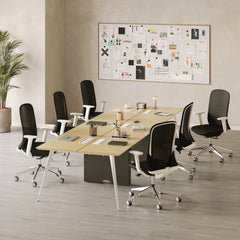
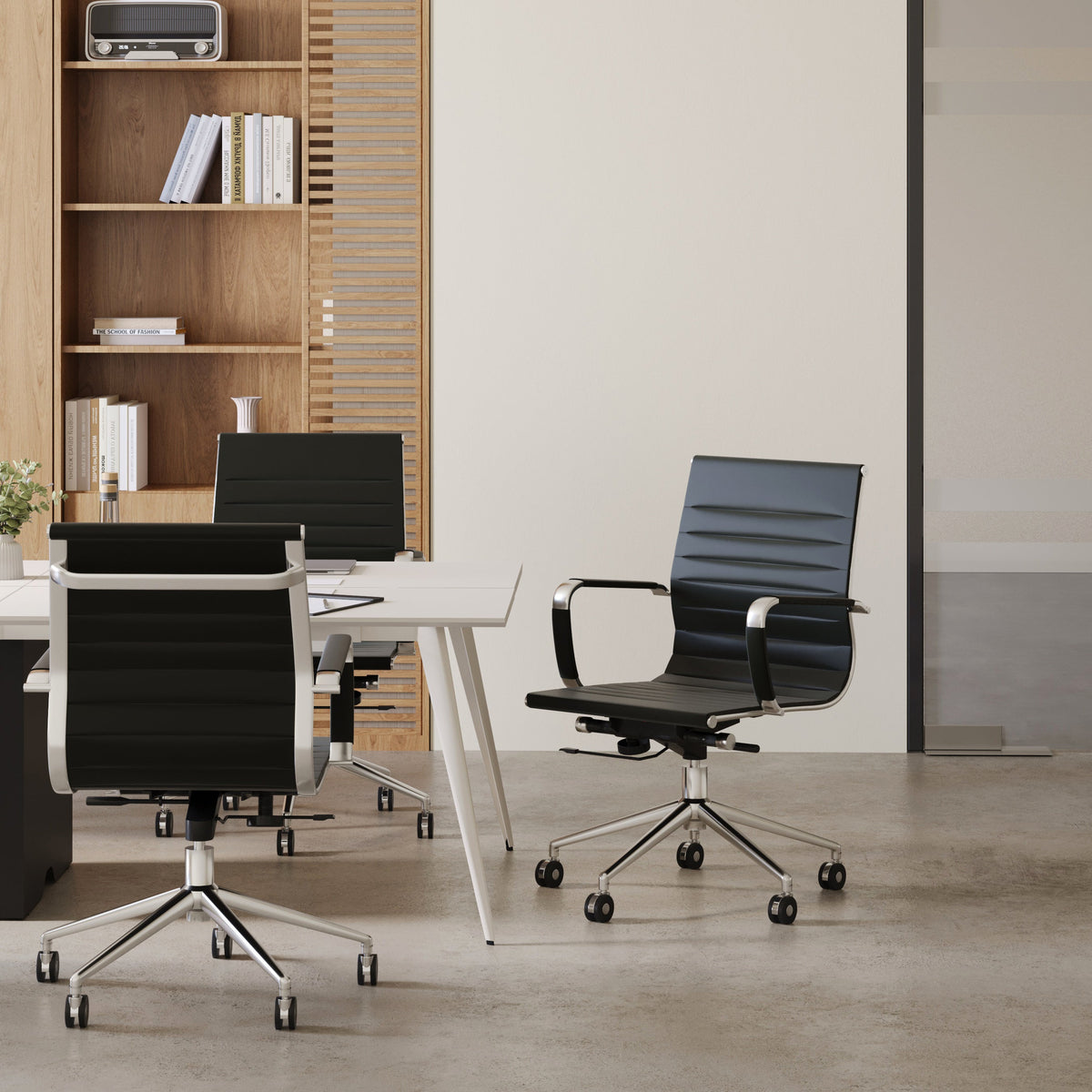
A room designed for seated discussions should include meeting room conference chairs that fit the purpose of the space and work with the table, room size, and meeting format.
Open Offices Create Visitor Confusion
Open office layouts can be efficient for teams, but they need careful visitor planning. A guest who is placed too close to employee workstations may feel like they are intruding. Employees may also feel distracted if visitor seating sits directly inside focused work areas.
The best solution is not to isolate visitors completely. It is to define where guest interaction belongs. Visitor seating near open work areas should feel accessible without blocking circulation or interrupting daily work. Clear boundaries, nearby tables, and thoughtful placement can make the guest feel included while preserving employee focus.
A Practical Framework for Better Visitor Seating Decisions
Choosing visitor seating becomes easier when every decision is filtered through four factors: comfort, scale, purpose, and visual cohesion. These criteria keep the office from choosing chairs based only on looks or availability.
Comfort Should Match the Length and Type of Visit
Comfort does not mean every guest chair needs to feel plush. It means the chair should support the expected use. Reception seating should make short waits pleasant. Conference seating should support longer conversations. Private-office guest chairs should allow people to sit comfortably across from a desk without crowding the room.
Short-Stay Seating Still Needs Support
Visitors may only sit in reception briefly, but the chair still matters. Seats that are too low can make it difficult to stand. Chairs that are too rigid can make even a short wait feel unpleasant. Seating that is too casual can weaken the professional tone of the space.
A good short-stay chair feels stable, accessible, and appropriate. It helps the visitor pause comfortably without making the reception area feel like a lounge.
Long-Stay Seating Needs Meeting-Level Comfort
Longer meetings require more support. A visitor seated in a conference room or interview room may need to focus for an extended conversation. Chair height, back support, arm clearance, and ease of movement all become more important.
A professional chair should not distract from the conversation. It should let the visitor stay present.
Scale Determines Whether Seating Feels Natural
A visitor chair can look good on its own and still fail in the room. Scale determines whether the chair fits the space, supports movement, and works with nearby furniture.
Oversized lounge chairs may overwhelm a compact reception area. Too many chairs can create a crowded lobby. Small chairs in a large meeting room can make the space feel underfurnished. The right scale depends on room size, circulation paths, table placement, and the expected number of guests.
A practical seating plan leaves enough room for people to sit, stand, pass, and place belongings without disrupting others.
Purpose Gives Every Visitor Seat a Reason to Exist
Visitor seating works best when each seat supports a specific scenario. A guest chair should never be placed simply because there is an empty wall.
Common visitor-seating scenarios include:
1. Reception waiting: Seating should be visible, comfortable, and easy to access.
2. Client presentations: Chairs should support attention, screen visibility, and note-taking.
3. Vendor check-ins: Seating should be practical and near the appropriate operational area.
4. Candidate interviews: The setting should feel calm, balanced, and professional.
5. Project reviews: Guest seating should allow visitors to join a team conversation without blocking work.
6. Hybrid meetings: Chairs should be positioned with awareness of screens, cameras, and shared surfaces.
7. Short laptop tasks: Seating should be paired with a stable surface when device use is likely.
Purpose prevents overfurnishing. It also helps the office avoid using one seating type for every guest interaction.
Visual Cohesion Builds Trust
Commercial office furniture should feel connected across zones. Visitor seating does not need to match every employee chair exactly, but it should belong to the same visual system.
Color, material, frame finish, chair shape, and table pairing all matter. A reception chair, private-office guest chair, and meeting chair can vary in form while still feeling coordinated. This creates a workplace that looks planned rather than pieced together.
Cohesion is especially important because visitors experience the office in sequence. They may start in reception, move to a conference room, pass workstations, and sit in a smaller meeting area. When the furniture language remains consistent, the entire workplace feels more credible.
Matching Visitor Seating to the Office Zones Guests Actually Use
Better visitor seating depends on understanding where guests spend time. Each zone has different needs, and each should support a different level of formality, comfort, and interaction.
Reception Seating Should Welcome Without Becoming Too Casual
Reception seating needs a careful balance. It should feel warm enough to make guests comfortable, but professional enough to match the company’s work environment. Overly casual furniture can feel disconnected from a commercial setting. Seating that feels too rigid can make the office seem cold.
The best reception layouts usually give visitors a clear view of where they are, where they should wait, and how they will be greeted. Chairs should not block doors, aisles, or front-desk interactions. A nearby surface can make the space more functional without requiring a large footprint.
Small Meeting Areas Need Seating That Encourages Equal Conversation
Not every visitor interaction belongs in a formal conference room. Some meetings are short, collaborative, and better suited to a smaller setting. A circular layout can help reduce hierarchy and make conversation feel more balanced.
A small round meeting table works well in this kind of setting because it gives everyone shared access to the same surface and supports a more direct exchange. The seating around it should be proportionate, easy to move around, and comfortable enough for focused discussion.
These smaller areas are especially useful for guest conversations that do not require a full meeting room but still deserve a proper setting.
Conference Rooms Need Focused Seating, Not Just Formal Seating
Formal does not always mean functional. A conference chair may look polished but still fail if it restricts movement, sits at the wrong height, or becomes uncomfortable during longer meetings.
Strong conference seating supports focus. It allows visitors to sit close enough to the table for notes or devices. It keeps sightlines open. It gives enough room for people to enter, exit, and shift position without disturbing the entire room.
The goal is not to make the room feel impressive for a photo. The goal is to make real meetings feel smooth, comfortable, and professional.
Private Offices Need Guest Chairs That Respect the Desk Layout
Private-office guest seating should support conversation without crowding the room. A guest chair placed too close to the desk can feel uncomfortable. A chair placed too far away can make the conversation feel disconnected. The right placement depends on desk size, room proportions, and the type of conversations held there.
Private offices often host sensitive discussions, interviews, client calls, and quick approvals. The seating should feel grounded, calm, and appropriate. It should not look like a borrowed chair from another room.
Workstation Areas Need Visitor Touchpoints Without Disruption
Guests often meet employees near the areas where work actually happens. That might include a project pod, a department benching area, or a shared workstation cluster. These moments need seating, but they also need boundaries.
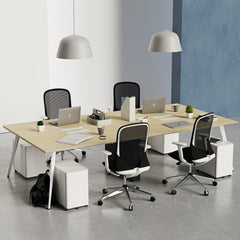
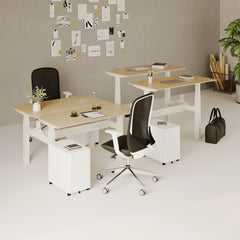
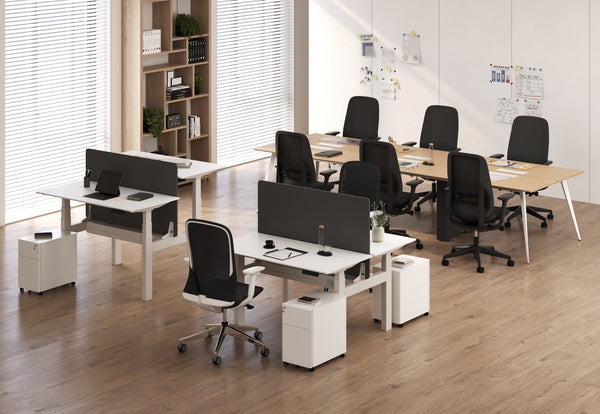
When a team area is organized around a six-person workstation desk, visitor seating should be placed nearby in a way that supports collaboration without interrupting individual work. A guest should not need to stand over someone’s desk or sit in an aisle to participate in a discussion.
Good workstation-adjacent visitor seating lets guests connect with the team while preserving the structure of the work area.
Open Office Boundaries Help Guests and Employees
Open offices benefit from visual order. Visitors should be able to understand where they are welcome to sit and where focused work is happening. Employees should not feel exposed to constant guest movement.
Office workstation panels can help define work areas and create clearer separation between employee zones and guest-adjacent spaces. Used thoughtfully, panels can support visual privacy and orientation without making the office feel closed off.
Visitor seating near open work areas should feel intentional, not temporary. The goal is to create a natural place for interaction while protecting the daily rhythm of the office.
Visitor Seating Works Best When Chairs, Tables, and Accessories Function Together
A chair alone rarely solves the full visitor experience. Guests often need surfaces, spacing, and small support pieces that make the seating area usable. Commercial office furniture performs better when these elements work as a system.
A Guest Chair Without a Surface Creates Friction
Visitors carry things. Phones, folders, notebooks, coffee, tablets, bags, and laptops all need somewhere to go. Without a nearby surface, guests may place items on the floor, hold them awkwardly, or crowd the front desk.
This creates small moments of discomfort. It also makes the office feel less prepared.
A table changes the message. It tells the visitor that the space was planned for real use, not just appearance. Even a small surface can make waiting, reviewing documents, or preparing for a meeting easier.
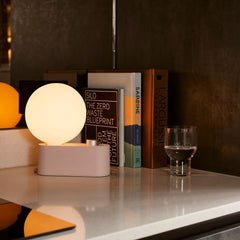
Small Tables Turn Waiting Areas Into Useful Touchdown Spaces
A reception or guest corner becomes more valuable when visitors can use it naturally. A small table allows someone to sign a form, set down a drink, check a message, or review notes before a meeting.
This is especially useful in offices where the reception area also functions as a brief touchdown zone. The space remains professional, but it becomes more accommodating. It can support a short conversation without immediately requiring a conference room.
The key is proportion. A table should fit the seating arrangement and the expected activity. Too large, and it overwhelms the area. Too small or poorly placed, and it becomes decorative rather than useful.
Laptop-Friendly Seating Reflects How Business Actually Happens
Visitors frequently arrive with devices. They may review a presentation, join a call, check a document, or work briefly before a meeting begins. Offices do not need to overbuild every seating area for technology, but they should recognize that laptop use is common.
A slim laptop stand can support better laptop positioning in flexible work settings where employees or guests need to raise a device for improved use. It belongs in the broader conversation about making office environments more supportive of real work habits.
The point is not to turn every guest seat into a workstation. It is to plan visitor areas with enough practicality that people can use them comfortably.
Table Height and Chair Height Should Be Planned Together
A comfortable chair can still feel wrong if the table does not align with it. Seat height, table clearance, arm position, and viewing angle all influence whether a visitor can sit naturally.
This matters in reception areas, huddle rooms, conference rooms, and private offices. A chair that works beside a low lounge table may not work at a meeting table. A guest chair that fits a private office may not be appropriate for a collaborative table.
Planning seating and surfaces together prevents mismatches that only become obvious after the office is in use.
Better Visitor Seating Choices by Commercial Office Area
| Office Area | Visitor Seating Requirement | Common Planning Mistake | Stronger Furniture Strategy |
|---|---|---|---|
| Reception | Comfortable short-term seating with a clear sense of arrival | Chairs placed against a wall with no nearby surface | Pair guest seating with small tables and intuitive spacing |
| Conference Room | Supportive seating for longer conversations | Choosing chairs mainly for appearance | Use meeting-appropriate chairs with consistent height and spacing |
| Private Office | One-on-one guest seating near the desk | Oversized chairs that crowd movement | Select compact guest chairs that fit the office layout |
| Open Office | Occasional visitor seating near employee zones | Guests seated inside active work areas | Create defined guest touchpoints outside focus-heavy zones |
| Huddle Area | Flexible seating for quick discussions | No shared surface for notes or devices | Use small tables and proportionate seating arrangements |
| Interview Room | Calm, professional seating for focused conversation | Seating that feels too casual or too stiff | Balance comfort, posture, and visual polish |
| Team Workstation Area | Guest seating for project reviews or brief collaboration | Visitors blocking aisles or employee access | Place visitor seats adjacent to workstation circulation |
This kind of planning helps offices avoid one-size-fits-all seating. Each area should support a different visitor need. Reception seating should make arrival easy. Conference seating should support attention. Workstation-adjacent seating should enable collaboration without creating distraction.
Better commercial office furniture planning begins when every zone is understood by how people actually use it.
How Better Visitor Seating Improves Office Flow and Daily Operations
Visitor seating affects more than comfort. It influences how people move, how employees host, and how smoothly meetings begin and end.
Visitors Move Through the Office With Less Uncertainty
A well-planned office quietly guides people. The visitor sees where to sit. The meeting area feels easy to identify. The path from reception to conference room is not blocked by chairs, bags, or awkward furniture placement.
This reduces confusion. It also reduces the number of small interruptions employees must handle. When guests understand the space, front-desk staff and team members can focus on the purpose of the visit rather than managing avoidable seating issues.
Employees Host With More Confidence
Employees should not need to improvise when a visitor arrives. Searching for an extra chair, clearing papers from a table, or moving someone between rooms can make a meeting feel less prepared.
Better visitor seating gives employees reliable options. A sales team can bring a prospect to a proper discussion area. An HR team can conduct an interview in a comfortable setting. A manager can meet a vendor without disrupting a conference room schedule. A project team can review work with a client near the team area without crowding employee desks.
The office becomes easier to host in because the furniture already supports the interaction.
Better Guest Seating Reduces Awkward Transitions
Many office interactions begin informally before moving into a meeting. A visitor may wait in reception, then speak briefly with an employee, then join a conference-room discussion. If each transition feels awkward, the overall experience suffers.
Thoughtful seating reduces these friction points. The visitor does not need to be moved simply because the first seating area was uncomfortable. A short conversation can happen in a smaller guest zone. A longer discussion can move naturally to a meeting room.
This makes the office feel organized and respectful of everyone’s time.
Visitor Seating Helps Hybrid Offices Feel More Complete
Hybrid work has changed how offices feel day to day. Some areas may be quieter than they once were. Some teams may rotate schedules. Even so, visitors still arrive for meetings, interviews, consultations, and presentations.
Strong visitor seating helps the office feel active and prepared, even when employee attendance varies. It gives structure to the space. It prevents the office from feeling empty, underused, or improvised.
Commercial office furniture should support flexibility, but flexibility should not mean uncertainty. Visitor seating gives hybrid offices a stronger sense of readiness.
What to Evaluate Before Buying Commercial Visitor Seating
Selecting visitor seating is easier when the decision is grounded in practical criteria. A good chair should fit the office’s use, layout, and visual standard.
Durability for Daily Guest Traffic
Visitor chairs are used by many people, often in quick succession. They may be moved, leaned on, cleaned, and repositioned more frequently than expected. Durability matters because the chair is part of the office’s first impression.
Materials, frame construction, finishes, and cleanability should be evaluated based on real office use. A visitor chair that looks good at installation but quickly appears worn can weaken the space over time.
Seat Height and Table Compatibility
Seat height affects comfort, conversation, and usability. A guest seated too low across from a desk may feel physically disadvantaged. A chair that sits too high at a meeting table can feel awkward. Inconsistent seating heights across a conference room can make the room look uneven and feel uncomfortable.
Before choosing visitor chairs, consider where they will be used. Reception seating, meeting seating, private-office seating, and huddle seating may require different proportions.
Cleanability and Maintenance Visibility
Visitor seating should be easy to keep presentable. Guests notice stains, scuffs, dust, and worn edges. Because visitors do not have the same familiarity with the workplace as employees, they often form impressions from visible details.
Clean, well-maintained seating communicates care. It suggests the office is managed thoughtfully. This does not require fragile or overly formal furniture. It requires choices that can handle regular commercial use while maintaining a professional appearance.
Flexibility Without a Temporary Look
Some visitor seating should be easy to move. Offices often need to adapt for interviews, small meetings, team discussions, or temporary project work. Flexibility is useful, but it should not make the furniture feel temporary.
A movable chair can still look intentional. A flexible guest zone can still feel polished. The best commercial office furniture balances adaptability with visual consistency.
Full-Office Cohesion Across Guest and Employee Areas
Visitor seating should be part of the broader furniture plan. Reception areas, meeting rooms, private offices, open workstations, and support spaces all influence one another. When each area is selected in isolation, the office can feel fragmented.
Companies updating multiple areas benefit from modern office furniture planning that considers employee workstations, visitor seating, meeting spaces, accessories, and boundaries as connected parts of one workplace system.
This type of cohesion makes the office easier to use and easier to trust. It also helps every furniture choice contribute to the same professional environment.
A Better Visitor Seating Plan Makes Commercial Office Furniture Work Harder
Visitor seating is not a finishing touch. It is part of how a commercial office performs. It supports hospitality, communication, focus, and movement. It helps employees host with confidence and helps guests feel expected from the moment they arrive.
A strong office furniture plan does more than place chairs where space is available. It considers how visitors enter, wait, meet, collaborate, and move through the workplace. It pairs seating with the right tables and accessories. It protects employee focus while making guest interaction feel natural. It creates continuity between reception, meeting rooms, private offices, and workstation areas.
The most effective offices understand that visitors are part of the workplace experience. They may not sit at the desks every day, but they still judge the office by the furniture they use. When visitor seating is comfortable, purposeful, and aligned with the rest of the commercial office furniture plan, the entire workplace feels more prepared, more professional, and more human.
Related Articles
-
 Our Conference Chairs and Meeting Tables Compared, so You Can Furnish a Huddle Room, a Meeting Room, or a Boardroom for Eight in One Order
-
 This Is How To Build A Small Home Office You Actually Want To Work From, And How To Pick Desks For Small Spaces - Urbanica Furniture's Full Guide
-
 Best Setup for Laptop and 2 Monitors With Less Neck Strain
-
 Round Meeting Table Ideas That Make Team Talks Smoother
-
 Better Guest Seating Ideas Around a Round Meeting Table
-
 Hot Desking Furniture Solutions Need More Flexible Seating


