















Best Filing Cabinet Options for Minimalist Offices That Still Need Real Storage

Minimalist offices look effortless when every object has a purpose, every surface has breathing room, and storage quietly supports the work instead of competing with it. The challenge is that real offices still create real things to store. Even a paper-light workspace can collect signed agreements, tax records, client notes, invoices, manuals, notebooks, charging cables, printer paper, and personal documents that should not sit in open view.
That is why the best filing cabinet options for minimalist offices are not simply the smallest cabinets available. A cabinet can be compact and still fail if it cannot hold the documents, supplies, or private items that shape daily work. The stronger choice is storage that visually recedes, fits the workflow, and gives paperwork a reliable destination before it turns into clutter.
A minimalist office works best when storage is intentional. A lockable file storage cabinet supports that goal because it gives important documents a contained, secure place while helping the rest of the workspace stay clear. The cabinet becomes less of an add-on and more of a quiet system for protecting focus.
Why Minimalist Offices Still Need Serious Storage
Minimalism is often misunderstood as an absence of things. In a working office, it is better understood as an absence of visual friction. The desk is not empty because nothing exists. It is clear because everything has a place to go.
A filing cabinet supports this discipline by separating active work from stored work. Active work belongs on the desk only while it is being used. Stored work belongs in a drawer where it can be found quickly without turning into a visible pile. That distinction matters in home offices, private studios, executive spaces, and shared work areas because clutter often starts with objects that are temporarily placed somewhere “just for now.”
The best filing cabinet for a minimalist office should solve three problems at once:
1. It should reduce visible clutter.
2. It should protect documents that need privacy.
3. It should support everyday habits instead of making organization feel like a separate task.
When storage is too far away, too small, or too poorly organized, papers return to the desktop. When storage is close, clear, and properly sized, filing becomes part of the workflow.
What Makes a Filing Cabinet Truly Minimalist
A minimalist filing cabinet is not defined only by size. It is defined by proportion, function, restraint, and placement. A large cabinet can feel calm if it is integrated well, while a small cabinet can feel messy if it creates overflow.
Clean Lines and Low Visual Weight
Visual weight describes how heavy an object feels in a room, regardless of its actual size. A cabinet with simple geometry, a quiet finish, and minimal hardware often feels lighter than a cabinet with bulky details or strong contrast.
For minimalist offices, the best options usually share a few traits:
-
A clean rectangular form
-
A neutral or restrained finish
-
Smooth drawer fronts
-
Hardware that does not distract
-
A footprint that fits beside, under, or near the desk
-
Enough capacity to prevent overflow
The goal is not to hide the cabinet completely. The goal is to make it feel naturally integrated with the workspace.
Closed Storage for Paperwork That Should Not Be Displayed
Open shelving can look beautiful when it holds a few curated objects. It becomes less effective when it has to manage folders, receipts, manuals, spare notebooks, mail, and loose office supplies. Minimalist offices depend on visual quiet, and paperwork rarely stays visually quiet on open shelves.
Closed drawers create a cleaner boundary. They allow the room to look calm even when the office still contains serious work materials. This is especially important for professionals who handle financial records, client documents, legal forms, employee information, or personal paperwork.
Real Capacity Instead of Decorative Decluttering
Decorative storage often hides clutter without organizing it. A filing cabinet should do more. It should make documents easier to sort, access, and maintain.
A useful minimalist cabinet can support categories such as:
-
Current project files
-
Signed contracts
-
Invoices and receipts
-
Tax documents
-
Insurance or warranty papers
-
Product manuals
-
Blank folders and labels
-
Notebooks and reference materials
-
Small office tools that should not live on the desk
A cabinet that only looks clean but cannot support these categories will eventually push clutter back into the room.
Best Filing Cabinet Types for Minimalist Office Layouts
The right filing cabinet depends on how much storage is needed, where the office is located, and how often documents are accessed. Minimalist office design becomes stronger when the cabinet type matches the actual rhythm of work.
Compact Two-Drawer Cabinets for Everyday Paper Control
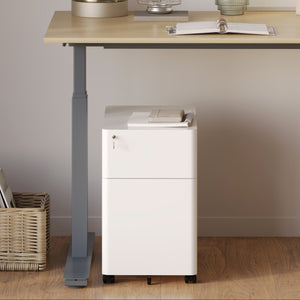
A compact two-drawer cabinet is one of the most practical options for minimalist offices because it offers enough structure without taking over the room. One drawer can hold active files, while the other can support archived records or occasional-use documents.
This layout works especially well when the office needs real storage but not a full wall of cabinetry. It is useful for home offices, apartment workstations, small business spaces, creative studios, and hybrid work setups where papers still need a dependable home.
The two-drawer structure also encourages discipline. Instead of mixing everything into one deep drawer, the office can maintain a simple division between what is current and what is retained.
Mobile Cabinets for Flexible Work Areas
A mobile filing cabinet can help minimalist offices that change often. Some workspaces shift between focused solo work, client calls, shared team sessions, and creative production. Movable storage allows the room to adapt without adding more furniture.
Mobility is most useful when the cabinet needs to move between a desk, meeting area, printer station, or shared supply zone. It also helps in compact rooms where a fixed cabinet might block a drawer, chair, doorway, or walking path.
For minimalist design, mobility should still be purposeful. A cabinet that moves should have a consistent home position so it does not become visual drift in the room.
Low Cabinets That Pair Naturally With Modern Desks
A filing cabinet works best when it supports the desk rather than competing with it. Height, width, depth, and drawer direction all affect whether the storage feels convenient or awkward. A cabinet placed beside a desk should leave enough room for the chair to move, the drawer to open, and the user to reach files without twisting or disrupting posture.
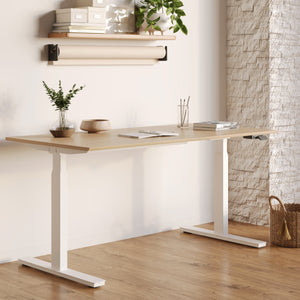
This is why cabinet planning should happen alongside desk planning. Pairing storage with adjustable ergonomic desks helps create a more complete workstation, especially when the office needs both surface space and closed storage. A desk and filing cabinet should function as one working zone, not two separate pieces that happen to sit near each other.
Vertical Cabinets for Records-Heavy Roles
Vertical filing cabinets are useful when the office has more paper volume than floor width. They can be effective for accounting, administration, legal work, property management, or any role that handles frequent document retention.
In minimalist offices, the risk is scale. A vertical cabinet can feel visually heavy if it is too tall, too dark, or placed in a prominent sightline. The best use is often along a secondary wall or in a storage-focused corner where it can serve a clear function without dominating the main work area.
Lateral Cabinets for Wider Rooms
Lateral filing cabinets suit offices with more wall width. They can feel more furniture-like than traditional vertical file cabinets, and they sometimes work well below artwork, near meeting tables, or along the side of an executive office.
The advantage is horizontal access and broader storage. The caution is footprint. A lateral cabinet can overwhelm a compact minimalist room if it is selected only for appearance without measuring the available wall space and circulation path.
How to Choose the Right Cabinet Size Without Creating Clutter
Minimalist storage should be sized honestly. Too much cabinet can make the office feel crowded. Too little cabinet creates overflow, which is usually worse.
Separate Active Files From Archive Files
The cleanest filing system begins with two categories: active and archive.
Active files are documents currently involved in work. They may include client folders, current invoices, contracts waiting for signatures, active project notes, or recurring forms. These should be the easiest to reach.
Archive files are documents worth keeping but not handling daily. They may include completed project records, tax documents, older invoices, insurance papers, warranties, and reference materials. These should be organized clearly but do not need the most accessible drawer.
This separation prevents one of the most common office problems: urgent papers buried under old papers.
Use Drawer Count as a Workflow Decision
Drawer count should be based on how the office functions. A two-drawer cabinet is often enough for focused individual workspaces. A larger cabinet may be better for roles with high document retention or shared teams.
The key is to choose the smallest cabinet that fully solves the storage problem, not the smallest cabinet available. A cabinet that looks minimal on day one but cannot hold the actual workload will force papers onto the desk, shelf, floor, or printer area.
Measure for Drawer Extension and Chair Movement
The cabinet’s footprint is not the only measurement that matters. Drawers need space to open. Chairs need room to roll, swivel, recline, or pull back. Walkways need to stay clear.
Before choosing a cabinet location, measure:
-
Cabinet width and depth
-
Drawer extension
-
Chair clearance
-
Distance from the desk edge
-
Walking path around the workstation
-
Door swings and nearby furniture
-
Access to outlets or floor vents
A minimalist office should feel easy to move through. Storage that interrupts movement will eventually feel like clutter, even if it looks clean.
Materials and Finishes That Keep Filing Cabinets Visually Quiet
The material and finish of a filing cabinet affect how it sits in the room. A cabinet can be functional and still feel calm if the finish supports the surrounding office palette.
Metal Cabinets for Slim, Practical Storage
Metal filing cabinets often work well in modern offices because they can offer a crisp profile and straightforward durability. Their visual simplicity suits minimalist spaces, especially when paired with clean desks, ergonomic chairs, and restrained accessories.
Metal also tends to communicate office function clearly. That can be useful when the workspace needs to feel professional rather than decorative.
Wood and Wood-Look Cabinets for Warmer Minimalism
Some minimalist offices need warmth. Wood tones and wood-look finishes can soften a workspace that might otherwise feel too stark. They are especially useful in home offices, creative rooms, private studies, or client-facing spaces where comfort matters alongside order.
The important detail is proportion. A warm cabinet should still feel visually controlled. Heavy forms, ornate hardware, or mismatched finishes can make the room feel less intentional.
Neutral Colors That Blend With the Office Palette
Neutral finishes help filing cabinets fade into the larger design. White, black, gray, soft beige, muted wood, and tone-on-tone combinations can all work depending on the room.
A cabinet that matches the desk or wall color may feel quieter. A cabinet that matches chair legs, lamp finishes, or other hardware can feel cohesive. The best choice depends on whether the cabinet should disappear visually or become a subtle design anchor.
Filing Cabinet Placement Strategies for Minimalist Flow
A filing cabinet is only as effective as its placement. When storage is easy to reach, the office stays cleaner. When it is inconvenient, clutter finds the nearest flat surface.
Desk-Side Placement for Daily Filing
Desk-side placement is often the best option for active files. It keeps paperwork close enough to file immediately and reduces the temptation to stack documents on the desk.
This setup is ideal for professionals who handle papers throughout the day. The cabinet can sit beside the dominant hand, near the return side of an L-shaped setup, or just beyond the main leg space if drawer access remains easy.
Under-Desk Placement for Tight Rooms
Under-desk placement can work in very small offices, but it requires careful measurement. A cabinet that fits physically may still reduce comfort if it limits leg space or blocks the chair.
This placement is best when the cabinet is compact, the desk has enough clearance, and the drawers can open without forcing the user to move awkwardly.
Behind-the-Chair Placement for Private Offices
In larger offices, placing storage behind the chair can keep the front-facing workspace visually open. This works well when files are needed regularly but not constantly.
The chair is part of the storage plan because movement affects access. A cabinet behind the work position should leave enough room for comfortable seating, turning, and reaching. Planning storage alongside ergonomic office seating helps protect both organization and comfort.
Corner Placement for Compact Minimalist Rooms
Corners can absorb storage visually. A cabinet placed in a corner may feel less intrusive while still remaining useful. This is especially helpful in apartment workspaces, studio offices, and rooms that serve multiple purposes.
The main caution is access. A cabinet tucked too tightly into a corner can become frustrating if drawers cannot open fully or files are difficult to remove.
Desk Zones That Make Filing Cabinets More Effective
A filing cabinet works best when the rest of the office has clear zones. Without zones, every item competes for the same surface.
The Clear Work Zone
The clear work zone is the area used for active tasks. It may include a laptop, monitor, keyboard, notebook, and one document or folder at a time. This zone should not become storage.
When the filing cabinet is close and organized, papers can leave the work zone as soon as they are no longer needed. That habit preserves the minimalist desk surface.
The Vertical Tech Zone
Technology can create clutter even without paper. Laptops, monitors, cables, chargers, and peripherals can crowd the desk if they are not managed intentionally.
A lightweight laptop stand can support a cleaner tech zone by raising the laptop and freeing more usable surface area. The filing cabinet then handles the physical documents and office supplies, while the desk remains focused on work.
The Hidden Paper Zone
The hidden paper zone is the cabinet itself. It should hold anything that does not need to be visible: contracts, records, manuals, receipts, private documents, spare folders, and archived notes.
A simple system keeps this zone from becoming a junk drawer:
1. Label broad categories rather than overly specific ones.
2. Keep active files closest to the top or front.
3. Review loose papers before they enter the cabinet.
4. Store archive papers separately from current work.
5. Remove outdated documents when they no longer need to be kept.
Lighting and Accessories That Support Storage Without Adding Visual Noise
Minimalist offices do not need many accessories. They need the right ones in the right places. Lighting is especially important because a poorly lit cabinet zone can feel like an afterthought.
Task Lighting Near the Work Surface
Task lighting helps the desk and nearby storage feel deliberate. A cabinet placed beside a desk should not create a dark corner where labels are difficult to read or drawers feel disconnected from the work area.
An LED table and wall light can fit a minimalist office because it supports useful illumination without requiring a cluttered accessory setup. Good lighting helps the storage area remain practical, not just visually clean.
Softer Light for Warmer Minimalist Offices
Some offices need a softer mood, especially those with metal storage, white surfaces, or compact layouts. Warm accent lighting can reduce the feeling of hard edges while keeping the room simple.
A recycled glass table lamp can support that softer layer because it adds light and material interest without turning the office into a decorative display. The goal is calm, not excess.
Accessories Should Reduce Decisions
Minimalist accessories should make work easier. A tray can hold daily essentials. A laptop stand can improve surface discipline. A lamp can support focus. The filing cabinet should carry the heavier storage responsibility so the office does not need multiple bins, baskets, and desktop organizers.
When accessories multiply, they often become a second form of clutter. A stronger approach is to choose fewer tools and give each one a specific job.
Filing Cabinet Comparison for Minimalist Office Needs
| Office Need | Best Cabinet Direction | Why It Works | Design Risk to Avoid |
|---|---|---|---|
| Small home office | Compact two-drawer cabinet | Supports active and archive files without overwhelming the room | Choosing too little storage and creating overflow |
| Apartment workstation | Slim desk-side cabinet | Keeps daily papers close while preserving floor space | Blocking chair movement or drawer access |
| Executive office | Low lateral cabinet | Offers storage with a more furniture-like presence | Selecting a finish that feels too bulky |
| Creative studio | Mobile cabinet | Handles project files, samples, and admin papers flexibly | Letting supplies spill into open view |
| Shared team area | Lockable cabinet | Helps contain documents that multiple people may need | Mixing ownership without labels |
| Records-heavy role | Vertical cabinet | Uses height when document volume is high | Making the cabinet the dominant visual feature |
The best filing cabinet option is the one that matches the real storage load while preserving the room’s calm. A compact cabinet is ideal for many minimalist offices, but document-heavy roles may need more capacity. The point is not to minimize storage at all costs. The point is to minimize disorder.
Storage Planning for Compact Offices, Studios, and Growing Workspaces
Minimalist office planning becomes more effective when storage is considered alongside desks, chairs, lighting, and accessories. A filing cabinet should not be chosen after the room is already crowded. It should be part of the workstation plan from the beginning.
Flexible Storage for Offices That Change
Many offices now serve more than one purpose. A home office may also function as a guest room. A creative studio may shift from desk work to project review. A small company office may need to support both individual focus and team collaboration.
In these spaces, storage needs to be flexible but not temporary-looking. A filing cabinet can support changing workflows by keeping essential documents and supplies contained, even when the room’s daily use changes.
Furniture Systems That Keep Workspaces Cohesive
A minimalist office feels better when the furniture speaks the same design language. Desks, chairs, file storage, lighting, and accessories should support one another in scale, finish, and use.
For businesses and professionals building out a more complete office, modern workspace furniture options can help connect filing cabinets with the broader workspace plan. The cabinet becomes one part of a larger system built around comfort, order, and focus.
Buyer Checklist for Choosing a Minimalist Filing Cabinet
A filing cabinet should be selected with the same care as a desk or chair. Use this checklist before deciding what belongs in the office:
1. Measure the exact cabinet location, including drawer extension.
2. Confirm whether the cabinet will sit beside, under, behind, or across from the desk.
3. Estimate how many active files need daily access.
4. Separate active documents from archived records before choosing drawer count.
5. Choose a finish that aligns with the desk, chair, lighting, and walls.
6. Prioritize lockable storage when documents include private, financial, employee, or client information.
7. Decide whether office supplies, notebooks, manuals, or devices also need drawer space.
8. Leave enough chair clearance for comfortable movement.
9. Avoid open bins for paperwork that needs privacy or long-term organization.
10. Choose storage that fully solves the clutter problem instead of simply looking compact.
This checklist keeps the decision practical. A filing cabinet should not be chosen only because it looks minimal. It should earn its place by making the office easier to use.
Common Filing Cabinet Mistakes That Make Minimalist Offices Feel Messy
Even a well-designed cabinet can fail if it is used without a clear system. Minimalist offices rely on habits as much as furniture.
Treating the Cabinet as Overflow
A filing cabinet should not be the place where miscellaneous items disappear. When drawers become catchalls, the office may look clean temporarily, but the system breaks down when documents are needed.
Each drawer should have a defined role. Active files, archive papers, supplies, and reference materials should not all compete in the same space.
Choosing Appearance Over Workflow
A cabinet can match the room beautifully and still be wrong for the office. If it is hard to reach, too small, difficult to open, or poorly placed, it will not support daily organization.
The best minimalist cabinet is not the one that photographs best. It is the one that quietly works every day.
Placing Storage Too Far From Paper Creation
Papers pile up where decisions happen. If documents are reviewed at the desk but the cabinet is across the room, filing becomes a separate chore. That distance creates delay, and delay creates clutter.
The most effective storage is close enough to use immediately but positioned well enough to preserve the room’s flow.
Mixing Active and Archived Documents
Active documents need speed. Archived documents need retention. Combining them slows the whole system.
A clean filing hierarchy might include:
-
Active files for current work
-
Reference files for frequently checked information
-
Archive files for records worth keeping
-
Discard or shred items that no longer belong in storage
This simple division protects the cabinet from becoming overcrowded and keeps the office easier to maintain.
A Minimalist Office Stays Calm When Storage Has a Clear Purpose
The best filing cabinet options for minimalist offices do not compromise the clean look of the room. They preserve it. Real storage allows the desk to stay open, the chair to move freely, the lighting to feel intentional, and the workday to flow without constant visual distraction.
A strong minimalist office is honest about how work happens. It accepts that papers, records, tools, and supplies exist, then gives them a thoughtful place to go. The right filing cabinet does not call attention to itself. It supports the room quietly, keeps important items accessible, and helps every surface return to calm at the end of the day.
Leave a comment